





News

Share
Published 17:03 2 Sept 2026 BST
Updated 17:03 2 Sept 2026 BST
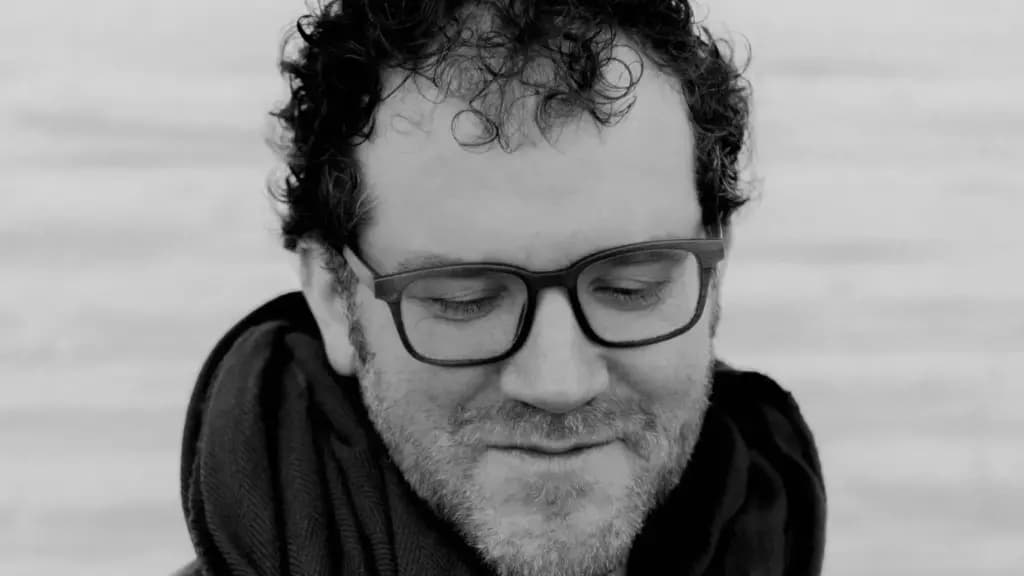
A man who underwent conversion therapy in Ireland says the practice is "terrifying" and still going happening.
Pádraig Ó Tuama, now an author and poet, originally from Cork, has been living in America writing his new book Love Between Men which focuses on Ó Tuama’s youth experiences with conversion therapy and the process from trauma to healing.
Ó Tuama says he survived multiple exorcisms and two years of reparative therapy as a teenager in Ireland.
In the 1990s he became involved with ecumenical prayer groups who had international connections in American evangelical churches.
Ó Tuama says during a prayer meeting when he was 18, an American woman manipulated him "to confess to her my sin of homosexuality".
"She did an exorcism on me, and then there was two more over the course of the next year."
Modern exorcisms imply that you're under the influence of the devil or some kind of demon or demonic force. In Ó Tuama's case they "would just shout at the devil and command he come out in Jesus' name and "lots of people would be gathered round praying in tongues".
"During the first two I was surrounded by people shouting at me," he said.
"The third I was told to go into a room by myself and not leave until the devil was gone.
I was petrified.
"I was so young, and at the same time, I thought; 'This is made up', you know, but it was early 1994. Homosexuality had only been decriminalized in the Republic in 1993.
"At and then at the ecumenical organization where I worked and lived, they said to me that unless I continued to try to 'get cured' I couldn't stay working there, so I didn't feel like I had many options," he told JOE.
"So I started to go along to a guy who said that he could cure unwanted same-sex attractions, calling it counseling.
"They have a fixation with the causation and the cure, they'll either it's the devil, or you're flawed, or that a gay man is somehow some kind of failure of a real man, which is this tantamount to acting like a woman. A lot of them hate women."
Many groups in Ireland no longer label their work "conversion therapy" but that they "respond to your unwanted same-sex attractions".
Organisations who provide conversion therapy in Ireland, north and south, can be found easily online. One notes they cater for "seekers who struggle with issues of sexual brokenness, including homosexuality."
In Ireland, most people enter conversion therapy after urging by their parents and guardians or other family, the second most common reason is through religious leader, others say their faith organisation, doctor or teacher suggested it.
"Overall, the participants wrote about the negative psychological effects... using words such
as ‘traumatising’, ‘destructive’, ‘anxiety provoking’, ‘horrendous’, ‘harmful’ and ‘damaging’," the research notes.
"It not only affected the individual but also sometimes damaged their relationships with their family. It made them feel guilty about who they were and there were references to long term effects, ultimately
delaying the self-acceptance that they needed. It also worsened the shame that they felt about
themselves and there were references to self-hate and self-loathing."
Some said it was the "worst time of my life, I kept thinking that there was something wrong with
me" and they attempted suicide, on multiple occasions. Others ran away from home and eventually
moved country.
Ó Tuama says the long-term effect of conversion therapy was "pathological shame and secrecy".
His "therapist" often forced him into sexually fantasising about his female friends, something he was not willing to do.
He left the group when he was 22.
"The long-term effect is, it has that I seek deliberate engagement with people who are proposing therapy or exorcism, to do everything I can to stop that, to work tirelessly and hard at networks of LGBTQI people.
"My feeling is that I want it to be banned, but I also want what I really want is religious groups to do the thinking themselves. What would it be like for religious groups to convert their thinking?"
A spokesperson from the Department of Children told JOE: "The Government remains committed to introducing legislation to prohibit conversion practices, in line with the Programme for Government. Given the complexity and sensitivity of the issue, work is continuing to ensure any legislation is effective, constitutionally robust, and legally sound."
Explore more on these topics:
Research published in 2023 confirmed that "therapy" which forces people to change their sexual orientation continues in Ireland. Unlike other European countries, Ireland has not banned the practice despite being proposed in legislation since 2018. Countries like France, New Zealand, Belgium, Cyprus, Iceland,Norway, Portugal and Mexico have all already banned the practice.
News
News
News
News
Solicitors legal aid row escalates ahead of Monday walkout
Criminal defence walkout set to affect cases across Ireland Criminal cases across Ireland could face further disruption from Monday, with more than 100 solicitors preparing to step away from defence work amid an unresolved row over legal aid payments. The solicitors have written to the presidents of the District, Circuit and High Courts to notify […]
News
2 days ago
Homes evacuated after ‘pipe bomb’ explosion in Belfast
Police have asked the public to avoid the area A number of homes have been evacuated after an explosion at a property in north Belfast. The incident is reported to have happened in the Stanhope Street area of the city. It is believed that a pipe bomb exploded at a property in the neighbourhood. The […]
News
2 days ago
News
Trump’s new press secretary gives bizarre answer when asked if she’s a qualified lawyer
News