









Business

Share
Published 10:00 10 Aug 2026 BST
Updated 12:56 10 Aug 2026 BST
It is not every day that a fictional house elf redraws the plans for Ireland’s energy infrastructure.
Yet that is exactly what happened during the building of the €500 million Greenlink interconnector, the subsea power cable linking Co Wexford to Wales.
This happened when engineers were forced to divert the route around the “grave” of Dobby, the beloved elf killed off in the Harry Potter films.
Greenlink is not a trivial piece of kit. The 500-megawatt link lets Ireland import electricity from Britain and export surplus renewable power the other way, a growing lifeline as the grid strains and the cost of electricity in Ireland keeps climbing.
So how did a character from a children’s book end up dictating where a high-voltage cable goes underground?
Project manager Simon Ludlam told the Energy Revolution podcast that the cable had to be re-routed after his office was bombarded with objections once the planned landing point was made public.
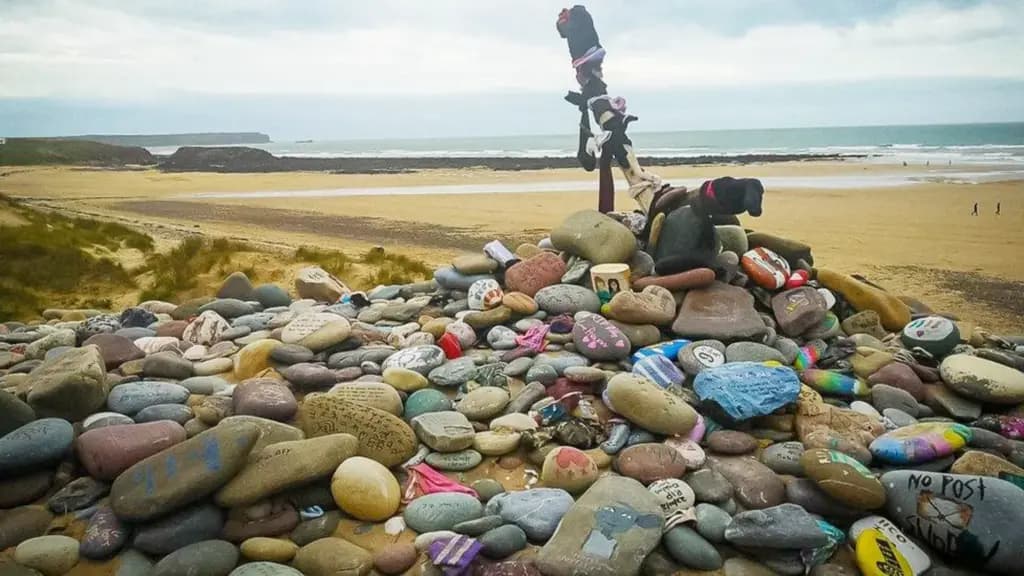
The spot in question was Freshwater West beach in Pembrokeshire, where the death of Dobby was filmed for Harry Potter and the Deathly Hallows, and where fans have since built a memorial.
Ludlam staid: "we got hundreds of calls, I mean hundreds of calls. My colleague said the cable was going straight through Dobby’s grave.
"I said, ‘Dobby, who’s Dobby?’ He’s a fictitious character in a fictitious book. The whole thing is fictitious."
The trouble started, Ludlam explained, after he pointed out where the cable would run underground during a BBC News interview.
Almost immediately, his office was inundated. What began as a handful of queries quickly snowballed into a co-ordinated campaign from fans.
They were determined to protect a spot that has become a place of pilgrimage, dotted with painted stones, socks and handwritten notes left in tribute to the character.
Ludlam admits he initially dismissed the fuss, but soon realised the concerns were, in his words, “very, very serious.”
As RTÉ News reported, engineers went back to the planners to work out exactly how to move the cable so it would not go anywhere near the memorial, a rare instance of pop-culture sentiment overriding an engineering blueprint.
Greenlink runs from EirGrid’s Great Island substation in Co Wexford to a UK National Grid substation in Pembrokeshire.
Spanning roughly 160km beneath the Irish Sea, with about 25km underground in Ireland and 5km underground in Wales.
According to The Journal, the interconnector was completed in February 2025 and now forms part of the growing web of connections meant to keep Irish lights on and prices stable.
For Ireland, links like Greenlink are about far more than novelty.
As an island on the western edge of Europe, the country has long been vulnerable to supply crunches and price spikes.
The 500-megawatt connection gives the grid a two-way valve: drawing in British electricity when demand is high, and selling on surplus wind power when Irish turbines are spinning faster than the country can use.
It is exactly the kind of infrastructure Ireland is leaning on as it chases its renewable-energy targets.
It is a curious footnote to a serious project: a piece of critical Irish infrastructure, worth half a billion euro, nudged off course by a painted stone and a legion of Harry Potter fans.
The final route swerves the memorial entirely, and everyone, planners, landowners and grieving film buffs alike, appears satisfied.
Dobby, it turns out, still has friends. And they have the National Grid’s phone number.
Explore more on these topics:

Business

Business
Business
Business
Killer on the run captured in Donegal caravan
Gary Anderson absconded when he was releasaed for his father’s funeral. A killer on the run from prison was found at Lough Swilly Marina in the village of Fahan, just outside Buncrana, shortly before 2pm on Wednesday. He brought into a Special sitting of Letterkenny Court yesterday to organise his transfer to prison in the […]
Business
2h
WATCH: Minister says Conor McGregor accuser Nikita Hand has “done the state some service”
Nikita Hand, a mother of two from Drimnagh, published a book, “Not the Perfect Victim” this week. Finance Minister Jack Chambers said Nikita Hand “has done the state some service in her in her wider leadership over the last number of months”, in her advocation for victims of sexual abuse. He added that she had […]
Business
5h
Business
71% of primary schools ran a deficit last year — now they want the school capitation rate hiked by €50
Business