




News

Share
Published 14:36 25 Aug 2026 BST
Updated 16:14 25 Aug 2026 BST
“I finally found I can be myself; I don't feel I'm a stranger anymore”, says
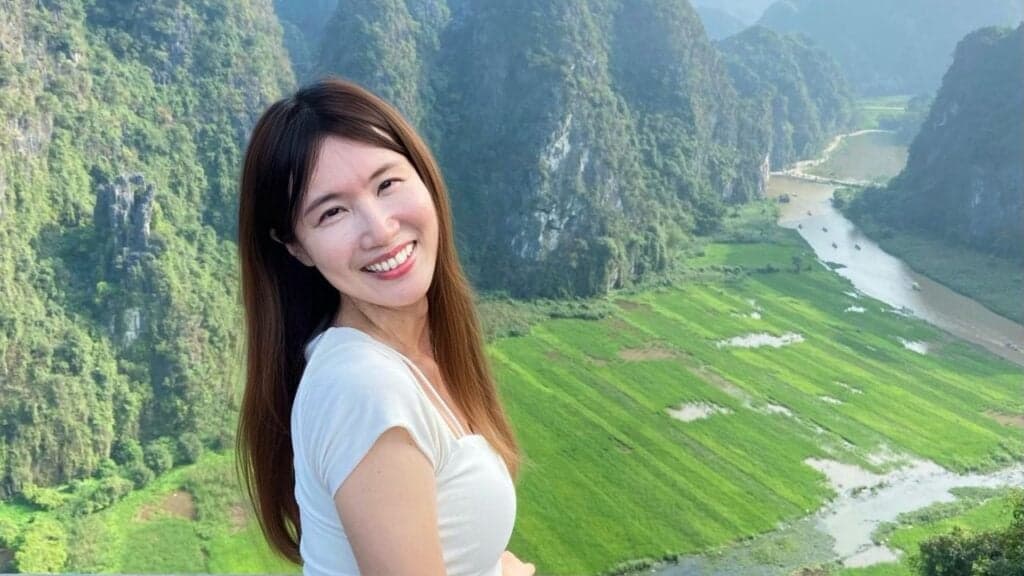
MiaoYu Tseng about Dublin. She’s been in Ireland for three months, and so far she’s been experiencing both many amazing and hard things.
“One thing I really love about it is that, in my country, society tends to follow just one standard. You’re expected to go to the best school, get a good job, get married, and build a family. We only chase the one goal standard. If you don’t achieve those things, you’re seen as a loser. But here, I feel like everything is more open. It’s okay to be yourself, and I feel so free. I feel more relaxed and more comfortable.”
In her home country, Taiwan, she worked as a pharmacist. Here in Dublin, she is a waitress and goes to the English academy.
Like MiaoYu Tseng, many migrants in Dublin feel that the city has awakened a side of them they didn’t know existed, and has even helped them bring certain skills to the fore.
To what extent can a city change our potential? Could it be that many of us are not, in fact, incapable of achieving our goals, but simply not in the right place?
“We, as human beings, are not static beings who remain the same from birth to death,” explains Cristina Solleiro, a social psychologist.
“We are influenced by our environment, by the people we interact with, by culture, and so on. That is what shapes us. These stimuli, both direct—such as something you learn or study voluntarily— and indirect—information you might pick up from your surroundings without realising it—shape how you communicate, what interests you, what you like or dislike… Simply by existing in a new environment, we are affected and shaped by it.”
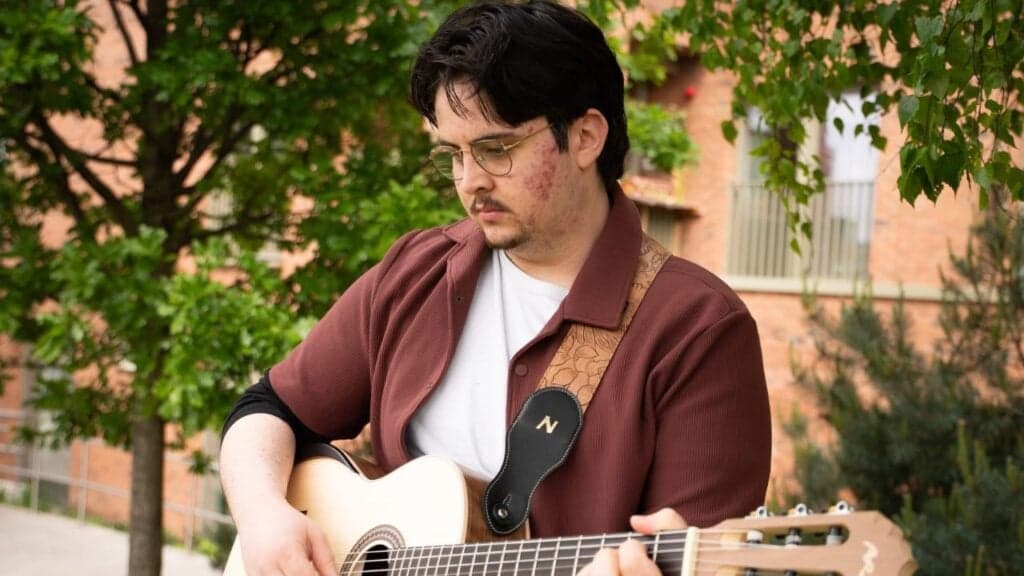
“I think Ireland attracts people who are interested in a certain kind of down-to-earth folksy art scene. Not just in terms of music; there's a lot of other art happening in Dublin. A lot of cinema, a lot of theater, a lot of art in general. That's really nice”, says Leo Gautreau, who came to Dublin to “make music”.
“I come from a small town in France, and my dream since I was a kid has been to be a musician and songwriter.”
Cristina explains how our environment ‘makes us more capable’. However, to a certain extent, we must already possess these abilities innately. This is known as nature versus nurture.
On the one hand, nature refers to the genes and abilities we are born with. In other words, a predisposition to be a certain way. On the other hand, nurture refers to the whole range of stimuli around us that affect us and which, as a result, enhance and alter those genes and abilities.
“If I go into an environment that stimulates me, that thing that was already inside me will be enhanced. If I don’t have those environmental stimuli, obviously it won’t be enhanced as much,” continues Cristina. “It’s a combination.”
Some people came to Dublin knowing that the city would help them achieve their goals or develop traits they wanted to maximise.
But many of them have also discovered skills they didn’t know they had.
“I never thought I was any good at learning languages. Back in Argentina, I don’t think I’d speak any other language,” explains Santino Cabral, from Villa Regina, a small town in Argentina.
Santino emigrated to Italy at the age of 19, then moved to Dublin, where he has now been for almost two years. He now speaks Spanish, Italian and English.
“It may also be that you weren’t aware that this side of you existed, but it did,” says Cristina. “Often there are things we perceive unconsciously, which we later give a conscious reasoning.”
Some people have even discovered new tastes and radically changed their views on long-held beliefs.
“I actually have discovered that I am an animal person”, shares Emmanuel Omisakin, from South Africa.
Despite not specifically choosing Dublin, he was looking for career opportunities and the city happened to give him the chance to develop more professionally. So when he was taken on board by the utility company he works for, he decided to give it a go.
“If you talk to any African person, it’s very common for a lot of us to be wary around animals. For me, my backstory and because of the racial divide and the history there, there are certain demographics of people whose pets seem to be more aggressive towards another demographic group.”
“We grew up not having pets because of socioeconomic issues, while other people would have them growing up. So you’d have this image of, ‘Okay, animals are very dangerous.’ I was quite worried about them, but coming here, I actually embraced the idea of, ‘Oh, let me pet a dog.’ It was something I’d been very apprehensive about in the past. I became more of a dog person, let’s say.”
“If you feel that your environment is holding you back in any way and you move to an environment that doesn’t, you’ll be able to explore that side of yourself that was previously being held back,” explains Cristina.
“When you’re in your environment – and, in fact, especially within your family – you create an identity and a sense of belonging. We develop this idea of the self—of who I am—our self-concept. And that is also heavily influenced by what others believe us to be.”
“You are assigned this role or this idea. [...] If you step outside that mould, it isn’t accepted. Because it’s human nature to want to categorise things and want things to stay as they are, because it’s a way of saving energy.”
“We need that confidence that we have things under control, and part of that control is assigning roles and categorising people [...].”
“You’ve got your little backpack of labels, but you’ve also got a few curiosities. Things you don’t know, that perhaps you’d tried to explore.”
When someone arrives in a new environment, not yet having a group that categorises them, they allow themselves – both indirectly and intentionally – to explore different aspects of themselves.
Trying new things, taking up new hobbies, developing different skills… In short, adapting to other ways of being.
“I’m a very outgoing person. I like physical touch and kissing my friends, but in my country, that can sometimes be seen as offensive. Here, I’m surrounded by a lot of Latino friends, and I really like that. I feel more relaxed and confident. I can wear clothes that I wouldn’t have dared to wear in my country, because here I feel like no one judges you. Everyone dresses very casually”, adds MiaoYu Tseng.
When Ángela Pérez arrived in Spain from Colombia, she felt she didn’t quite fit in. Her outgoing personality wasn’t always accepted.
She also talks about a sense of frustration with the language. “For me, it’s not that Madrid is any worse — my experience there has been fantastic, don’t get me wrong — but there is precisely that friction with the language. It’s like having to translate my Colombian Spanish, my accent, into what I’m actually saying to you when you have a different Spanish accent.”
“In English, on the other hand, whatever Spanish you speak, when you translate it into English, ‘me’ is ‘me’, ‘you’ is ‘you’. There’s no such thing as ‘vosotros’ or ‘ustedes’.”
Ever since she was little, Ángela has been the sort of person who always signed up for everything. Dancing, painting, singing… She has always loved outdoor activities and nature.
Dublin has allowed her to set up the Social Latin Run Club, a community that brings together different Latin cultures and welcomes anyone of any nationality who wants to experience a cultural exchange through sport.
Once the honeymoon period is over – when everything about arriving in a new city is exciting – the setbacks and obstacles that aren’t quite so pleasant start to appear. Some cultural clashes hold us back.
The reality of having left another life behind hits you like a reality check
Just like any other city, Dublin can also make you feel small.
“I think the weather can make you less sociable and more withdrawn without you realising it, simply because there are so many things you can’t do because it’s raining, windy or cold,” reflects Santino.
“It’s also a major culture shock. There’s a huge contrast in the people and their social norms.”
At certain times, when you feel already adapted to your new life, but it lacks aspects of your past, you feel that you belong to many places, but none completely.
There are routines, habits, dynamics and ways of relating to others that you have stopped practising, and perhaps these make you feel that you will never quite belong 100% in this new place. But it’s been so long that you don’t fully belong to your home country either.
“Trying to force ourselves into a mould and telling ourselves, ‘I belong here’, can be more harmful than simply accepting that we’re made up of different parts, and that those parts may also be connected to different places and different cultures,” says Cristina, reflecting on this sense of emptiness.
“You don’t have to belong to just one place. Perhaps a part of you—the part that’s more childlike, more playful—belongs to one country. Then there’s a part of you that’s more adventurous, which you associate with another place.”
When it comes to moving abroad, despite the flexibility one is prepared to embrace, there are certain essentials we look for. Everyone has a couple of basic needs which, wherever they go, give them the stability they need to carry on.
Emmanuel was looking for a “social scene, Christian churches, sports clubs and outdoor activities.” He feels Dublin ticked all those boxes.
For Leo, it’s having a secure roof over his head. “I didn’t really think about it that much back home. I was just in a normal flat, and I didn’t have to worry about losing it.”
But for Ángela, on the other hand, it’s not so much the city itself that matters, but the people around her.
In many cases, we go in search of what we feel we’re missing, what we may lack.
“We are social beings. Social support and a sense of belonging are fundamental and necessary for survival. They also bring opportunities. If, for example, I have a certain interest in art, I’ll gradually start to pursue that interest. That interest will attract people who share it, and those people will likely bring opportunities related to that interest.”
And so, little by little, one redirects one’s path.
Some would choose Dublin as their destination again. Others would not. However, none of them regret their past decisions. Because they are part of who they are.
“Your story has been shaped by all the groups you’ve belonged to and by all the places and cultures that have shaped you. You are made up of little pieces of those experiences and routines,” explains Cristina
Moving to the Irish capital has provided them with countless lessons – exactly what they needed at that particular moment.
Each of them has their own piece of advice.
“Save for the accommodation and travel as much as you can”.
“Look for a place before coming. And go to more pubs”.
“Patience”.
So far, Leo has been around the whole open mic and music scene circuit, and he has met many musicians. “I've managed to record a bunch of songs already and release them and work with a distribution company.” He shares his music on many platforms, including Spotify.

News
News

News

News
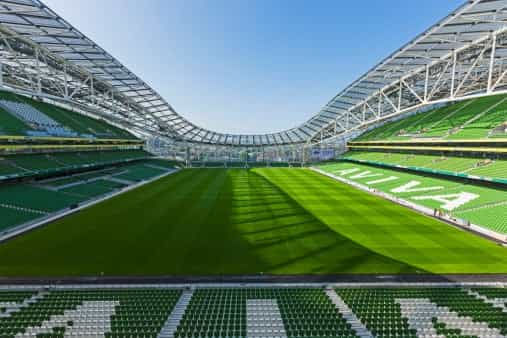
First images revealed of the new Dublin Arena planned for Cherrywood
A first in Dublin’s winter sporting books The company behind the Sphere in Las Vegas, Yankee Stadium in New York and the Aviva Stadium has released the first computer-generated images of a new Dublin arena planned for Cherrywood in the south of the city. The venue, to be called the Prime Arena, is intended as […]
News
7 min
Budget 2027 will be far bigger than announced, fiscal watchdog warns
Why the watchdog is worried about Budget 2027 The Irish Fiscal Advisory Council has warned that the real size of Budget 2027 will be far larger than the figure the Government announces on 6 October. They are worried that an oversized package risks pushing inflation and household costs higher. The watchdog set out its position […]
News
55 min
News
AI is likely behind Ireland’s youth employment slowdown, report finds
News