




News

Share
Published 15:37 22 Apr 2026 BST
Updated 15:37 22 Apr 2026 BST
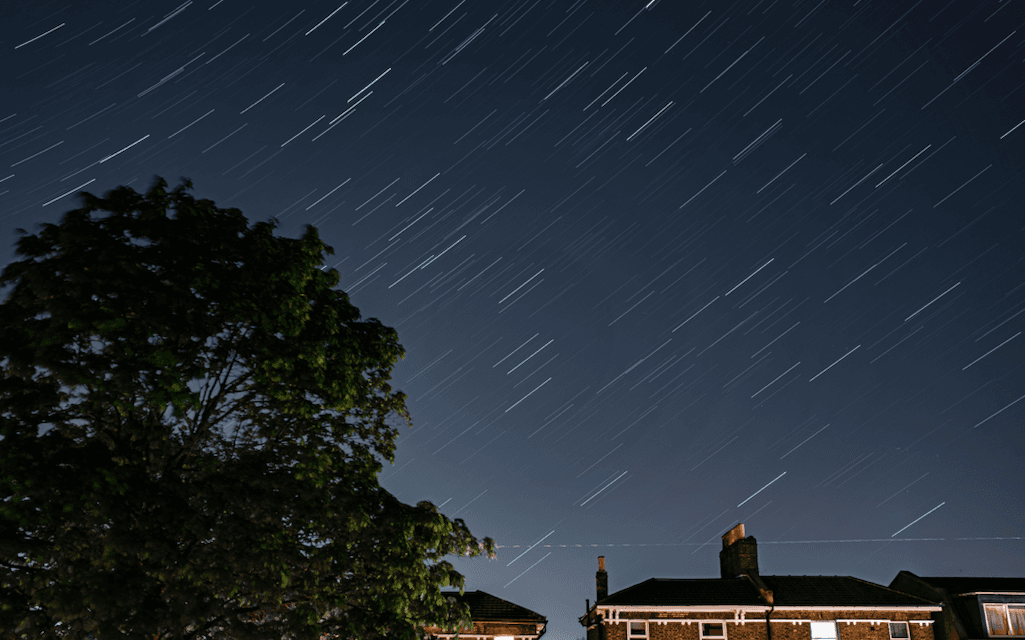
Stargazers and others who are curious have a good chance of seeing the Lyrid meteor shower over the coming nights, with good views promised by lots of clear skies.
The peak of the shower is expected on Wednesday night, 22 April, while it has been ongoing since the 16th this month.
Across the UK and Ireland you can see around 10 to 15 meteors an hour, while up to 100 an hour can be brought up by surges of activity.
The meteor shower is an annual event as a result of the Earth passing through dust left behind Comet Thatcher.
There is little cloud in the forecast as there is high pressure dominating the weather over the coming days, meaning it’s ideal conditions.
The Lyrid meteor shower reaches maximum on 22 April and being two days before the First Quarter Moon, the Moon won't cause too much light pollution, the Royal Museums Greenwich said.
As a lot of clear skies expected the next day, the good viewing conditions will continue on Thursday night too.
However, there will be a bit more cloud moving in across eastern Scotland and the eastern side of England, during hours of early Friday morning.
What time is best to see the meteor shower?
The ideal time to see the meteors perhaps will be after 22:00 BST, once it gets properly dark.
You should also try and move away from streetlights or other light pollution.
It might also be best to look to the east or south-east away from the Moon for a darker sky, as there will still be a crescent Moon lighting up the north-western night sky.
For a totally dark sky, where you should be able to see streaks of light mostly anywhere, you could wait until after 02:00 BST for the Moon to set below the horizon.
The good news is that you don’t need binoculars or a telescope, as the streaks of light from the meteors will be seen with the naked eye.
For the first time, the Lyrid meteor shower was first recorded almost 3,000 years ago by Chinese astronomers.
The showers were named after the constellation of Lyra from where the meteors appear to originate.
It occurs every year from 16 to 25 April, but often peaking around 22 April.
Explore more on these topics:

News
News

News
News
Homes evacuated after ‘pipe bomb’ explosion in Belfast
Police have asked the public to avoid the area A number of homes have been evacuated after an explosion at a property in north Belfast. The incident is reported to have happened in the Stanhope Street area of the city. It is believed that a pipe bomb exploded at a property in the neighbourhood. The […]
News
13h
Man arrested over Waterford arson recently released from prison
Two people, a man and a woman, who were arrested yesterday (Thursday) after an arson attack in Waterford remain in custody this morning. They are considered low-level criminals. The man, aged in his twenties, was recently released from a prison sentence for burglary. Gardai are investigating whether the female suspect used her own car in […]
News
15h
News
Mortgage protection insurance law ends cancer diagnosis barrier
News