









News

Share
Published 10:18 11 May 2026 BST
Updated 10:47 11 May 2026 BST
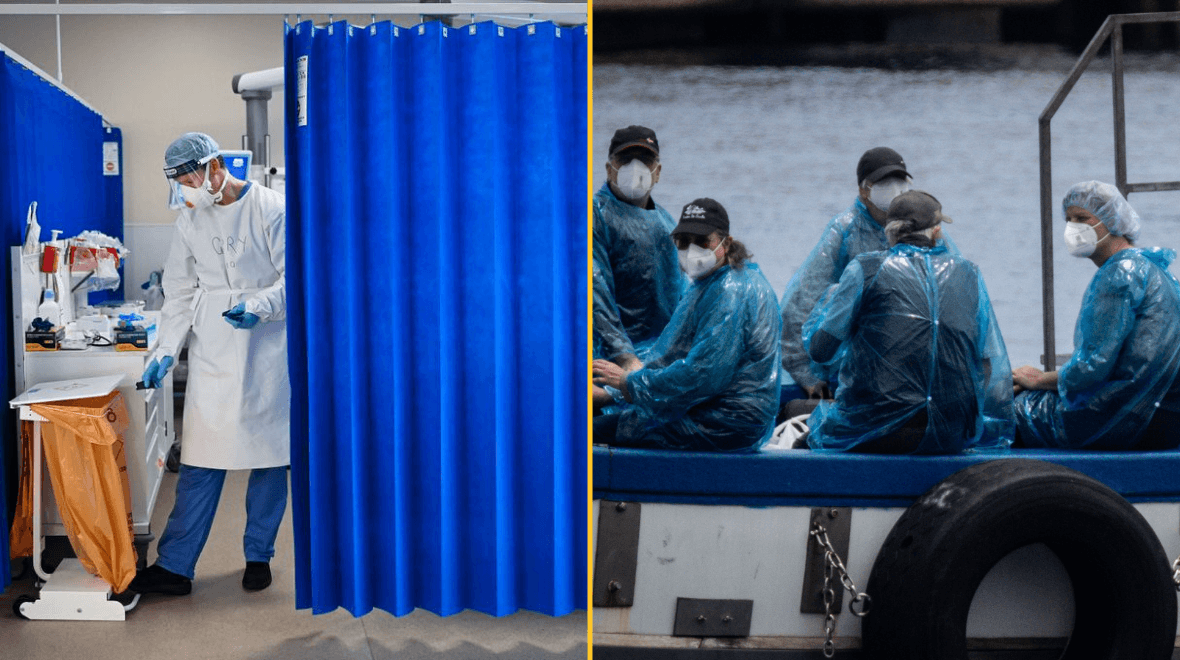
The two Irish passengers who were on board the hantavrius-hit MV Hondius cruise ship have begun quarantining at a HSE-run facility in Ireland.
They were flown home yesterday via government jet from Tenerife.
The two Irish passengers were among nearly 150 people on board the ship and will quarantine for five weeks.
Speaking to RTÉ’s Morning Ireland, Interim Chief Medical Officer, Professor Mary Horgan, reassured that the pair are not showing any symptoms of the virus.
“They’re in good spirits, they’re in good health,” she said, continuing to say that she wouldn’t share more detail in respect of their privacy.
May 6 marked day zero of their quarantine, and per the instructions of the HSE and the government, they must remain isolated for 42 days/five weeks from this date.
Additionally, Horgan told RTÉ that they will be offering the passengers mental health support during this time.
The Hantavirus outbreak happened on the MV Hondius cruise ship, as it was travelling between Argentina and Cape Verde, resulting in the death of three passengers, a Dutch husband and wife and a German woman.
The cruise ship departed about three weeks ago with around 150 passengers and stopped in Antarctica and other locations on its way to Cape Verde.
Spain's health minister confirmed that the cruise ship is expected to dock in the Canary Islands over the coming days, with those still on board believed not to be presenting any symptoms of the virus.
Department of Health said it is at least expected that the Irish passengers will quarantine for a period of time, following European Centre for Disease Prevention and Control guidance. They are also expected to be actively monitored during this time.
Regarding where the quarantine will take place is set to be decided on a case-by-case basis.
Furthermore, the department confirmed it is closely monitoring developments with EU colleagues, the HSE and the Department of Foreign Affairs and Trade.
Public health protocols will be followed once the ship has docked, including health checks, assessments, and possibly including further testing.
The rodent-borne virus known as hantavirus can either mostly affect the lungs or kidneys, and there are no specific drugs to treat it.
Treatment for hantavirus focuses on supportive care, while in severe cases, it includes putting patients on ventilators.
According to the Centers for Disease Control and Prevention, hantavirus is spread mainly by rodents, not from person-to-person.
People get hantavirus from contact with rodents like rats and mice, especially when exposed to their urine, droppings, and saliva.
It can also spread through a bite or scratch by a rodent, but this is rare, according to CDC.
While around 150,000 cases of the disease are reported each year worldwide, only "very few cases of hantavirus infection have been confirmed in the United Kingdom" as per the government website.
Cases tend to be most concentrated in China, Russia, Scandinavia and the US.
Hantavirus can cause two serious infections in humans:
Early symptoms:
About half of all HPS patients also experience:
Symptoms include coughing and shortness of breath. Patients might experience tightness in the chest, as the lungs fill with fluid.
Thirty-eight percent of people who develop respiratory symptoms may die from the disease.
People may have flushing of the face, inflammation or redness of the eyes, or a rash. Later symptoms can include:
The survival rate of HFRS can vary depending on the virus causing the infection.
Less than 1% die from the Saaremaa, and Puumala viruses which are found in Scandinavia and western Europe, while the Hantaan (Asia) and Dobrava (Balkans) have a 5-15% fatality rate.
The Seoul virus is worldwide and also has a less than 1% fatality rate.
There is currently no specific treatment for a hantavirus infection with the best course of care being to support the patient with rest, hydration and treatment for other symptoms as per the CDC.
This can be support for breathing difficulties such as intubation, a procedure where a tube is placed in the lungs from the mouth.
Some patients with HFRS may need dialysis to treat kidney disruption.
Explore more on these topics:


News

News

News

News
TDs to hear from Build Your Own Home presenter how to halve the cost of self-build homes
“The problem is that too few people can afford them or know how to use them.” Build Your Own Home presenter Harrison Gardner will tell TDs how to cut the cost of self-build homes. The sustainable construction worker will present ways to make self-building a more affordable option to the Oireachtas Housing Committee later today, Tuesday, […]
News
14h
Two Monkstown teens in horror crash have had amputations
Two of the six victims of a crash in Monkstown on Sunday have had limbs amputated. Two of the teens suffered serious injuries to their limbs forcing medics to amputate, one of whom is in a critical condition. The group of teenagers are aged between 13 and 15 and were injured when a Nissan X-Trail […]
News
14h

News
Ireland set for biting cold snap as temperatures plunge to -2C this week
News