









News

Share
Published 11:48 3 Sept 2026 BST
Updated 10:24 4 Sept 2026 BST

New regulations governing e-scooter use will come into force tomorrow, following approval from Minister for Transport Darragh O'Brien and Minister of State Seán Canney.
The changes come as part of the Government's response to a rise in serious injuries and fatalities involving e-scooter users, especially children.
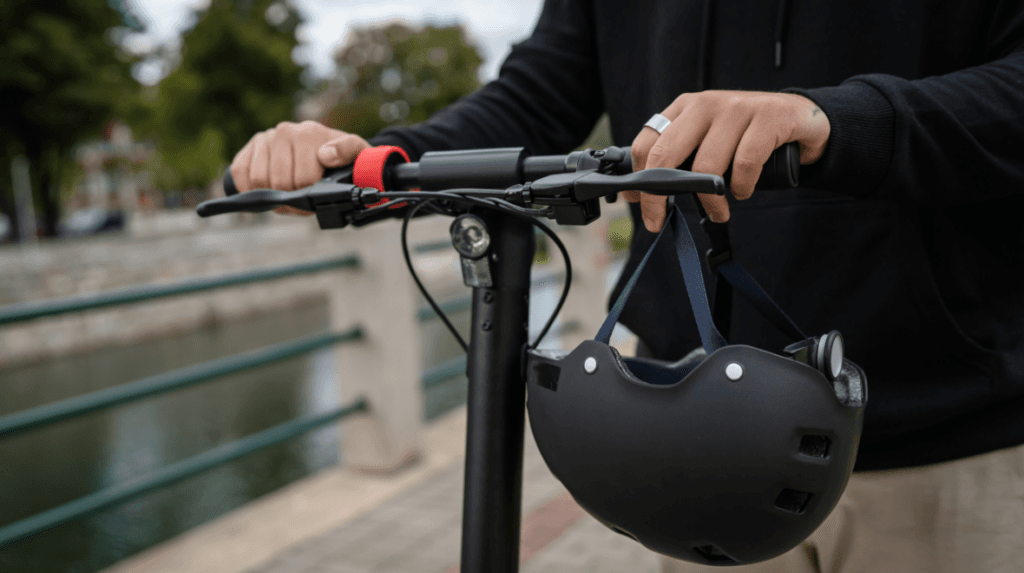
From tomorrow, Friday, September 4 riders will be legally required to wear a helmet and high-visibility clothing while using an e-scooter.
There will also be a hike in the cost of storing seized e-scooters, with the fee doubling to €80 from early October.
A further €30 daily storage charge will also apply.
Additionally, the coming weeks will see a €100 fine being introduced for e-scooter offences such as not wearing a helmet.
One of the biggest changes may come later, as Minister Canney confirmed that the Government is looking to increase the minimum age for riding an e-scooter from 16 to 18.
However, this change is still awaiting approval from the European Commission, with Canney expecting the process to take "a couple of months."
The measure was submitted to the European Commission following advice from the Attorney General's office, and is part now of a process known as the EU Technical Regulation Information System.
It can take up to 12 weeks to complete the process with the Government's aim being to have the age limit regulations set before the end of 2026.
Speaking on the enforcement of the new regulations, which he is confident will work, Minister Canney said everyone going on an e-scooter holds a responsibility.
"Their parents will also need need to know. And if somebody's buying an e-scooter for their child, it will be the owner of these scooters with the person that will actually be prosecuted.
"What we're doing is bringing in legislation that will give clarity, so you can actually physically see that somebody's not wearing a high-vis vest or a helmet. You can say stop."
The Minister also revealed that his Department is consulting with the Attorney General on whether e-scooter users could be required to have insurance.
He stated: "We want to make sure whatever we do is effective, will work, is enforceable, and the people who are breaking the law will understand and suffer the consequences."
However, Garda Representative Association president Detective Garda Niall Hodgins warned that enforcement of the new rules is likely to be "weak".
He said on RTÉ's Morning Ireland that the lack of registration for e-scooters creates a "major enforcement gap", particularly when riders refuse to stop, ride on footpaths or leave the scene of an incident.
Hodgins also said Gardaí are not trained to intervene when riders fail to comply, adding that enforcing the rules comes at "a serious cost" due to the time and resources required.
While medical professionals welcomes the changes, Dr John Legge, consultant in Emergency Medicine at St Vincent's University Hospital, said the legislation they have demanded has been 'rushed through'.
Speaking to RTÉ's Morning Ireland, he said: "It's all well and good to give the impression that we're taking this issue seriously. We're demanding new legislation, and it's been rushed through.
"That's fine, but how is it going to be enforced? So without enforcement, you're not going to see a significant change."
Dr Legge continued to highlight that age enforcement will be as challenge as it is difficult to differentiate between a 16-year-old and an 18-year-old.
He added that there are two types of e-scooter users, recreational users who may use them improperly, and those who rely on them for transport.
Explore more on these topics:


News

News

News

News
Solicitors legal aid row escalates ahead of Monday walkout
Criminal defence walkout set to affect cases across Ireland Criminal cases across Ireland could face further disruption from Monday, with more than 100 solicitors preparing to step away from defence work amid an unresolved row over legal aid payments. The solicitors have written to the presidents of the District, Circuit and High Courts to notify […]
News
2 days ago
Homes evacuated after ‘pipe bomb’ explosion in Belfast
Police have asked the public to avoid the area A number of homes have been evacuated after an explosion at a property in north Belfast. The incident is reported to have happened in the Stanhope Street area of the city. It is believed that a pipe bomb exploded at a property in the neighbourhood. The […]
News
2 days ago

News
Trump’s new press secretary gives bizarre answer when asked if she’s a qualified lawyer
News