







News

Share
Published 12:02 30 Apr 2026 BST
Updated 12:02 30 Apr 2026 BST
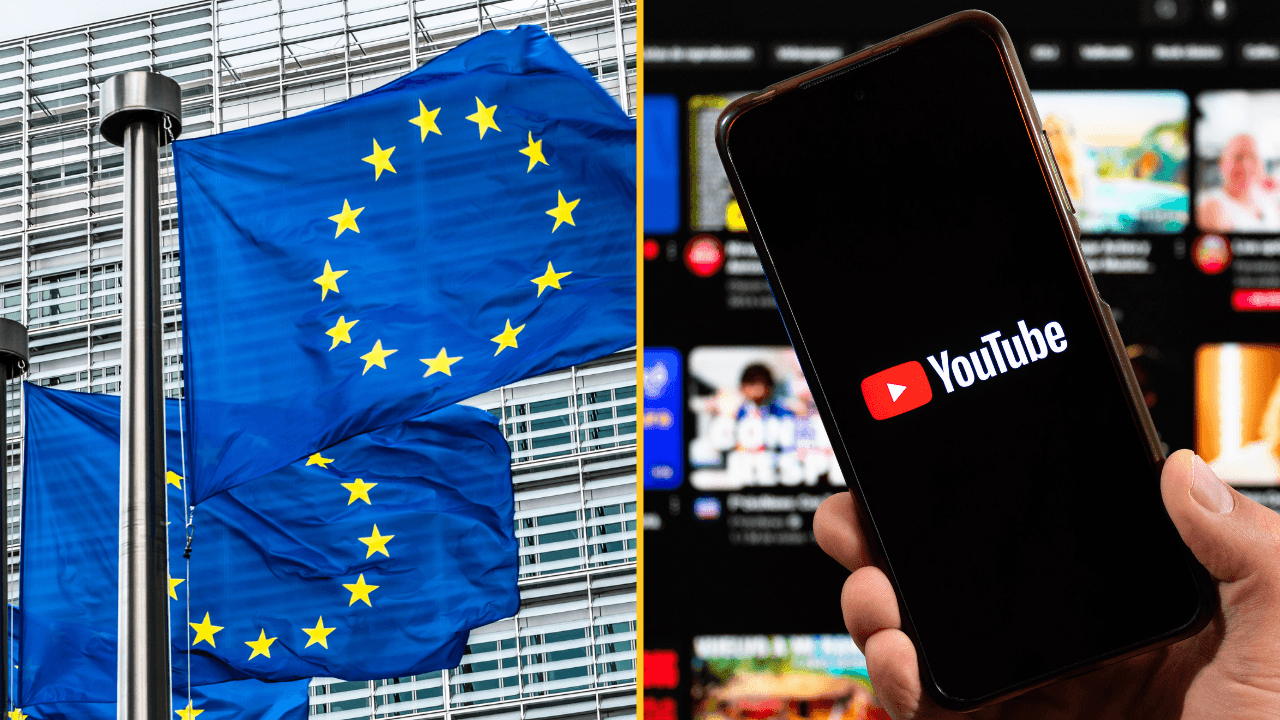
The EU is trying to decide what news you see, and it could have serious ramifications for the independent news source.
The rise of YouTube is one of the greatest success stories of the modern internet age; a video sharing platform created in 2005 by three guys whose first video upload was a trip around a zoo.
Fast forward 21 years and the platform is getting billions of hits per day, overtaking the traditional broadcast industry and creating its own ecosystem within it.
While video killed the radio star, the internet killed the TV star.
And that's important, because the independence of YouTube creators is what makes it a special example of the fifth estate (citizen journalism) in a world of political bias, covert advertising and brand perception.
However, after spending years laughing at internet video, the major legacy broadcasters, and governments, are finally waking up to its potential and widespread influence.
In plain English, the EU, and the UK, are looking into the prominence rules around YouTube and how it promotes certain videos to certain audiences.
Currently, YouTube's prominence rules work on a basis of user experience. Effectively it measures user satisfaction.
If people watch a video for a long time, like it, and engage with it, it will likely be promoted by the algorithm.
This goes for most content platforms, and it is the core, juicy recipe for video virality and ultimately social media addiction - that's a whole topic for another day.
The European Commission's website presents the proposal as part of "commitments in the recently presented European Democracy Shield" initiative.
It states that the evaluation will look into updating the rules to ensure:
While the EU can front this evaluation as a protection of democracy, the very nature of such a change would be massively hypocritical.
A turn to favour legacy media over independent news creators and sources would be a form of state censorship on a scale unheard of in a supposed liberal EU.
Yes, of course these independent sources have less regulation and monitoring than large media organisations, but platforms like YouTube already make an effort to filter out the fake from the trustworthy; maybe they need to do more, but relegating them to an afterthought is not the solution.
The damage that would be caused to an industry which generated €7bn to the EU’s GDP in 2024 and supporting more than 200,000 full-time jobs, as per research by Oxford Economics, would be catastrophic.
Instead of looking to promote legacy media on YouTube over independent creators who have made the platform what it is, the EU and UK should be looking to support these independent news sources.
The fifth estate is a true pillar of democracy, one much stronger than regulation, and it should be supported for the weight it bears.
Rather than bowing to the media moguls, governments should be provided funding and services to support reliable news filtering on social media and video platform sites.
It is possible to do so with the resources and the funding, and if that's the cost for a diverse, engaging and independent news source which holds central power to account, then it is well worth the price.
Read the European Commission documents for yourself below:
Regular people have been able to make themselves celebrities off the back of YouTube and have gone on to impact societal culture in ways that nobody could have fathomed- just look at the Sidemen charity football match which raised millions for charity, and was viewed by millions more.

An ongoing consultation at the European Commission is currently looking into audiovisual media and the rules that "promote the competitiveness of European media companies and the cross-border circulation of media content, protect viewers and enhance cultural diversity and media pluralism, among other things."
The user satisfaction cycle and feedback loop of YouTube has led to it surpassing the BBC in the number of people consuming video on its respective media platform, as per Ofcom.

News

News
News

News
Man, 30s, arrested as teen killed in Kerry hit-and-run named locally
The teenager had just celebrated his 17th birthday. A man has been arrested after a teenager was killed in a County Kerry hit-and-run. The incident involving a van and a pedestrian occurred on the N69 near Dromin Upper, Listowel, on Saturday, September 26, around 3am. The van failed to remain at the scene. The male […]
News
15h
Ed Sheeran forced to cancel upcoming shows at Robert Kraft’s Gillette Stadium
It comes as the tour made headlines after removing Macklemore over pro-Palestine speech Ed Sheeran’s two shows at Robert Kraft’s Gillette Stadium in Massachusetts this weekend have been cancelled due to severe weather warnings. The singer had been due to perform at the home of the New England Patriots on Friday and Saturday as part […]
News
2 days ago
Killer on the run captured in Donegal caravan
News