







News

Share
Published 11:47 17 May 2026 BST
Updated 11:48 17 May 2026 BST
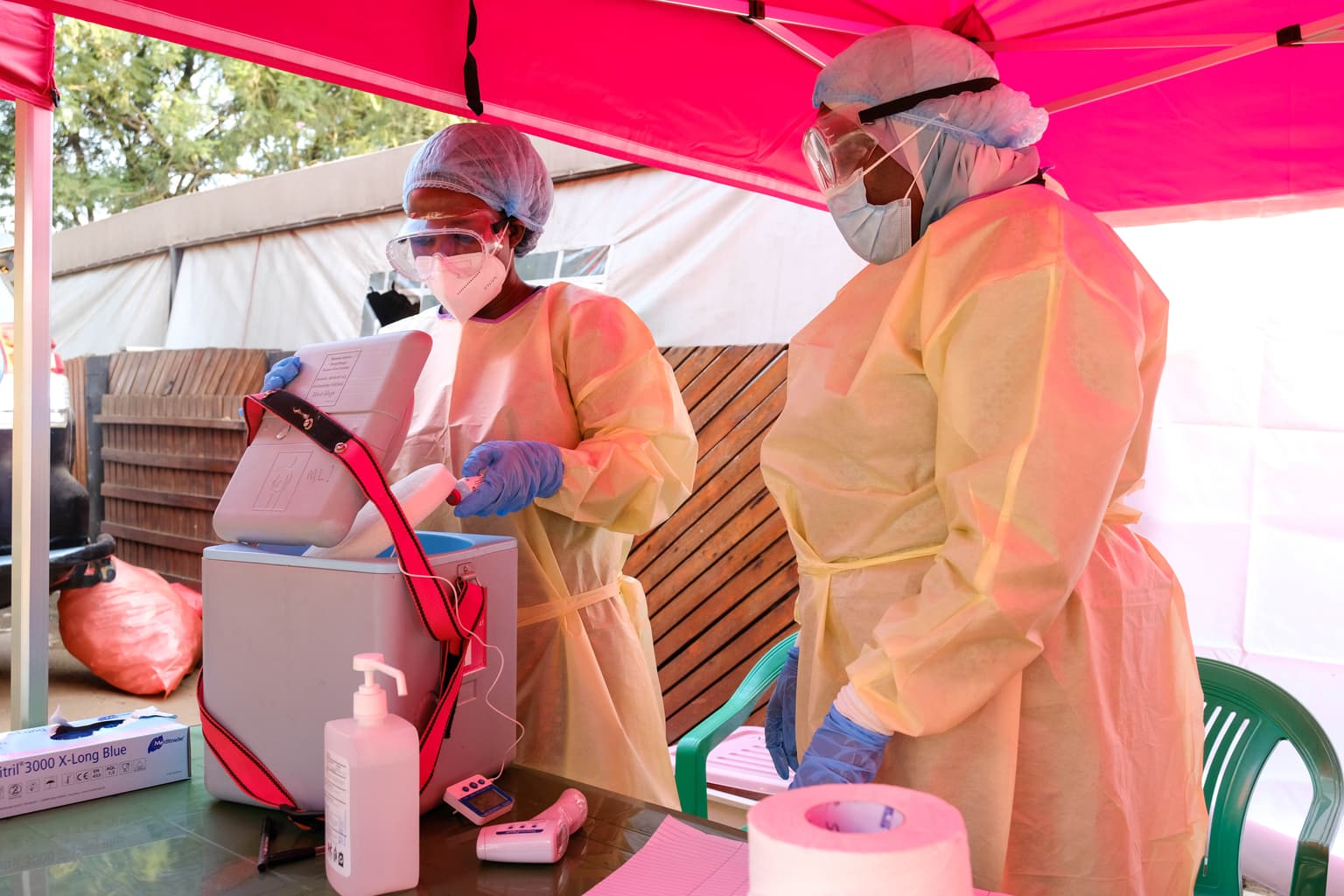
The World Health Organisation has declared the Ebola outbreak in the Democratic Republic of Congo and Uganda a 'public health emergency of international concern'.
Nearly 90 people have died and a rare strain of the virus spreading that has no approved vaccine or treatment, reports Sky News.
Director-General Tedros Adhanom Ghebreyesus made the announcement on Sunday, warning that countries bordering the DRC are at high risk of further spread.
The WHO stopped short of calling it a pandemic emergency.
This particular outbreak is being driven by the Bundibugyo strain of Ebola.
Unlike the more common Zaire strain, there are no licensed vaccines or therapeutics for Bundibugyo.
It has only been responsible for two outbreaks before now: one in Uganda in 2007 and one in the DRC in 2012.
As of Saturday, the DRC's remote Ituri province had recorded 80 suspected deaths, eight laboratory-confirmed cases and 246 suspected cases across three health zones in Bunia, Rwampara and Mongbwalu.
The Africa Centres for Disease Control and Prevention put the figures slightly higher by the weekend: 87 deaths, 336 suspected cases and 13 confirmed, with four deaths among the confirmed cases.
The WHO has warned the real scale could be far bigger than what's currently being detected, given how many of the initial samples are coming back positive and the steady rise in suspected cases.
Two laboratory-confirmed cases, including one death, were reported in Uganda's capital Kampala on Friday and Saturday. Both patients had recently travelled from the DRC, and Uganda's health ministry described the cases as 'imported'.
A third confirmed case turned up in Kinshasa, the DRC's capital, in a person who had returned from Ituri.
Africa CDC has flagged the proximity of the affected areas to Uganda and South Sudan as a major concern, and warned that there is already 'active community transmission' as health workers race to ramp up screening and contact tracing.
Ebola is a virus that can develop into a full-blown disease known as Ebola haemorrhagic fever or Ebola viral disease, which in serious cases leads to massive internal and external bleeding.
It is highly contagious and spreads through bodily fluids such as blood, vomit and semen, and can also be picked up from infected animals or during burial ceremonies where mourners come into contact with the dead.
Symptoms usually start with a rapid fever, intense weakness, muscle pain, headaches and a sore throat, before progressing to vomiting, diarrhoea, a rash, kidney and liver failure and bleeding.
In severe cases, the disease destroys connective tissue and attacks the skin and internal organs.
The incubation period, from infection to symptoms appearing, runs between two and 21 days. Average fatality rate is around 50%, but past outbreaks have varied between 25% and 90%.

News
News

News

News
Man, 30s, arrested as teen killed in Kerry hit-and-run named locally
The teenager had just celebrated his 17th birthday. A man has been arrested after a teenager was killed in a County Kerry hit-and-run. The incident involving a van and a pedestrian occurred on the N69 near Dromin Upper, Listowel, on Saturday, September 26, around 3am. The van failed to remain at the scene. The male […]
News
15h
Ed Sheeran forced to cancel upcoming shows at Robert Kraft’s Gillette Stadium
It comes as the tour made headlines after removing Macklemore over pro-Palestine speech Ed Sheeran’s two shows at Robert Kraft’s Gillette Stadium in Massachusetts this weekend have been cancelled due to severe weather warnings. The singer had been due to perform at the home of the New England Patriots on Friday and Saturday as part […]
News
2 days ago
Killer on the run captured in Donegal caravan
News