





Business

Share
Published 13:47 3 Oct 2026 BST
Updated 13:47 3 Oct 2026 BST

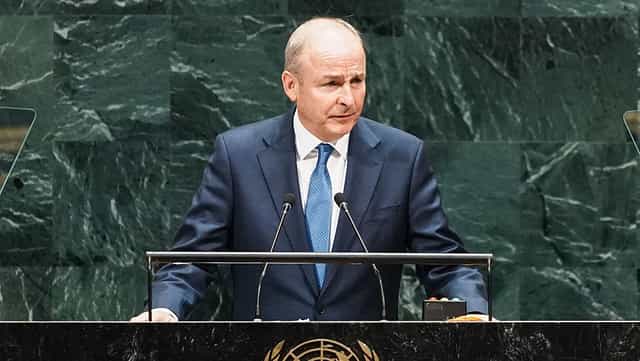
A Trump diesel ban threat prompted G7 leaders to release oil reserves on Friday, easing fears for Irish and European fuel prices amid Ireland's EU presidency role.
Ireland's EU presidency called an emergency meeting of ambassadors on Friday after Donald Trump threatened to ban US diesel exports.
The warning came unless France and Germany released some of their own fuel reserves, according to the Irish Mirror.
French president Emmanuel Macron responded by convening a virtual G7 summit within hours.
G7 leaders, which included Trump, agreed to release 100 million barrels of diesel from strategic reserves through the International Energy Agency.
A substantial share will be front-loaded within the first 20 days with the deal easing Trump's export ban plan, which was widely viewed as an attempt to boost his position before next month's US midterm elections.
Pump prices eased as a result, just as Budget 2027 talks over the fuel excise cut continue at home.
The scare adds to wider anxiety about living costs. A recent poll found 7 in 10 young adults considering leaving Ireland for a better quality of life.
The G7 bloc of major economies said it would coordinate the release through the IEA.
Officials confirmed the plan would run over four months, with the frontloaded diesel share arriving fastest. European Commission President Ursula von der Leyen welcomed the outcome.
She said: "We welcome the decision of G7 countries not to impose any export bans on allies and the continued solidarity between partners.
"We support an IEA-coordinated release of fuel stock."
Ireland imports only a small fraction of its diesel from the US. Recent figures put the share between 3% and 11%.
The UK is far more exposed, importing roughly a third of its diesel stock from American suppliers.
Experts had warned a ban could push UK pump prices toward £3 a litre. That would come just after prices only recently passed the £2 mark.
Explore more on these topics:

Business

Business
Business

Business
Multiple floors in National Children’s Hospital replaced three times due to “poor workmanship”
The development comes from documents given to the Public Accounts Committee (PAC). A number of operating theatre floors in the National Children’s Hospital have been replaced three times due to “poor workmanship and oversight of works” by Bam. There are currently 2,057 defects remaining within the hospital. The contractor has submitted more new claims for an additional […]
Business
2 days ago
The Taoiseach tells Trump’s favourite news station Ireland is “not overrun” with immigrants
Micheál Martin says system is “too slow” but pushes back on myths. The Taoiseach has rejected the notion that Ireland is “overrun” with immigrants, in a interview with Fox News. The Rupert Murdoch owned station is a strong supporter of the US President Donald Trump. Speaking to Fox News Digital, Martin said “I don’t believe murder […]
Business
2 days ago
Homelessness has risen 9% this year
Business