

News

Share
Published 21:10 6 Dec 2010 GMT
Updated 03:26 1 Jun 2013 BST

If you are not prepared to do what it takes to win, you shouldn't get involved in the first place, writes Ken Early.
The reaction of England 2018's chief executive Andy Anson to the decision to award the World Cups to Russia and Qatar recalled Oscar Wilde's comment about the death of Little Nell: "you would need to have a heart of stone not to laugh."
Having raged against the Panorama and Sunday Times investigations of FIFA ExCo members, describing Panorama as "an embarrassment to the BBC", Anson now realised that some of these men could not be trusted. They had looked into his eyes, he said, and lied to him. One of them had even put his arm around the shoulder of the Prince of Wales, and lied to him. Above the bleating could be heard the lonely choo-chooing of the last train pulling into the station.
Maybe one day Anson can explain how exactly he understands the term "deal-making" in the FIFA context
The England bid team looked as though they had failed to grasp the nature of the process in which they were participating. "Deal-making is the nature of the game", Anson said, "but there are limits... if there is corruption, that is illegal, unethical and immoral."
Maybe one day Anson can explain how exactly he understands the term "deal-making" in the FIFA context. England's bid was of course right not to try to cheat, but if you go into a street brawl looking to fight by the Queensberry rules, you are liable to take a kicking. If you are not prepared to do what it takes to win, you shouldn't get involved in the first place.
That is a cynical reading but with FIFA no other reading is possible. The proportion of ExCo members who have shown they are untrustworthy is simply too high. The Sunday Times ensured that two members couldn't even make it to the vote, so compelling was the evidence of wrongdoing against them. Panorama made credible allegations against four of the 22 remaining voters, Ricardo Teixeira of Brazil, Nicolas Leoz of Paraguay, Issa Hayatou of Cameroon and Jack Warner of Trinidad.
Corruption
Then there are the allegations against Teixeira in Brazil's Lance sports magazine, in which the 2014 World Cup chief is accused of manipulating the corporate structure of the World Cup organising committee with the aim of personal enrichment, and the allegations against the Argentine FA chief Julio Grondona in the Wall Street Journal, in which a former member of the Qatari bid team claimed that a recommendation was made to pay $78m to the Argentine FA to secure Grondona's vote for Qatar.
And these are only the allegations that have reached the public domain. The rational response is to look at the rest of the committee and wonder. Claudio Sulser, who chairs FIFA's ethics committee, recently complained that "when one talks of FIFA, there is generally a negative attitude out there, there is talk of corruption. This is rather curious but on the other hand it's no joke."
FIFA treat it as a joke though. When the Panorama allegations against Hayatou emerged, the International Olympic Committee, of which he is also a member, immediately announced they would conduct an inquiry into the affair. FIFA simply closed ranks.
They dismissed the bribery allegations on the basis that in Switzerland, where it all took place, commercial bribery was not a criminal offence until 2001, and these transactions all happened before then. The question of whether members of the sport's highest governing authority should siphon funds intended for the good of the game into their own pockets is therefore not addressed, and the result is that FIFA protects its elders at the expense of its reputation.
Putin's powers
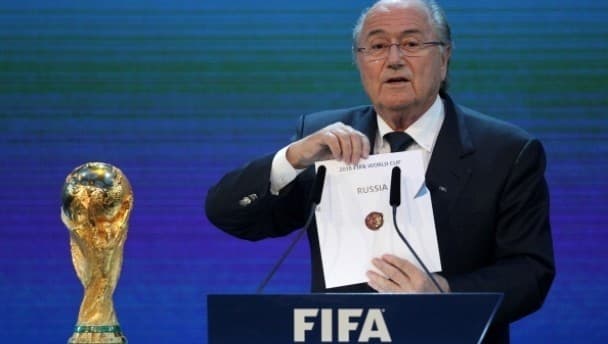
It was not a surprise that of the four 2018 bidders, Russia proved to have the keenest grasp of how to win over the ExCo. Vladimir Putin worked all his life in the security services and now sits at the apex of their intelligence-gathering pyramid; he evidently receives better information than David Cameron. Leaving aside Putin's powers of personal persuasion, the sheer scale of Russia's plans were bound to impress FIFA, who are susceptible to anything that flatters football's transformative powers.
Qatar 2022 will at least be original, because never before has an entire country been turned into a FIFA theme park
That is also the most generous interpretation of why they chose Qatar for 2022. The Qataris plan to spend between $50 billion and $70 billion on the World Cup. Even in the world's richest country by GDP per capita, that is a staggering commitment and it gives FIFA a very special feeling.
For travelling fans, Russia 2018 looks a more difficult, yet far more interesting prospect; as Putin told the press in Zurich: "Big country, great history, not bad, not bad at all". Qatar 2022 will at least be original, because never before has an entire country been turned into a FIFA theme park. Having visited several FIFA fanparks I can say this does not sound very appealing. Then again, by 2022 the phenomenon of hundreds of thousands of travelling fans might be as old-fashioned as smoking on television, as higher fuel prices drive up the cost of air travel.
There is certainly an appetite for FIFA reform in England, the United States and Australia, the three countries who felt most aggrieved at the way the voting turned out. But they are not hugely significant players within the FIFA structure. How could their anger translate into real pressure on the governing body?
FIFA has two weak spots. The lesser is that its major sponsors might one day be turned off by the stink of corruption. There is no sign of that happening. The greater is that the World Cup depends on the participation of players who are mostly contracted to European clubs. The clubs already resent having to support international football by lending their players out for free. They are the only ones with the power, as a united group, to challenge FIFA. Yet FIFA's enduring power rests on the fact that all over the world, people love international football. There is a risk that if the future was left up to the clubs, the cure would be worse than the disease.

News

News

News

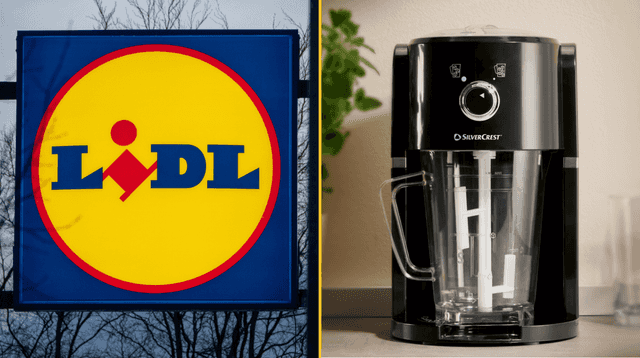
Lidl launches €20 slushy maker perfect for making frozen margaritas at home
The Ninja SLUSHi (Lidl’s version) Lidl has launched a €20 slushy maker, which is perfect for making frozen margaritas at home. And other stuff, we promise we don’t just think of the margaritas… A dupe for the Ninja SLUSHi Frozen Drink Maker, the product can be used to make an array of delicious drinks, from […]
News
1 year ago
We tested the students’ of Ireland’s driving knowledge – here’s how they got on
Brought to you by SuperValu Insurance Reckon you could pass our quiz? Have you heard? SuperValu Insurance provides car insurance to sound learner drivers, so to celebrate this offering, we thought it was only fitting to head out to campuses across the country, armed with a series of tricky quizzes. First up – True or […]
News
2 years ago
News


