









Advertorial

Share
Published 15:27 30 Sept 2025 BST
Updated 15:27 30 Sept 2025 BST

Brought to you by FraudSMART
According to new research from FraudSMART, the fraud awareness initiative led by Banking & Payments Federation Ireland, almost €9.4 million was laundered through money mules between June 2024 and June 2025. The amounts that moved through these accounts varied, but according to the figures, they typically range from €5,000 to €10,000.
Following the release of these figures, FraudSMART have launched the Don't be a Mule campaign to warn young people to spot the red flags of money muling. The campaign officially kicked off at the FraudSMART x Sole Mates Red Flag run on 21st September, which was attended by Israel Olatunde, Ireland's fastest man. The event's aim was to empower young people to spot the red flags of money muling.
A money mule is someone who receives stolen money or proceeds of crime into their bank account and transfers it to another account. They are often promised money or an expensive gift in exchange for the transfer. Anyone of any age may be recruited to be a money mule, but as FraudSMART's findings show, criminals are targeting young people in particular.
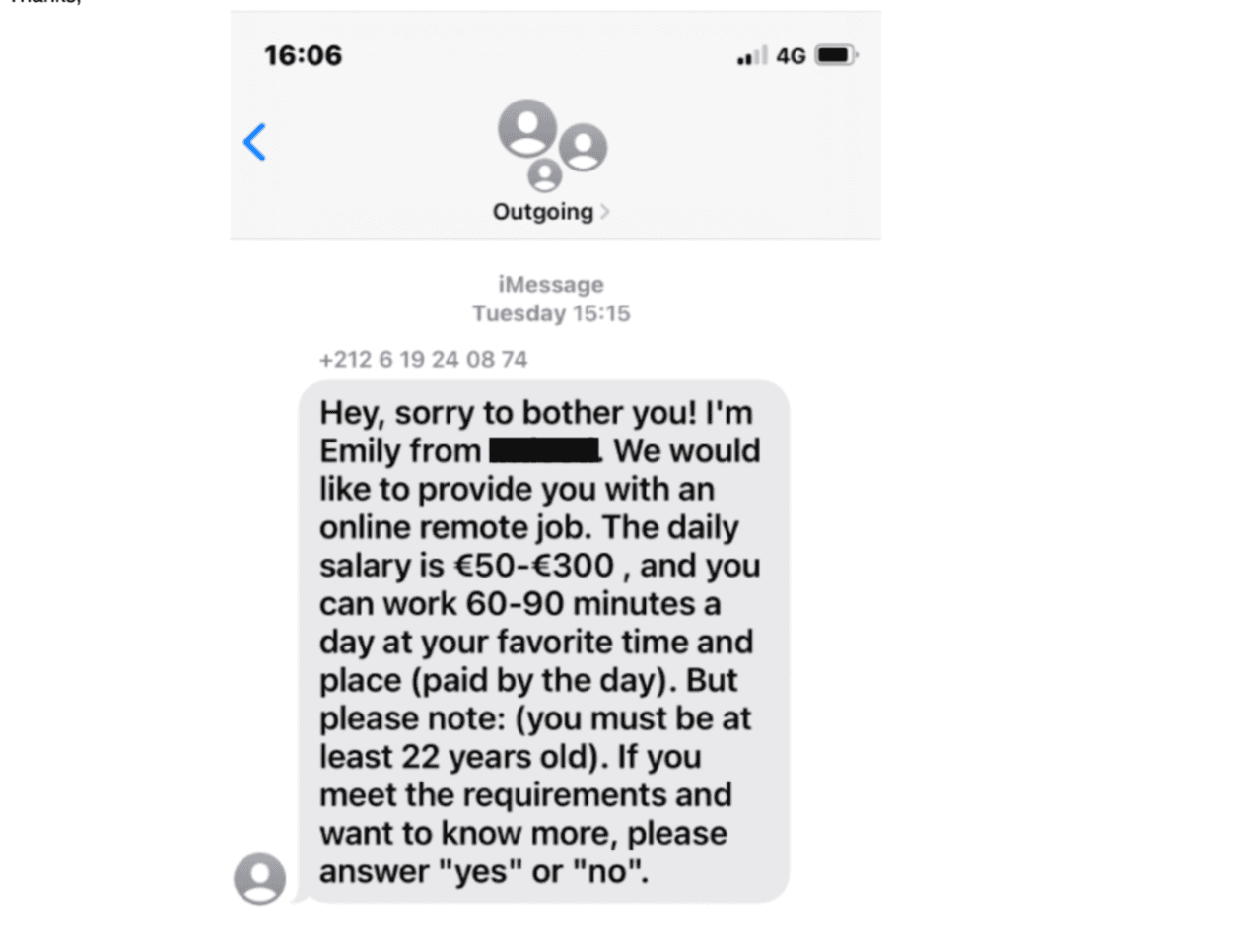
This is a screenshot of a text from a money muling scheme that is currently circulating:
- Be cautious of unsolicited emails or approaches promising opportunities to make easy money, especially on social media.
- Research any work-from-home job opportunities thoroughly. Do not get involved unless you're certain the business is legitimate.
- Be especially cautious of of offers from people oversees seeking "local/national representatives" or "agents" to act on a company's behalf.
- Do not accept any job offers that ask you to use your own bank account to transfer money.
- Never give your bank account details to anyone unless you know and trust them.
- Never allow your bank account to be used by anyone else.
- Never agree to open a new bank account in your own name to receive payments from a third party.
If you have been approached to act as a money mule or if you have been a victim of this type of crime, contact your local Garda station and inform your bank.
Almost a third of 18-24 year-olds have been approached or know someone who has been approached to use their bank account to transfer money. One in four 18-24 year-olds admitted that they would consider using their bank account to transfer money on behalf of someone else. Despite the prevalence of money muling, awareness is low. 47% of 18-24 year-olds said that they have never heard the term before, while 52% said they didn't understand what it means. 26% of this age-group were unaware that money muling could help fund criminal activity and 31% did not understand that they could face jail-time for money muling. 42% were unaware that money muling could affect their ability to travel internationally or secure work visas.


Advertorial


Advertorial

Advertorial
Advertorial
JOE Cinema Club: Join us for a free screening of A Quiet Place this Halloween with M&M’S
Brought to you by M&M’S We’re on hand to provide the spooks, the vibes, and of course, the M&M’S. There’s no better time of year to kick back and watch a horror flick, and no better way to enjoy it than in a packed-out cinema. This spooky season, we’re turning up the fear factor with […]
Advertorial
3 weeks ago
Doing some DIY? This service from Screwfix is a game-changer for last minute fixes
Brought to you by Screwfix Screwfix Sprint delivers products direct to your door in as little as 30 minutes, so you don’t have to leave your job. We’ve all been there. Working away on a DIY project, finally feeling like you’re getting somewhere, in a flow state, when you realise – you’re missing a screwdriver. […]
Advertorial
3 weeks ago

Advertorial
Bushmills gift guide for Father’s Day
Advertorial