


Fitness & Health

Share
Published 11:42 3 Sept 2015 BST

 It’s all a bit science-y but try and keep up.
Genetics specialist Petra Haak-Bloem told Vice: “The genes that determine hair colour are so-called ‘incomplete dominant hereditary traits.’ This means that there isn’t one single gene that’s dominant over the rest, but all genes influence each other.”
“More than a decade ago, researchers discovered that one gene (MC1R) on chromosome 16 plays an important part in giving people red hair. MC1R’s task is making a protein called melanocortin 1. That protein plays an important part in converting pheolmelanine (red pigment) into eumelanine (black pigement),” he added.
“When someone inherits two mutated versions of the MC1R-gene (one from each parent), less pheomelanine is converted into eumelanine. The feomelanine accumulates in the pigment cells and the person ends up with red hair and fair skin.”
It’s all a bit science-y but try and keep up.
Genetics specialist Petra Haak-Bloem told Vice: “The genes that determine hair colour are so-called ‘incomplete dominant hereditary traits.’ This means that there isn’t one single gene that’s dominant over the rest, but all genes influence each other.”
“More than a decade ago, researchers discovered that one gene (MC1R) on chromosome 16 plays an important part in giving people red hair. MC1R’s task is making a protein called melanocortin 1. That protein plays an important part in converting pheolmelanine (red pigment) into eumelanine (black pigement),” he added.
“When someone inherits two mutated versions of the MC1R-gene (one from each parent), less pheomelanine is converted into eumelanine. The feomelanine accumulates in the pigment cells and the person ends up with red hair and fair skin.”
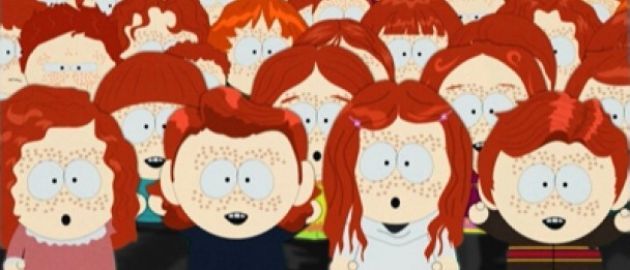 Basically, when someone inherits two mutated versions of the MC1R gene, they get red hair, but when they only get one, red hair can turn up where you might not necessarily want or expect it, such as under your armpit, around your *ahem* genitalia, or even on your face.
Got it? Good.
So, while you might be none the wiser after that explanation, that’s why people who don’t have ginger hair sometimes end up with ginger beards.
Try offering that explanation by way of a chat-up line on a night out. Trust us, it'll work a treat.
Basically, when someone inherits two mutated versions of the MC1R gene, they get red hair, but when they only get one, red hair can turn up where you might not necessarily want or expect it, such as under your armpit, around your *ahem* genitalia, or even on your face.
Got it? Good.
So, while you might be none the wiser after that explanation, that’s why people who don’t have ginger hair sometimes end up with ginger beards.
Try offering that explanation by way of a chat-up line on a night out. Trust us, it'll work a treat.Explore more on these topics:

Woman with same cancer as MAFS star shares symptoms
fitness health

Fitness & Health

Fitness & Health
Symptoms of meningitis to look out for amid UK outbreak
Fitness & Health
Irish books you need to read at least once in your lifetime
Fitness & Health

Fitness & Health

Fitness & Health

Fitness & Health

Fitness & Health
Anyone who sees blue tits in their garden issued warning
Fitness & Health


