





Life

Share
Published 11:35 27 Mar 2016 BST
Updated 16:44 1 Apr 2016 BST
Explore more on these topics:
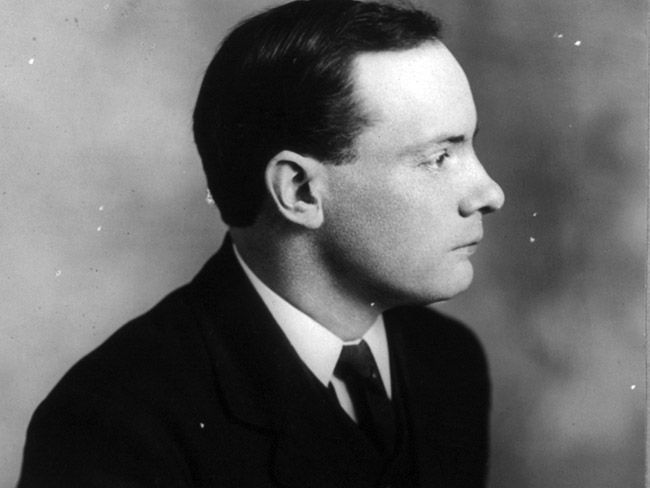 2) He was born on his own street: in Dublin on November 10th, 1879, to an English father, James, and an Irish mother, Margaret. He and his siblings, Willie and Margaret, were born on Great Brunswick Street - it would later be renamed Pearse Street.
3) He's responsible for the cúpla focal: He is almost single-handedly responsible for the fact that most of us can (just about understand) the RTÉ Nuacht. It was massively important to Pearse to save the Irish language from extinction, so he set up St. Enda's School (Scoil Éanna) in 1908 as a bilingual school, teaching through both English and Irish. He taught alongside Thomas MacDonagh, later a fellow signatory of the Proclamation of the Irish Republic, and his brother Willie.
2) He was born on his own street: in Dublin on November 10th, 1879, to an English father, James, and an Irish mother, Margaret. He and his siblings, Willie and Margaret, were born on Great Brunswick Street - it would later be renamed Pearse Street.
3) He's responsible for the cúpla focal: He is almost single-handedly responsible for the fact that most of us can (just about understand) the RTÉ Nuacht. It was massively important to Pearse to save the Irish language from extinction, so he set up St. Enda's School (Scoil Éanna) in 1908 as a bilingual school, teaching through both English and Irish. He taught alongside Thomas MacDonagh, later a fellow signatory of the Proclamation of the Irish Republic, and his brother Willie.
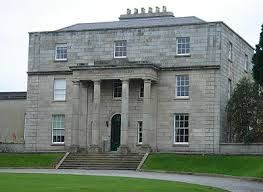 4) Pearse was a poet: His works inspired generations of young poets and writers after him; while his poems were written with the sole intention of freeing Ireland, and the Irish language, he wrote several - "The Mother," "The Fool" and "The Wayfarer" - acclaimed pieces in English. He was also closely associated with the song 'Oró Sé Do Bheatha 'Bhaile,' for which he wrote additional lyrics.
5) His last ever poem: was The Wayfarer was Pearse's last poem, written on the eve of his execution, which took place on 3 May, 1916.
It reads:
4) Pearse was a poet: His works inspired generations of young poets and writers after him; while his poems were written with the sole intention of freeing Ireland, and the Irish language, he wrote several - "The Mother," "The Fool" and "The Wayfarer" - acclaimed pieces in English. He was also closely associated with the song 'Oró Sé Do Bheatha 'Bhaile,' for which he wrote additional lyrics.
5) His last ever poem: was The Wayfarer was Pearse's last poem, written on the eve of his execution, which took place on 3 May, 1916.
It reads:
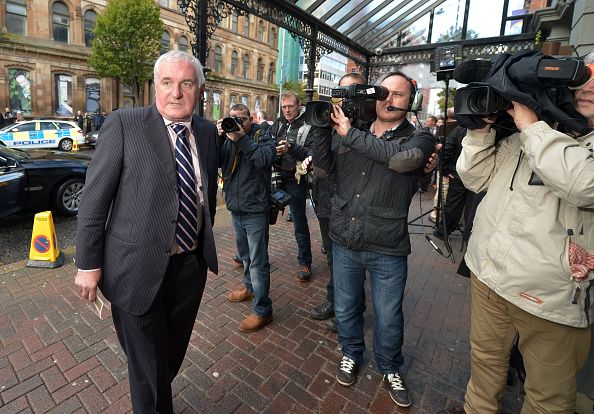
The beauty of the world hath made me sad, This beauty that will pass; Sometimes my heart hath shaken with great joy To see a leaping squirrel in a tree Or a red lady-bird upon a stalk, Or little rabbits in a field at evening, Lit by a slanting sun, Or some green hill where shadows drifted by Some quiet hill where mountainy man hath sown And soon would reap; near to the gate of Heaven; Or children with bare feet upon the sands Of some ebbed sea, or playing on the streets Of little towns in Connacht, Things young and happy. And then my heart hath told me: These will pass, Will pass and change, will die and be no more, Things bright and green, things young and happy; And I have gone upon my way Sorrowful.6) He was Bertie's hero: Former Taoiseach Bertie Ahern once described Pearse as one of his heroes, and had a picture of the freedom fighter over his desk in Government Buildings.
 7) He wanted the British to know he wasn't afraid: On the day of his execution, Pearse reportedly whistled on his way to meet his maker. This was according to the diary of a British soldier, Sergeant Samuel Henry Lomas, who was present at Kilmainham Gaol on the day that the rebel was executed by firing squad.
8) There was no Mrs. Pearse to mourn him. Pearse never married. Senator David Norris has suggested in the past that Pearse, Michael Collins and Roger Casement were all gay, writing of Collins: "If Michael Collins was gay or bisexual – so what? Who cares? It shouldn’t matter as it is just a neutral fact. It certainly isn’t a slur, and the vast majority of the Irish people no longer regard it as such.”
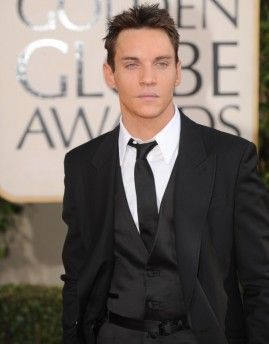
9) Jonathan Rhys Meyers is going play him in a new movie: The Corkman who played the young gunman who assassinated Michael Collins in Neil Jordan's film of the same name, is set to portray Pearse in a new film called The Rising.
7) He wanted the British to know he wasn't afraid: On the day of his execution, Pearse reportedly whistled on his way to meet his maker. This was according to the diary of a British soldier, Sergeant Samuel Henry Lomas, who was present at Kilmainham Gaol on the day that the rebel was executed by firing squad.
8) There was no Mrs. Pearse to mourn him. Pearse never married. Senator David Norris has suggested in the past that Pearse, Michael Collins and Roger Casement were all gay, writing of Collins: "If Michael Collins was gay or bisexual – so what? Who cares? It shouldn’t matter as it is just a neutral fact. It certainly isn’t a slur, and the vast majority of the Irish people no longer regard it as such.”
9) Jonathan Rhys Meyers is going play him in a new movie: The Corkman who played the young gunman who assassinated Michael Collins in Neil Jordan's film of the same name, is set to portray Pearse in a new film called The Rising.
 10) He never got a statue: There was a proposal thrown out in 1979 to erect a statue of Pearse on O'Connell Street, replacing Nelson's Pillar. Standing higher than the GPO, and made of over £150,000 worth of bronze, the proposal was ridiculed when brought towards the City Council, with Councillor Frank Sherwin stating “it should be thrown in the Liffey." To this day, James Connolly is the only signatory commemorated in Dublin city centre.
Previously in this series
James Connolly
Joseph Mary Plunkett
Thomas Clarke
Tomás MacDonagh
Éamonn Ceannt
Seán Mac Diarmada
10) He never got a statue: There was a proposal thrown out in 1979 to erect a statue of Pearse on O'Connell Street, replacing Nelson's Pillar. Standing higher than the GPO, and made of over £150,000 worth of bronze, the proposal was ridiculed when brought towards the City Council, with Councillor Frank Sherwin stating “it should be thrown in the Liffey." To this day, James Connolly is the only signatory commemorated in Dublin city centre.
Previously in this series
James Connolly
Joseph Mary Plunkett
Thomas Clarke
Tomás MacDonagh
Éamonn Ceannt
Seán Mac Diarmada
Life

Life

Life

Life
Irish driver baffled by neighbour who moves their car every time they move theirs
“It doesn’t matter where I park they will move their car there as soon as I leave” A Reddit user has been left completely baffled by a neighbour who appears to follow them around their apartment car park. The resident explained that their apartment complex, where they have lived for seven years, has plenty of […]
Life
1 week ago
Medical expert explains when erectile dysfunction is worth getting checked
Erectile dysfunction is something many men will experience at some point in their lives, and an occasional issue getting or maintaining an erection isn’t necessarily cause for concern.1,2 However, a health expert has explained when a change in erectile function should be checked out – and how it could potentially tell you something important about […]
Life
2 weeks ago
Why do we get goosebumps and where do they come from?
Life