







Business

Share
Published 14:47 9 Jul 2026 BST
Updated 14:47 9 Jul 2026 BST

Wake up at 5am. Take your €100 10-step skincare routine. Meditate. Journal. Get some movement. Have a healthy breakfast with at least 30 grams of protein. Don’t forget your supplements. Are you staying hydrated enough? Remember to book that reformer pilates class.
Just in time to start your nine-to-five full-time job while also being a parent to a five-year-old kid. What do you mean by “you are too exhausted” to follow your unwinding night routine? Reading and practising gratitude are essential to keep your cortisol levels low. Wait… did you meal prep for the week?? You should be more organized.
This is because you don’t prioritize yourself well enough. But, to be honest, you should also make time for your partner and for your friends.
It seems self-care has become a full-time job, in the form of expensive products that ultimately reinforce individualism and leave you with empty pockets and chronic stress. On top of everything, self-care has drifted us apart, increasing loneliness, fading connections, and eroding bonds.
Firstly, social media has distorted the perception of self-care, shifting this practice into a bunch of trends - many of them unrealistic - and has turned it into another hidden mechanism to encourage overconsumerism.
Brands have stepped forward with lotions, serums, journals, meditation apps, and YouTube is full of videos of sponsored self-care routines.
Companies and marketing experts have made us believe that we don’t love ourselves enough if we don’t strictly apply that red-light treatment every single day.
Additionally, the emergence of overanalysis disguised by therapy language only adds to the feelings of frustration and impotence. Now, every reaction, emotion, and decision- whether it's ours or someone else's- is examined from the perspective of your inner child, your past wounds, or your unhealed traumas, and many other psychological concepts that seem to have been taken out of context by their social media overuse.
But reflection doesn’t equal improvement. Too much of it can be counterproductive and can have an opposite effect. Studies show that increased self-focused attention consistently links to higher levels of depression, anxiety, and negative mood. There is a difference between reflection and rumination.
The pressure of having to be constantly healing, living a life where each of your daily actions should be oriented towards a better version of yourself, burdens you with the huge individual responsibility of solving every problem alone and triggers a constant state of hypervigilance rooted in mercilessness.
We also analyze other people. Green flags and red flags have become our main guide to immediately classify everyone who does something that might make us slightly uncomfortable. Within a context where the tolerance threshold is at its lowest, cutting people off is our immediate coping mechanism to protect our peace.
Despite a lot of happiness and inner peace comes from self-care and looking inwards, human beings are inherently social, and that means that we need others to feel fulfilled. Research actually shows that one of the greatest forms of happiness and the feeling of self-expansion comes from helping others.
A big part of finding our purpose and meaning in life is rooted in the gratification of connection with other people and the rewarding feeling of serving others.
So whilst having a good relationship with oneself is essential, it doesn’t discard the need to stay in touch with your community to create mutual and nurturing bonds.
Explore more on these topics:



Business
Business
Business
Business
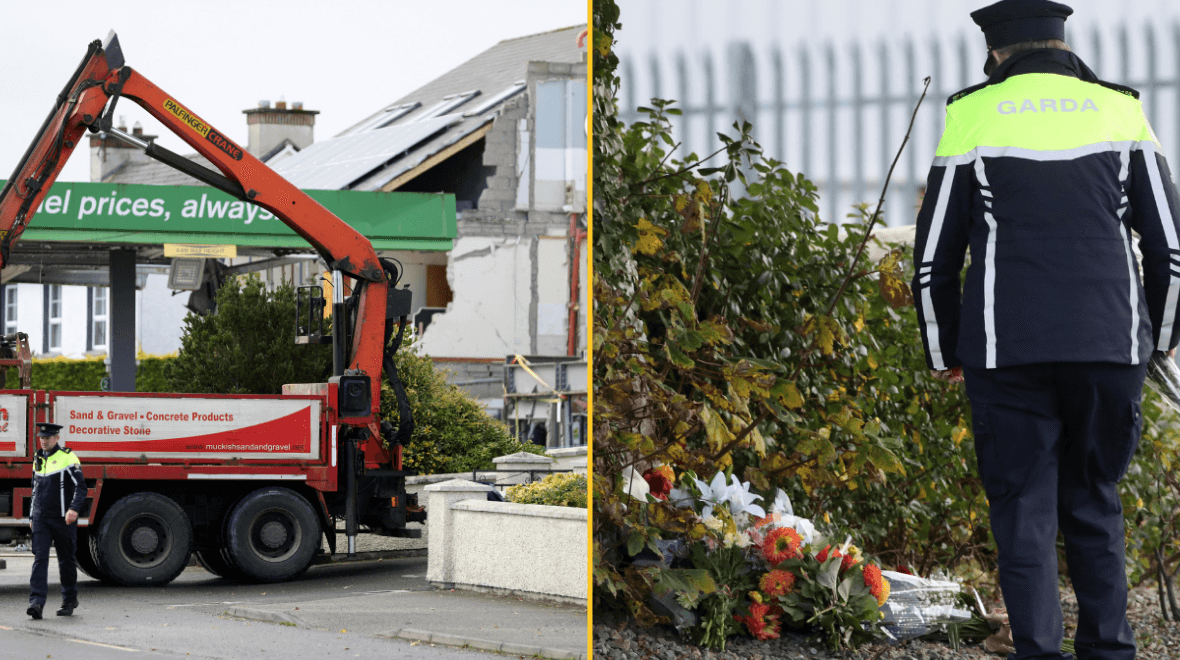
Ceremony to take place to mark four years since tragic Creeslough explosion
10 people lost their lives in the 2022 tragedy. A ceremony will take place today to mark the fourth anniversary of the tragic Creeslough explosion and remember the 10 people who lost their lives. On October 7, 2022, an explosion at a service station and apartment complex in the Donegal village claimed the lives of […]
Business
2h
20 things your penis could be telling you about your heart
Listen up, fellas… Erectile dysfunction is something millions of men worldwide experience, but it’s fair to say most don’t immediately associate it with heart health.1 We probably should. A growing body of research has found a significant connection between erectile dysfunction (ED) and cardiovascular disease. Crucially, erection problems can sometimes appear years before more obvious heart symptoms.1,2 That’s the serious message behind Listen to Jordic, a […]
Business
3h

Business
Dublin named sixth-best city in the world – but there’s one major catch
Business