


News

Share
Published 12:05 27 Sept 2018 BST

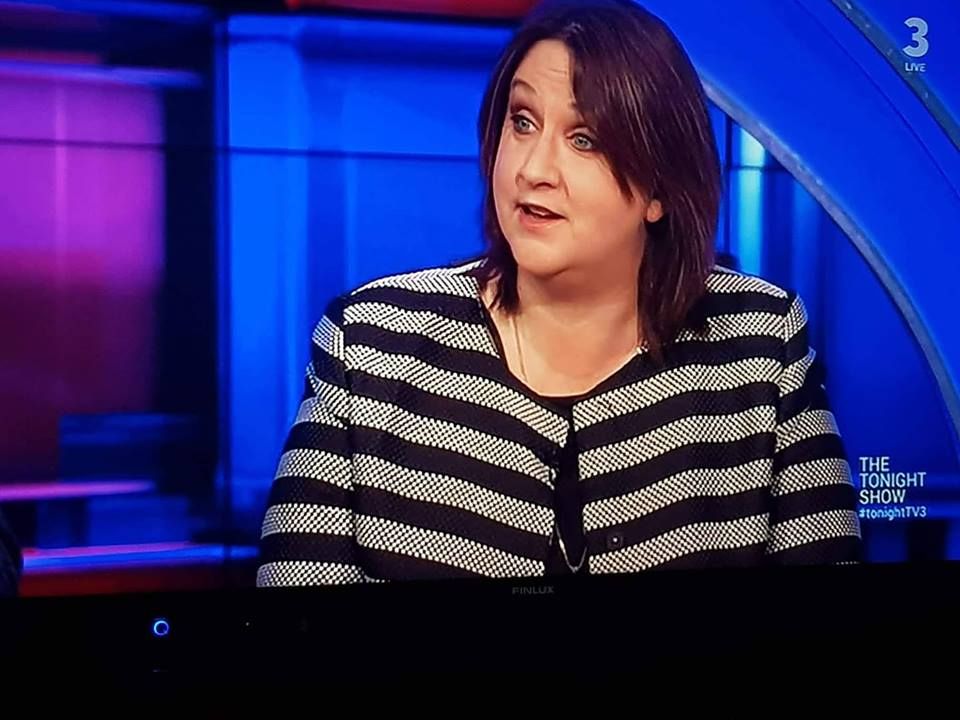 Speaking to JOE, Rabbitte mentioned that similar systems are already in place.
"What we want to do is gather data. And how can we gather the data without weighing people?
"To be fair to the Departments of Children, Health and Education, I asked the question [at the Joint Committee on Children and Youth Affairs], 'So, what's your plan for weighing children?'
"They thought about it but said they don't weigh children. Then, Dr Kate O'Flaherty (the medical representative) said that, actually, they do weigh children every second year and feed it into a national strategy.
"The thing with the Department of Health is that they've the best policies in the world but not the best actions.
Speaking to JOE, Rabbitte mentioned that similar systems are already in place.
"What we want to do is gather data. And how can we gather the data without weighing people?
"To be fair to the Departments of Children, Health and Education, I asked the question [at the Joint Committee on Children and Youth Affairs], 'So, what's your plan for weighing children?'
"They thought about it but said they don't weigh children. Then, Dr Kate O'Flaherty (the medical representative) said that, actually, they do weigh children every second year and feed it into a national strategy.
"The thing with the Department of Health is that they've the best policies in the world but not the best actions.
"They got it written as part of national obesity plan, that as part of the new GP contract they weigh children at two and five years of age. However, that's assuming that every child goes to the doctor at those stages. You can't assume that. "What I'm suggesting is that we have one entry point. I want to start it in the first year ECCE (Early Childhood Care and Education)."This would see children be weighed in their first year of preschool, aged two-and-a-half. Rabbitte continued to say that the programme would benefit children of all kinds, not just those who struggle with obesity. "The flip side is not just about children that are overweight. Weighing children will also allow data to be stored on children who may be anorexic or suffering from other underlying conditions.
"What I'm saying is that we need a cultural change, and this must start from the generation that is in the obese bracket; their parents. Children shouldn't feel that having a bit of weight on you is the end of the world. It's all to do with body changes, and sure that happens naturally and is taught in school.The most important thing is that it has to be done in conjunction with parents. The parents must buy in." This isn't the first time the move has been suggested. Six years ago, Dr Edna Roche, consultant paediatric endocrinologist at Tallaght Hospital and head of paediatrics at Trinity College suggested the same thing in a bid to halt the worsening obesity crisis. Children under the age of six are already entitled to free visits to a participating GP. In addition to free GP visits, the GP visit card covers specific asthma assessments as well as preventive checks that include charting age, weight and height and taking appropriate follow-up action. Earlier in the year, Rabbitte wrote to Professor Donal O’Shea, Clinical Lead on Obesity, as well as Minister for Health Simon Harris and the Minister for Communications Denis Naughten asking them to address the sponsorship of the Big Big Movie on RTÉ by McDonalds. “Childhood obesity is a huge issue in Ireland," Deputy Rabbitte explained. "Almost one-third of children in Ireland are now overweight, which represents a 10-fold increase in the rate of obesity among Irish boys between 1975 and 2016, and a nine-fold increase among Irish girls. “Thousands of children look forward to sitting down in front of the Big Big Movie every Saturday, and it is not right that they are encouraged to associate this fun leisure time with fast food." Meanwhile, the Department of Education says it has no intention to ban schools from having vending machines. As of May 2018, Irish men score the highest body mass index (BMI) in Europe. Irish women rank third in this category, and one in four children in Ireland are now classified as overweight or obese. Figures show that 75% of obese children risk remaining obese into adulthood — thus bringing with them an increased risk of heart disease and stroke as they age. By 2030, Ireland will be the most obese country in the EU, according to the World Health Organisation.
Explore more on these topics:

News

News

News

News

News

News


