







News

Share
Published 14:25 6 Sept 2026 BST
Updated 10:54 7 Sept 2026 BST
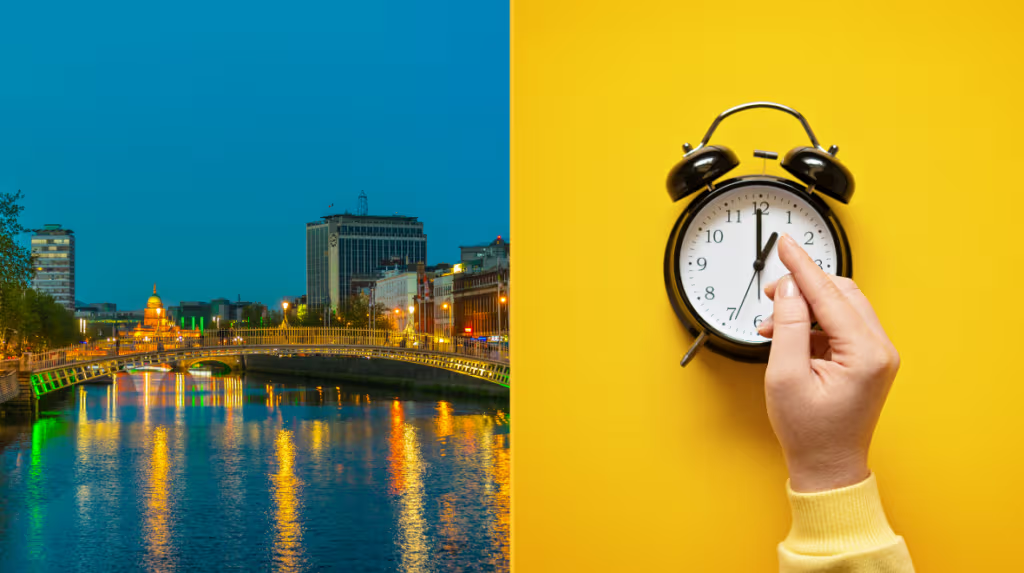
Clocks are set to go back a day earlier this year as autumn gives way to the winter months.
With the ‘ber’ months now underway, cooler weather, darker skies and wintry conditions are creeping in, while another familiar seasonal change is approaching.
This year, daylight saving time will end a day earlier than it did in 2025.
Last year, the clocks went back on October 26, but this year they will turn back by one hour at 2am on Sunday, October 25.
The twice-yearly clock change is designed around the hours of daylight available throughout the year. When the clocks are turned back, sunrise occurs earlier, giving people more light at the start of the day.
The trade-off is that daylight fades sooner in the afternoon, meaning darker evenings.
According to timeanddate.com, sunset will get earlier in the coming weeks, falling from 8.02pm today to 5.07pm on October 25, when the clocks go back.
Iceland is the only European country that keeps the same time year-round. The EU voted in 2019 to potentially scrap seasonal clock changes, after most people surveyed said they preferred not to change their clocks twice a year. However, the plans were delayed during the Covid-19 pandemic.
The issue has also been raised in Ireland, with former Social Democrats TD Róisín Shortall previously calling for the clocks to remain unchanged during the winter months.
At the time, Shortall said: “It’s worth considering leaving our clocks and not changing them, in order to have that bit more of daylight in the evening time and I think that would help people, including older people who are living alone.
“The more light we have in the afternoon the better and it also facilitates people getting out for exercise and lift the mood a little bit.”
Shortall also confirmed at the time that Taoiseach Micheál Martin had agreed to consider the proposal.
For now, however, the twice-yearly clock change remains in place.
When the clocks go back next month, most modern devices will adjust automatically, while traditional clocks will need to be changed manually.
Looking ahead to next year, the clocks will go forward on March 28, 2027, before going back again on Sunday, October 31.
Explore more on these topics:

News
News
News

News
John Finucane slams Tory MP comments on solicitors: “I watched my father being shot dead”
Sinn Féin MP and son of murdered solicitor Pat Finucane, John Finucane, has slammed Tory MP David Davis’ comments in the House of Commons. David Davis, Conservative MP for Goole and Pocklington, made the remarks on Tuesday during a debate on amendments to the Northern Ireland Troubles Bill, which referred to “the activities of IRA […]
News
17h
Tusla special care beds plan at risk as judges order emergency detentions
For at-risk children, High Court judges ordered emergency detentions The Child and Family Agency plans to cut the number of severely at-risk children placed in special care, an internal document shows. The special care beds plan remains at risk, as there are just 13 of 26 units open. Meanwhile, High Court judges have criticised the […]
News
19h
News
Rape Crisis Centre slams Irish comedian for joke about rape
News