









News

Share
Published 17:49 25 Mar 2026 GMT
Updated 10:16 26 Mar 2026 GMT
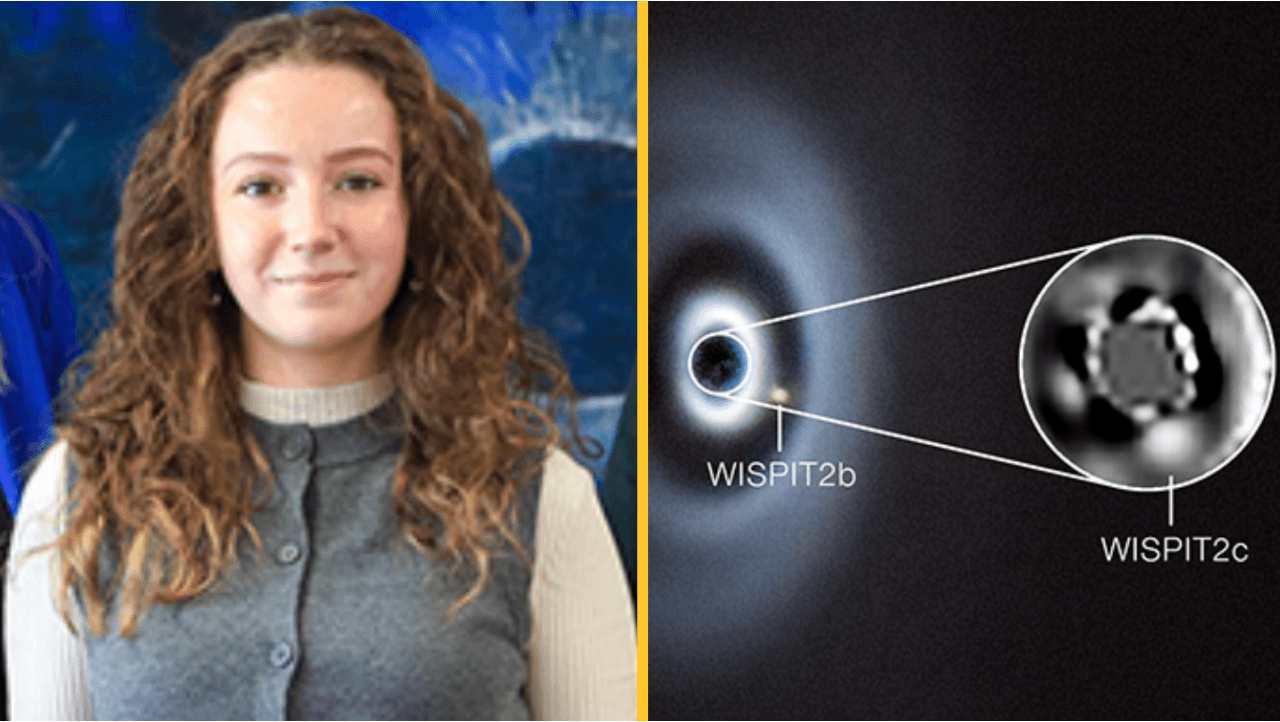
An international team of astronomers, led by a PhD student at the University of Galway, have discovered a new planet, just months after finding another.
The study was led by Chloe Lawlor, 25, from the Centre for Astronomy at the School of Natural Sciences and the Ryan Institute at the University of Galway.
This was in collaboration with PhD student Richelle van Capelleveen, of the Leiden Observatory, Netherlands, and postdoctoral researcher Guillaume Bourdarot, of the Max Planck Institute for Extraterrestrial Physics in Garching, Germany.
Their latest planetary discovery has been named WISPIT 2c and is estimated to be about five million years old.
It was detected at an early stage of formation in the disc around a young star called WISPIT 2.
The star is located in the constellation of the Eagle, a prominent equatorial constellation visible in the summer northern hemisphere (July-November) along the Milky Way.
WISPIT 2c's identification comes not long after that of WISPIT 2b, which was discovered last year by the same research team.
At that time, the team was led by van Capelleveen, alongside Dr Laird Close from the University of Arizona.
In a statement, published by the university, Lawlor said: “After the initial discovery of WISPIT 2b, which I was also involved in, we suspected there might be another object in the system.
"At first, we weren’t sure if it was a planet or a very large dust clump. Carbon monoxide is one of the key signatures we are looking for in young giant planets.
"When we saw it clearly in the data, that was when we knew we had something significant.
"There was definitely an element of disbelief. I didn’t expect to be the one to find a second planet in the system.
"When I sent the spectrum to my supervisor, Dr Christian Ginski, it was a huge shock and upon further examination, he confirmed I’d found a planet.
“WISPIT 2 will become an important laboratory to study planet formation.”
Director of the Ryan Institute, Professor Frances Fahy, also said: “The discovery of the planet WISPIT 2c is a remarkable achievement...
"I warmly congratulate PhD researcher Chloe Lawlor on this breakthrough and Dr Christian Ginski for his leadership and dedication to astronomy research.
"Discoveries like this capture the imagination and can inspire a whole new generation of astronomers.”
University of Galway said that the discovery offers scientists "a rare opportunity to study how massive planets form and evolve, shedding new light on the early processes that ultimately led to the formation of Earth".
Explore more on these topics:



News

News

News

News
Solicitors legal aid row escalates ahead of Monday walkout
Criminal defence walkout set to affect cases across Ireland Criminal cases across Ireland could face further disruption from Monday, with more than 100 solicitors preparing to step away from defence work amid an unresolved row over legal aid payments. The solicitors have written to the presidents of the District, Circuit and High Courts to notify […]
News
2 days ago
Homes evacuated after ‘pipe bomb’ explosion in Belfast
Police have asked the public to avoid the area A number of homes have been evacuated after an explosion at a property in north Belfast. The incident is reported to have happened in the Stanhope Street area of the city. It is believed that a pipe bomb exploded at a property in the neighbourhood. The […]
News
2 days ago
News
Trump’s new press secretary gives bizarre answer when asked if she’s a qualified lawyer
News