








News

Share
Published 15:21 9 Nov 2026 GMT
Updated 15:22 9 Nov 2026 GMT
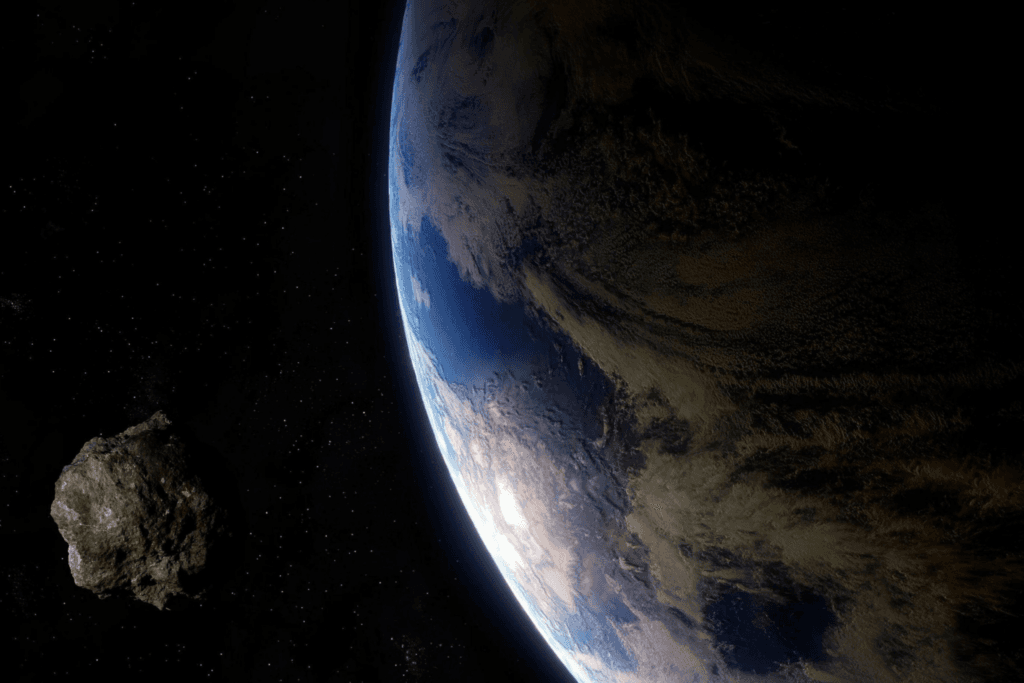
If you've ever watched a Hollywood disaster film, you'll probably know the drill.
A giant asteroid is heading straight towards Earth, humanity is facing extinction, and someone comes up with a brilliant idea: blow it up with a nuclear bomb.
Sounds simple enough, right?
Well, scientists have now discovered one rather important problem with that plan.
It turns out that which side of the asteroid you target could make all the difference between saving the planet and failing to stop a collision.
According to a new study published in the scientific journal Icarus, the effectiveness of a nuclear blast could vary almost fivefold depending on the direction it comes from.
Researchers at Sandia National Laboratories in the US have been investigating whether a nuclear explosion could push a dangerous asteroid off course.
The idea is to detonate a nuclear device near the asteroid, releasing powerful X-rays that heat its surface and vaporise some of its material.
That would create a small push, potentially changing the asteroid's path enough to make it miss Earth.
But there's a catch.
Asteroids aren't perfectly round. Many have irregular shapes, with bumps, ridges and uneven surfaces.
And those differences can have a surprisingly big impact on how they respond to an explosion.
Using advanced computer simulations, researchers found that targeting one side of an asteroid changed its speed by 3.9 millimetres per second.
Targeting another side of the very same asteroid produced a change of just 0.8 millimetres per second.
That's almost five times less effective.
"We expected aim to matter," said physicist Nathan Moore, who led the research. "What surprised us was how much."
And while those changes in speed might sound tiny, even a small adjustment could be enough to prevent a collision if scientists spot the asteroid early enough.
Potentially, yes. But scientists still have some major challenges to overcome.
For one thing, their computer model cannot yet accurately predict whether a nuclear explosion might break an entire asteroid into smaller pieces.
That could create another problem, as some of those fragments might still be heading towards Earth.
Researchers would also need detailed information about the asteroid's shape to work out where to aim the blast.
And if an asteroid were discovered on a collision course with Earth, there might not be enough time to collect that information.
Then there's the small matter of getting a nuclear device into exactly the right position in space.
Despite these challenges, scientists believe the new research could help humanity prepare for a future asteroid threat.
"Our study shows how important it is to aim carefully," Moore said.
"Pick the right side and you win. Guess wrong and it could be a bad day."
Explore more on these topics:

News

News

News

News
Russell Brand sentenced to 10 years and six months in prison for rape and sexual assault
BREAKING British comedian Russell Brand has been sentenced to 10 years and six months in prison, after he was found guilty of one count of rape and three counts of sexual assault. Brand’s sentencing hearing took place on Monday, and came after he was found guilty of the charges at Southwark Crown Court, after a […]
News
44 min
Two arrests after mass brawl and stabbing at ‘manosphere’ boxing event in Kilkenny
Shocking scenes. A boxing event in Kilkenny last Saturday turned into chaos, with two arrests made and one man brought to hospital. The event was organised by Unhinged Promotions, which is headed by ‘manosphere’ influencer Harrison Sullivan, aka HSTikkyTokky, and took place at The Hub in Kilkenny. Earlier in the evening, before the main brawl, […]
News
2h

News
Everything you need to know if you’re heading to Niall Horan at the 3Arena
News