






News

Share
Published 01:45 2 Sept 2026 BST
Updated 10:24 4 Sept 2026 BST
Women are consistently more likely than men to express concern about discrimination, economic insecurity, fairness and the adequacy of Government responses.
Women are also significantly less likely to believe that efforts to combat discrimination are effective.
Just 8% of women believe wealth is distributed fairly in Ireland, compared with 15% of men.
Men are also significantly more likely than women to believe that everyone enjoys their basic human rights equally, that Government is doing enough to address racism, and that Ireland welcomes diversity.
Differences in attitudes according to age are also notable.
Younger people are much less confident about their ability to experience equality in practice. Only 40% of 18–24-year-olds believe they have equal opportunities to get ahead in life, down from 60% last year. By contrast, adults aged 65 and over remain the age group most likely to believe they have equal opportunities.
Younger adults are also significantly more likely to have witnessed racism and disability discrimination. 26% of 18–24-year-olds witnessed disability discrimination in the past year, compared with just 4% of those aged 65 and over.
Strong support for economic and social rights
87% of respondents are worried about the cost of living. Yet only 12% believe Government is doing enough to address cost-of-living pressures, while 72% disagree. Similarly, only 11% believe wealth is distributed fairly in Ireland.
There is overwhelming support for Government action on economic, social and cultural rights:
· 94% consider affordable healthcare important
· 91% consider affordable housing important
· 91% consider adequate pensions important
· 90% consider adequate earnings important
· 90% consider public transport important
· 89% consider disability benefits important
Women and older adults consistently place greater importance on these rights.
Recognition of discrimination does not always translate into confidence in fair treatment
The poll also finds widespread recognition that discrimination continues to affect particular groups.
Three quarters (74%) agree that refugees and asylum seekers experience racism and discrimination. However, confidence in their treatment is considerably lower: only 49% believe they have access to adequate accommodation and 47% believe they are treated fairly.
Among non-Irish respondents, 25% report personally experiencing racism in the previous year, while 42% say they witnessed racism.
Women and younger adults are less likely to believe refugees and asylum seekers are treated fairly, while younger people are significantly more likely to report witnessing racism.
Only 31% believe Government is doing enough to address racism, while 42% disagree.
Liam Herrick, Chief Commissioner, IHREC said: “The findings from this year's poll point to a very important distinction. The vast majority of people in Ireland continue to strongly support human rights, equality and fairness. But increasingly, they are questioning whether those principles are being realised in practice.
“That gap between rights in principle and rights in practice should concern all of us. It is particularly striking among women and younger people, who are more likely to identify discrimination, inequality and economic insecurity, and less likely to believe that current responses are working effectively.
“The message from the public is not that human rights and equality matter less. It is that they matter deeply, and people expect to see them reflected in their everyday lives.
“Whether someone can afford a home, access healthcare, earn an adequate income, participate fully in society or live free from discrimination are all questions of fairness and human rights. The challenge now is to turn Ireland's very strong commitment to equality into greater confidence that people are actually experiencing those rights equally in practice.”
The 2026 IHREC Annual Public Attitudes Poll is based on a nationally representative sample of 1,205 adults in Ireland, with data collected between 12 and 24 May 2026 through an online survey administered by Ipsos B&A. The maximum margin of error is +/- 2.8%.
Explore more on these topics:
News
News
News
News
Solicitors legal aid row escalates ahead of Monday walkout
Criminal defence walkout set to affect cases across Ireland Criminal cases across Ireland could face further disruption from Monday, with more than 100 solicitors preparing to step away from defence work amid an unresolved row over legal aid payments. The solicitors have written to the presidents of the District, Circuit and High Courts to notify […]
News
2 days ago
Homes evacuated after ‘pipe bomb’ explosion in Belfast
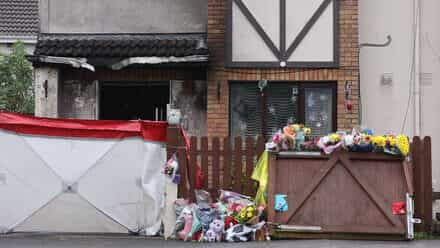
Police have asked the public to avoid the area A number of homes have been evacuated after an explosion at a property in north Belfast. The incident is reported to have happened in the Stanhope Street area of the city. It is believed that a pipe bomb exploded at a property in the neighbourhood. The […]
News
2 days ago
News
Trump’s new press secretary gives bizarre answer when asked if she’s a qualified lawyer
News