
Movies & TV

Share
Published 15:13 21 Mar 2025 GMT
Updated 11:24 22 Mar 2025 GMT
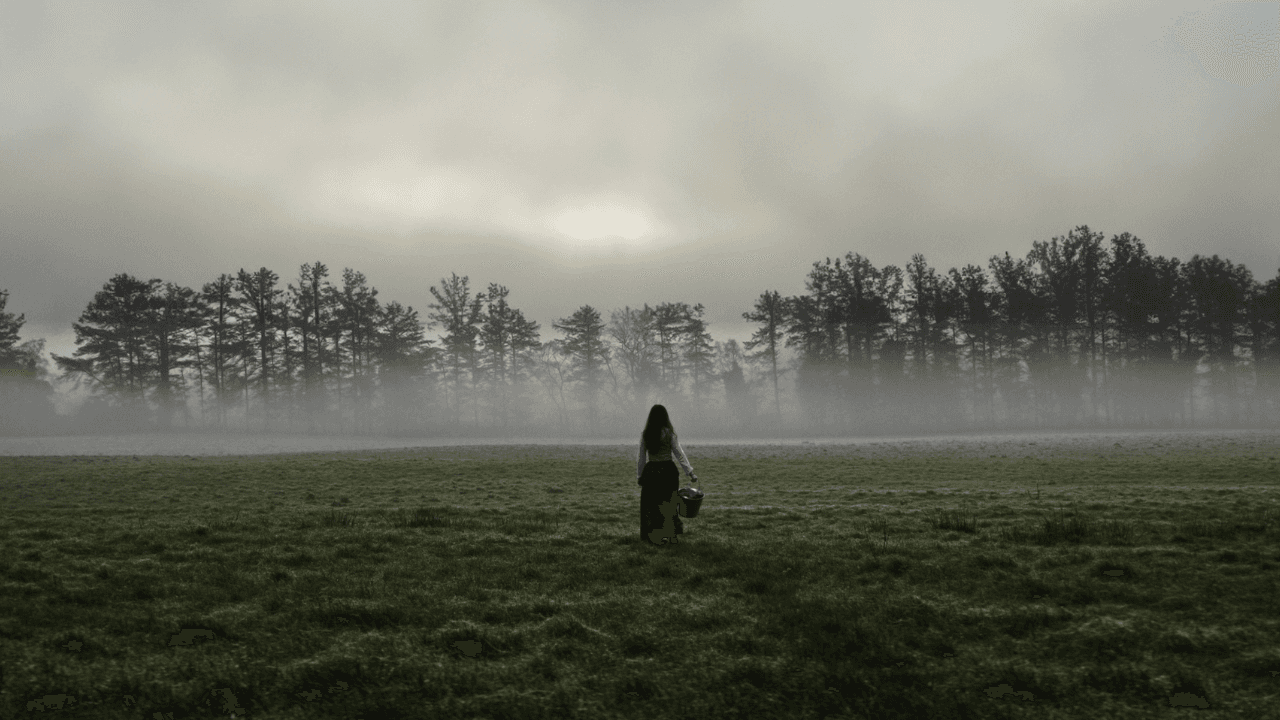
Given Ireland's horror bonafides (we did give the world Dracula after all) and the recent resurgence of the Irish language on screen, it may surprise people to learn that there's never been an Irish language horror feature film before.
That is until An Taibhse (The Ghost), an excellent new homegrown movie from on-the-rise writer-director John Farrelly (The Sleep Experiment) set during the tail end of the Great Famine.
Out in cinemas this month, it centres around Éamon (Tom Kerrisk) and his daughter Máire (Livvy Hill) who, still reeling from the death of a loved one, take on the task of looking after a remote crumbling mansion all by themselves during the winter months.
Upon arrival, however, Máire comes to believe that she is being stalked by a threatening entity who she dubs 'Alexander'.
This also coincides with the teenager discovering an extremely creepy puppet in her new bedroom and Éamon's behaviour becoming increasingly, dangerously erratic.
But what is the source of Máire's torment and can she survive the winter?
An Taibhse feels thrilling and important in equal measure. As a horror movie, with its many gorgeous candle-lit night-time scenes, it has a beautifully gothic sense of atmosphere that keeps viewers gripped all the way up to its truly haunting and shocking finale.
But as the film plays out, it also becomes a powerful story about hope and strength amidst darkness - which is very much aided by its Famine backdrop and its use of the Irish language.
Ahead of An Taibhse's release, JOE sat down with writer-director John Farrelly and his stars Livvy Hill and Tom Kerrisk to discuss the movie.
As for its origins, Farrelly explained: "The story was inspired by a true story of a family member of mine. I wanted to tell her story and have that theme of hope.
Farrelly added: "In the aftermath of the Great Famine, there were a lot of issues that aren't really talked about enough. In school history, it's all the starvation that you learn about, but there was a lot more going on behind the scenes that no one really addressed.
"That linked to the actual theme of the story about hope and finding the light in the darkness, because… for years until now, we've felt the effects of what happened to our country [during the Famine]."
Kerrisk also said of his character Éamon and his experiences during the Famine: "Essentially, not everyone took the soup. So obviously, a lot of people died.
"For me, the way it plays out is clearly [Éamon's family] didn't. And then Máire's mother dies. So then it's like: 'Okay, [we] can't have any more people dying.' So they go and take a job working for the English.
"Basically then, they've taken the soup. So, you're partitioned then from the people who did take the soup and the people who didn't take the soup. And I think for Éamon, he didn't want to take the soup, but he had no choice. And then there's that resentment of having to go and get a job for the English."
Having attended the Gaelscoil, Farrelly grew up speaking Irish and recruited his previous collaborators Hill and Kerrisk to join the project.
While Kerrisk - who is from Clare - was already fluent in the language, Hill was not, telling JOE: "I did not speak a word of Irish before this. There's a lot of schools in Ireland and Northern Ireland that teach Irish, but I didn't go to one of them.
"When I met John and we started on this film, I was really excited to learn it. It was tough. I sort of had to learn it phonetically, write it down in English and then Irish and then the phonetics. So you'd see me on set with my wee book reading.
"It was really rewarding and tough. But yeah, I just hope I did a good job."
Farrelly and Kerrisk were full of praise for their "brilliant" co-star in this respect, with the director saying: "When it came to Liv learning the lines phonetically, it was amazing.
"There's so much dialogue in that film, and she picked it up so quick and there'd be a lot of last-minute changes to the script, and I'd be like: 'Can you learn these lines quickly?'
Hill added, laughingly: "I couldn't really say no, could I?" to which Kerrisk added: "But we rehearsed a lot, and that's the huge thing. Before we went on set, we were pretty solid with the lines and stuff like that. But some effort, amazing."
Given An Taibhse's gothic candle-lit aesthetics - that recall Stanley Kubrick's Barry Lyndon and Robert Eggers' The Witch - audiences may be shocked to learn that the film cost just €3,000 to make.
As for how costs were kept down, Farrelly explained: "The €3,000 we used to shoot went towards the location [the film shot in Coollattin House in Wicklow] and the food, that kind of thing.
Also helping to keep costs low were Hill and Kerrisk's major contributions behind the scenes as well, with the latter helping to compose the score.
"I play in the band Daft Pop. We're a corporate and events band, so that's a nice little plug," Kerrisk said laughing.
"But yeah, Ally [Donald] and I, we composed the score on John's first film. So again, to keep that close family together, we did this one again. And then [I] doubled up as a producer on this as well with John."
On top of this, Hill was on costume design and makeup artist duties.
"I am a costume person, so I currently work in costume on films at the minute. But I'm sort of going through the acting route now," Hill said.
"I have a lot of background in sewing, that kind of thing. So it meant I could rustle up stuff pretty quickly. The red dress in the film I actually made the day before.
"We realised: 'Oh, we need this red dress.' So I ran down to the charity shop and found red curtains and just threw together this design, and there it was the next day."
According to the trio, it was the passion of the small crew - comprising mostly of Farrelly and Hill's friends from college - that kept An Taibhse on the rails. This was despite its micro-budget and the "freezing, sub-zero" conditions at Coollatin House, which even started to affect the batteries in the crew's cameras.
That said, Farrelly and Kerrisk think the cold helped with the finished project, with the latter saying: "We tried to make it as real as what it would have been back in the day, and people didn't have central heating. They had a fire."
In contrast to many who have worked on horror films, the trio did not experience any creepy possibly paranormal phenomena. Instead, they feel they were blessed by "good spirits".
"Usually on a film set, something goes wrong. But the day it snowed, we needed it to snow. The gods were with us," Kerrisk told JOE.
Farrelly added: "We had one day scheduled for snow that we needed for exteriors. I was just going to green-screen the grass. Basically, just turn it white and then add a bit of visual effects.
"We got loads of salt to blend the grass to our foreground elements so it would look like that's just melted snow.
"But we'd scheduled one day for exteriors, and we were like: 'We're shooting anyway if it doesn't snow or not.' And then it snowed that day. We got all the snow shots... We got really lucky with that."
An Taibhse caught the attention of Oscar-nominated filmmaker Jim Sheridan (In the Name of the Father, My Left Foot), a hero of Farrelly and Kerrisk's, who joined the project after it was shot but gave advice during the editing process.
Farrelly said of Sheridan's involvement: "We got a chance to show Jim the film. It was a really early cut... He watched it. He really liked it.
"He's a hero of mine, so to have Jim even watch the film and talk about it was just amazing. Then he agreed to come on board as an executive producer.
"Just to be working alongside my hero from growing up, it's surreal."
As for making what's been billed as the first-ever Irish language horror film, Farrelly says:
Kerrisk adds: "Yeah, I agree. We're going through a golden period actually, a resurgence - a little like with Yates and them just at the turn of the century when all of that mythology came back into Irishness and stimulated the Republican movement, basically.
"So who knows where it goes? I mean, language is an extremely powerful tool, and it represents the consciousness of a nation. And without your language, you're not that nation.
"And the native tongue, it enhances storytelling 100% - instead of all films being in English."
Read more:
Explore more on these topics:
"I wanted to show that there is hope amongst darkness, and for the actual premise of the film, that worked well with setting it during the tail end of the Great Famine and the aftermaths of the Famine and what it did to the Irish people and what created the cycle of inter-generational trauma.
"And it was actually during lockdown where I was thinking about people being trapped in their house, not being able to leave. That's when the idea initially came for the haunted house story where they're actually stuck in this remote mansion and they can't leave because they're forced to work on this job. All those elements came together and that's how the story began."


"For shooting the night time sequences, we wanted it to look as natural as possible, so just using candlelight.
"And a lot of the time, it was just a candlelight. That was tricky because we shot it on a DSLR and a GH5S, which is not great in low light. So we just bumped up the ISO just to a point where it wasn't too grainy, and then we were able to shoot it.
"But it was like a balance between getting the aperture right and the ISO and trying to keep her in focus because we didn't have any external monitors either. It was just the little viewfinder on the GH5S. So yeah, that was a bit tricky.
"But we managed to work around it by moving as close as we could with Liv. Whenever Liv was walking through those hallways, it was like: 'Just stay as close as possible.'
"And then we had one light, a chino light, that created a flame-looking effect, which was good for the dinner time sequences."

"To make a film in the Irish language is amazing. It's a joy - the amount of people who fought and died to keep our language alive and to now be making films in my favourite genre of horror - to make a film in the Irish language and then have it play around the world.
"[At An Taibhse's international premiere at London's FrightFest festival] we had 800 people in the cinema, and a lot of them came up to us after and said that it was their first time hearing the Irish language. They thought it really added to the authenticity and the immersion of the story. And I thought: 'That's beautiful.'
"I think it just shows that it's playing around the world. People are engaging with it, an Irish language film. It's such a niche Irish-language horror film and to see people connect with it and then want to see more and then ask for recommendations on more Irish language films, it just shows that the Irish language is not dead. It's thriving and it's here to stay."
Movies & TV
Movies & TV
Movies & TV
Movies & TV
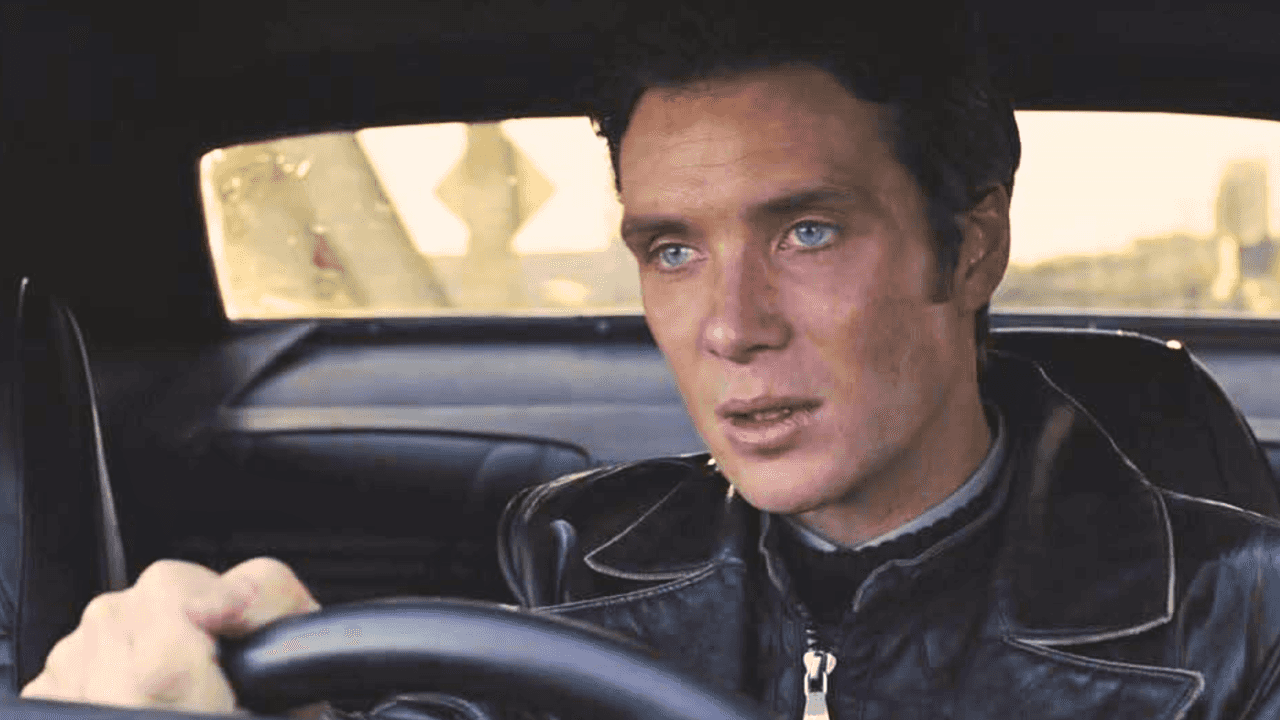
Cillian Murphy’s underrated thriller movie is on TV tonight
Though it received mixed reviews upon release, it has built up a cult following. In Time, a 2011 sci-fi thriller with an incredible premise starring Cillian Murphy, is airing on TV tonight (Friday, 9 October). Written and directed by Andrew Niccol (Gattaca, The Truman Show), the movie is set in a future where time literally […]
Movies & TV
2h
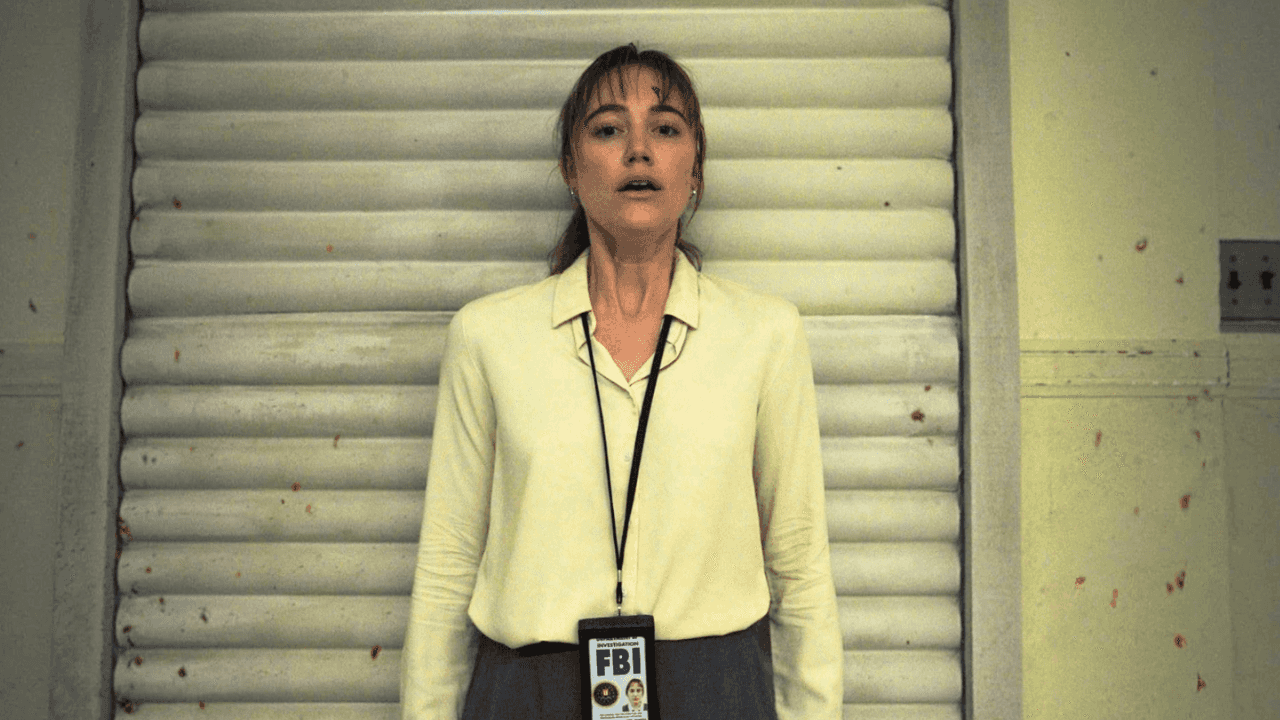
One of the best thriller movies of the decade is on TV tonight
We’d argue it’s one of the best films Hollywood has put out in years. Our TV movie pick for tonight (Friday, 9 October) is Longlegs, the brilliant horror thriller from writer-director Osgood Perkins (The Monkey, the upcoming The Young People). Maika Monroe (The Guest, It Follows) stars as Lee Harker, an up-and-coming FBI agent in […]
Movies & TV
3h
Movies & TV
Watch a dark Irish thriller movie on TV tonight
Movies & TV