Movies & TV

Share
30th December 2025
06:19pm GMT

Saipan, one of the most anticipated Irish movies of 2025, is finally available to watch in cinemas now.
Currently previewing in Irish theatres, before expanding to all of them on New Year's Day, the biographical sports film recounts the infamous bust-up between Ireland's football team captain Roy Keane (Éanna Hardwicke, Normal People) and the squad's manager Mick McCarthy (Steve Coogan, Alan Partridge) in the run-up to the FIFA World Cup in 2002.
The Irish team had gathered on the titular island in the Pacific Ocean on the eve of the tournament to prepare for the competition.
Going to the World Cup "to win it", Keane, however, grew increasingly frustrated with the poor facilities on the island, perceiving a lack of ambition from the Ireland team.
These tensions boiled over, eventually culminating in a public quarrel between the player and manager, the fallout of which led to Keane not participating in the World Cup.
Over two decades later, the feud has become the stuff of legend, making it inevitable that it would one day be dramatised in a movie. Now, we have the film, which is directed by Glenn Leyburn and Lisa Barros D’Sa (Good Vibrations) and written by Paul Fraser (A Room for Romeo Brass) and imagines what happened behind closed doors on those infamous few days.
On the positive side, Saipan absolutely nails the casting, which is probably the most important element to get right for a biographical movie about such recent history.
Hardwicke is an absolute revelation as Keane, managing to perfectly distil the footballer's trademark mix of drive, intensity and anger, as well as his wry humour.
While the Normal People star has the showier part, Coogan proves a fascinating counterpoint, avoiding a caricature of McCarthy, instead portraying him as someone well-intentioned, trying to do his best with the underwhelming resources given to him by the Football Association of Ireland (FAI).
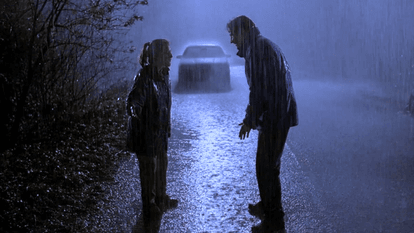
The scenes of Coogan and Hardwicke facing off one-on-one are really electric, brimming with suspense.
Partly, this is due to the clash of personalities: McCarthy's is depicted as being all about keeping the peace. Keane, meanwhile, has an ardent and steadfast belief that winning is more important than making friends.
"You can't go into battle if you're not aggressive," the captain states early on.
But there are other interesting factors contributing to the tension. Hardwicke's version of Keane, on top of all his frustrations about the facilities in Saipan, seems to bristle at the notion of taking orders from a Republic of Ireland manager who he seems to believe is not properly Irish (while McCarthy played for and managed Ireland, he grew up in England).
At the same time, there appears to be frustration from the rest of the Ireland side regarding Keane's superstar status as a Manchester United player. A recurring question put to McCarthy throughout the drama is: "How are you going to manage Roy Keane?"
On top of all these simmering pressures, screenwriter Fraser does tap into something universal about the story: that it's about two proud men who struggle to communicate emotionally with each other.
At one point in the drama, Keane sits with McCarthy at a team breakfast in a short-lived effort to convey to the rest of the squad that they are a united front. When McCarthy then tries to chat to him, Keane cuts him off, telling him plainly: "We don't need to make small talk."
And there is a melancholy to Saipan in regard to what could have been had the pair managed to talk more openly. Perhaps, they could have put their differences aside and actually come to some sort of agreement, improving Ireland's chances at the World Cup.
All this being said, the sports movie is on less sure footing when it comes to the scenes not involving Keane and McCarthy together.
Perhaps, it's out of fear of offending any of the other real-life people involved in the Saipan incident (the film does begin with a lengthy disclaimer, explaining that it's a work of dramatisation and not a factual account of what really happened), but the movie doesn't flesh out any of its supporting characters.
For much of Saipan, we were left wondering how the rest of the Irish team's players felt about Keane and his concerns, which are depicted as being very well-founded. For instance, there were no footballs to train with when the Ireland squad arrived on the island, a problem that is hard to deny.
Similarly, the movie is critical of the FAI, suggesting that its members splurged on themselves instead of providing the necessary resources to the Ireland squad to be proper contenders at the World Cup.
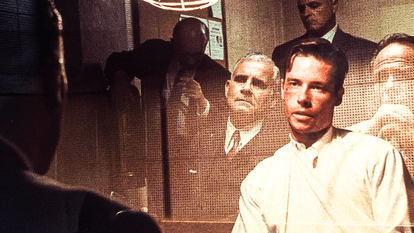
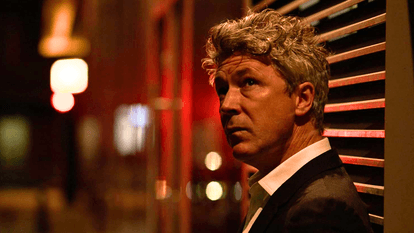
That said, this opulence is insinuated through these supposedly artsy, actually sort of cheap and airless looking quick montage flashes of some FAI members and some of the Irish team partying in empty rooms and corridors.
This recurring visual motif actually winds up undercutting the glamour and epic sweep of the film, while taking viewers' attention away from the movie's most fascinating aspect: the Keane and McCarthy dynamic.
The makers of Saipan also try to infuse some added farcical elements into the story (a large paper cutout of Roy Keane's head is another recurring image), but these also feel superfluous and stick out because the true story itself is wild enough.
To be honest, perhaps a smaller, even stage version of Saipan, where it's just Hardwicke as Keane and Coogan as McCarthy acting against each other, would be the perfect way to tell this story. This version still has enough of this to be worth seeking out, even if it leaves you wanting slightly more.
Explore more on these topics: