Share
19th November 2025
06:21pm GMT

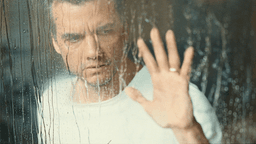
The Death Notice of Eamonn McCarty, a very emotional new Irish short film, will have its Irish premiere later this month.
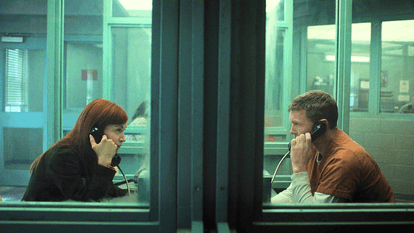
Starring Michael McElhatton (House of Guinness) and Hannah Mamalis (RTÉ's Good Boy), the sci-fi will screen in Ireland for the first time at the Foyle Film Festival in Derry on Sunday, 30 November, where, if it wins certain awards, it could go forward to the Oscars long-list for 2027.
The short is set in a dystopian Ireland where the Government lets you know exactly when you are going to die.
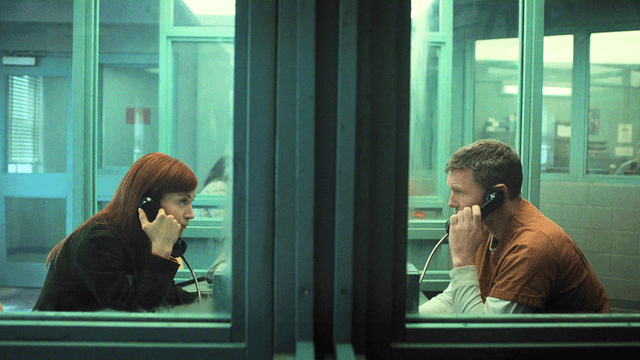
While members of the public usually get a couple of months' heads up about their impending demise, a bureaucratic error leaves one man - the titular Eamonn McCarty (McElhatton) - with only one day's notice of his imminent passing.
With the help of Geraldine (Mamalis), a kindly but inexperienced customer care agent, Eamonn puts together a plan for his final day on Earth.
Anchored by its two excellent lead performances, its clever world-building and its emotional, existential yet still comic story, The Death Notice of Eamonn McCarty is the type of film - even in just 13 minutes - that might make you rethink the way you are living your life.
Ahead of its Irish premiere, the short's writer-director, Aaron Chalke, and its star, Hannah Mamalis, visited JOE's offices for an interview about the project.
Chalke, who comes from the advertising and marketing world, said the idea for the story came to him after the death of his mother, to whom the short is dedicated.
"When I was going through the grieving process, a really good friend, [comic and TV presenter] Martin Beanz Warde, I was talking to him and he said: 'Just write. Use that to process,' And I did," he told JOE.
"I kept coming back to this concept that when people pass away, there's always a last [thing] that they did. And that they mightn't know if that was the last time they ever did it.
"I thought, what if you flipped that? And there was a world or an Ireland where you did know when you're going to die, someone - a government body - was able to tell you exactly when that moment was.
"Then I just put the Irish lens on it. What would be the actual way different characters might react, and bump into that scenario?"
Indeed, the short does feel uniquely Irish in how it finds humour in such a dark premise. For instance, McElhatton's Eamonn is more frustrated by the situation than distraught.
"He's pissed off," Mamalis laughs, with Chalke adding, "Actually, that pissed off element of him, Michael himself, actually, really helped me find the character, find Eamonn.
"I had him about 70%. But when I was talking to Michael about him, he was like: 'Well, maybe it's just like he got a high insurance quote. It's that normal.'
"That really helped me dial it in a little bit... It really helped with the flow of the piece, I think."

Mamalis - recently chosen by Screen Daily as being one of 10 rising stars in film and TV in Ireland - told JOE that she was drawn to Chalke's script because of its mix of emotion and genre.
"I think we have a tendency… particularly Irish shorts... for them to just be the same thing over and over. It's like: 'You're sad on a farm, you're sad somewhere,' she quips.
"Like it's sad in this, but I don't know, I like things that have another element to them. I love sci-fi. I love a bit of fantasy.
"I love when you're dealing with what you're dealing with, but using a metaphor and using that to be able to explore some of those things like grief.
"This is doing something cool, and it's doing it in a different way, and that really appealed to me."
In fact, Mamalis referred to The Death Notice of Eamonn McCarty as a "cry-fi".
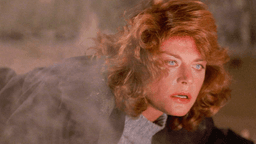
"I mean that, in terms of a genre sense. You've got like Arrival, that would be cry-fi… sci-fi that you cry at," she explained.
"It's not like a sci-fi where you have flying cars. It's rooted more in the emotion and in the empathy and the humanity of it, and that's always really nice.
"It's nice when something isn't cynical, I think. When it's just like: 'This is what it's about. We're all going to die. Life is short, cool.'"
In terms of the message he wants audiences to take away from the short, Chalke stated: "Life is short and we can go day to day doing our regular things, but then you don't know.
"You might get hit by the bus, or you might end up 80 or 90 and haven't achieved what you wanted to.
"So, carpe diem; it's kind of a cheesy metaphor, but it rings true."
As for his inspirations for the unique world of The Death Notice of Eamonn McCarty, Chalke told JOE:
"I like the world of the near past, where it's a country that we're all familiar with, but just one tiny, tiny tweak in it.
"For some reason, I did have it set in the late 80s, 90s in my head, and I had those tiled fireplaces that you'd see. That was like the tail that wagged the dog; everything came from that.
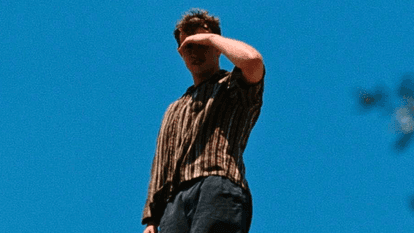
"So a lot of the visuals we were looking at were Hunger [the 2008 biographical drama about Bobby Sands], when the officer is getting ready in the morning, that house scene.
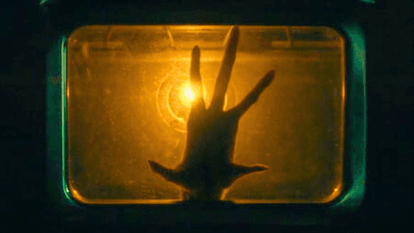
"Demon 79, the Black Mirror episode... beautiful episode. The colours in that were so brilliant. I couldn't get away from that.
"Then funnily enough, the TVA [Time Variance Authority] in Loki season one as well, that orangey type of [backdrop]. They all melded together."
The short looks visually impeccable, despite costing only €6,000 to make. When we compare Chalke to Ridley Scott, another director who came from advertising, he is modest.
"Saying Ridley Scott and my name in the same sentence, that's just a recipe for disaster in the future," he laughs.
"But a lot of brilliant directors come from [that world]. I think the constraints of advertising, where you have to tell a story in such a short space of time, I think they are skills that really transfer over into film."

Mamalis echoes this sentiment when speaking about why she loves making shorts, adding: "Yeah, the limitations, I think… having to tell a story concisely in a short period of time, it's fun.
"It allows you to think more creatively around what you're doing and how you do it. If you're trying to distil something, distil a feeling or an emotion or a through line or an arc, what's the most efficient way to be able to do that?
"Because I think everything is always better when it's shorter, isn't it?"
Chalke then noted: "Yeah, it reminds me of that old adage of 'arrive late and leave early', with Mamalis adding: "Yeah, get out of dodge. The Irish goodbye. Irish goodbye out of your shorts."
The writer-director is full of praise for his cast and crew, who worked for very little money.
"We did it all on €6,000, and we pulled in a massive amount of favours, not least [Hannah] and Michael getting on board," Chalke noted.
"But all the cast, all the crew and the remainder of the cast, they basically worked for nothing.
"They're volunteers - amazing skills, effort, equipment, and, while it was a challenge at times, they really put [the work in].
"So, if anyone is making a short or making a project, pause the credits, look at those people and have them on your team because your project will be better for it."
McElhatton - who joined the project just after finishing filming House of Guinness season one - and Mamalis had just one day of rehearsal to prepare for the short, something which the actress believes benefited the sci-fi.
"We had done one rehearsal day, where we got together and read it, and we all chatted about it and dug into it a little bit," she explained.
"I'm wary sometimes of doing too much prep on the acting side, particularly because [our characters are] not supposed to know each other in the short.
"So you want to leave a certain amount of that open in terms of what you find. If you overrehearse something, then you're locked into that.
"A conversation like [what the characters have], you want it to unfold in such a way that you're like: 'Oh, those people don't know each other and they haven't done this a million times.'"
That said, Mamalis adds that she and McElhatton had "great craic" in between takes, "just chatting s*it".

Chalke confesses that he, at one stage, had "a silly grandiose idea" to keep the actors apart and only have them meet when they were actually doing a take.
However, the central set proved so small that there was "literally no space" to separate them, with the writer-director now believing this was for the best.
At this stage, we brought up the past history in cinema of directors playing psychological mind games with actors in order to supposedly get better performances, and how it seems to be going out of vogue.
It was then that Mamalis declared with refreshing candour: "All of that stuff is just an excuse to be a w*nker a lot of the time, like all this f*cking method acting bulls*it."
Making a vomit noise, she added: "Like, relax, you just want to be a p*ick. You want carte blanche to be a p*ick."
The goal of Chalke's for the next year is to get The Death Notice of Eamonn McCarty to play "as many festivals" as possible.
He then hopes the short will be added to a streaming service or get picked up by a distributor "hopefully next year".
This is as Chalke and Mamalis are also looking to expand the sci-fi story into a feature.
"We're in... a very early stage of development of it as a feature," the writer-director explained.
"I think it's a world that we've only scratched the surface of. It can touch every part of life, and then when you add that with bureaucracy, it has a lot of legs, I think.
"So, we have a concept and we're fleshing that out. So, hopefully you'll see it in a feature in the next couple of years."
Explore more on these topics:

The JOE Film Club Quiz: Week 84
movies tv