









News

Share
Published 14:38 19 Aug 2026 BST
Updated 14:38 19 Aug 2026 BST

14% of all Irish domestic customers were behind on their electricity bills in April, recent figures from the Commission for Regulation of Utilities (CRU) show.
These 322,298 households could be making easy mistakes.
Jamie Griffin, Director of Cork Electrical, says households can cut usage without losing comfort.
“Everyone talks about standby and light bulbs, and those matter, but they’re pennies beside the hot water tank,” Jamie says.
“If your home has an immersion, that’s where a big chunk of your bill is going, mostly by accident.”
Simple things such as switching from bath to sink or heating the cylinder overnight rather than at teatime can make a very big difference.
Using the sink is worth €618 a year. Using your hot-water cylinder at night instead could reduce your annual electricity bill by €573, more than the €515.77 the average household in arrears now owes.
Here’s how to apply Jamie’s advice without compromising your convenience.
Firstly, the essential checks for any one with a cylinder include reading the labels to see if sink and bath have worn off.
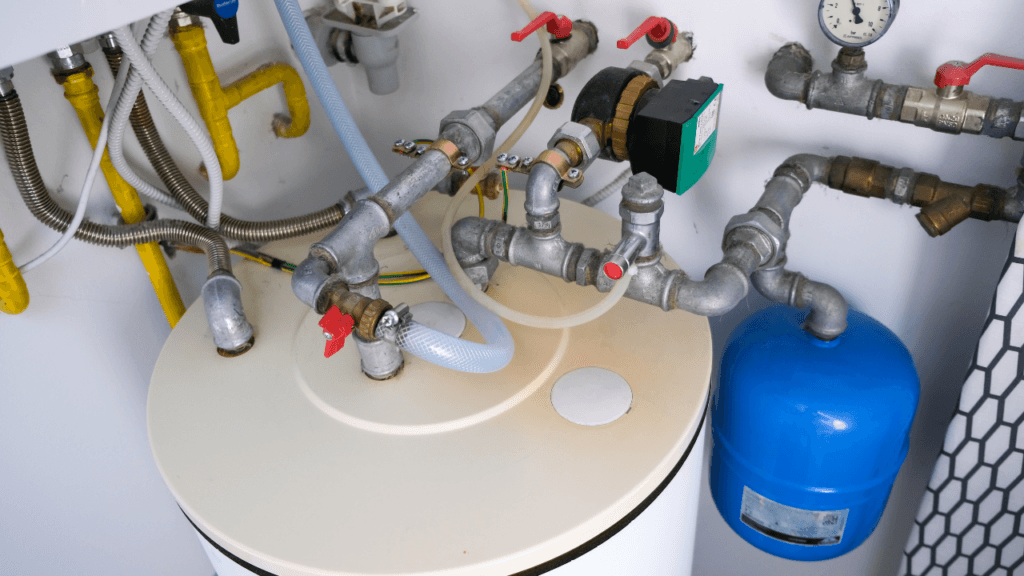
Most Irish hot water cylinders have two immersion elements, usually labelled ‘Sink’ and ‘Bath’. Sink heats only the top of the tank, while bath heats the whole cylinder.
As part of their research, Cork Electrical ran the numbers on the Sustainable Energy Authority of Ireland’s (SEAI) unit rates. Heating a full cylinder takes costs €2.54 at the standard household rate of 40.42c. The same job on the sink switch costs 85c. When you consider daily use for a year, the gap is €618.
Also, using the appropriate cylinder for the job; The sink is for daily washing up, and bath only when someone needs a full tank.
Insulate your cylinder too. If your hot-water cylinder has little or no insulation, you can buy a lagging jacket for around €20–€30. Jackets are covered free under SEAI’s Warmer Homes Scheme for homeowners on qualifying welfare payments.
Finally, check the timer so you make sure the cylinder only heats water when you actually need it. Mechanical time clocks can drift after power cuts, and Jamie says some of them can lose their programmed settings.
Jamie also mentions to me aware of the night rates.
SEAI puts the night rate at 15.42c, so the same tank costs 97c overnight instead of €2.54. Heating on a timer inside that window is worth €573 a year on Band DC, or €435 on Band DD. That means the average household in arrears owed €515.77.
For this reason, households should heat their cylinder overnight, but run the washing machine in the evening.
But check your usage pattern first, because a night rate plan only pays if you can shift a decent share of it.
The best of all of this is that you don’t have to ask permission from anyone.
“Using the right switch, setting a timer, putting a jacket on the tank, moving your washing to a cheaper hour, that’s all free or close to it,” Jamie says. “You don’t need to own the house to do it.”
“Anyone struggling can talk to their supplier about hardship arrangements, or even to the Money Advice and Budgeting Service (MABS), which is free and confidential,” Jamie continues. “Nobody should be sitting on arrears in silence.”
Explore more on these topics:


News

News

News

News
Man charged with murder over four year-old and his great aunt in Offaly
A 22-year-old man has been charged with the murder Tadgh Farrell and his grand aunt Mary Holt in a fire at a house in Edenderry. Michael Dunne, with an address in Co Kildare, has appeared before Tullamore District Court charged with two murders that shocked the country last year. A fire at Castleview Park, Edenderry […]
News
1h
IKEA launches second-hand marketplace as 93% of Irish adults say they shop second-hand
The platform allows customers to buy and sell pre-owned furniture. IKEA has launched a second-hand marketplace in Ireland as 93% of adults surveyed in Ireland said they shop second-hand. The platform will allow customers a convenient and free way to buy and sell pre-owned furniture directly with one another, for prices, on average, 60% cheaper […]
News
1h
Mary Lou McDonald moves ahead with RTÉ defamation case
News