









News

Share
Published 14:59 9 Sept 2026 BST
Updated 15:00 9 Sept 2026 BST
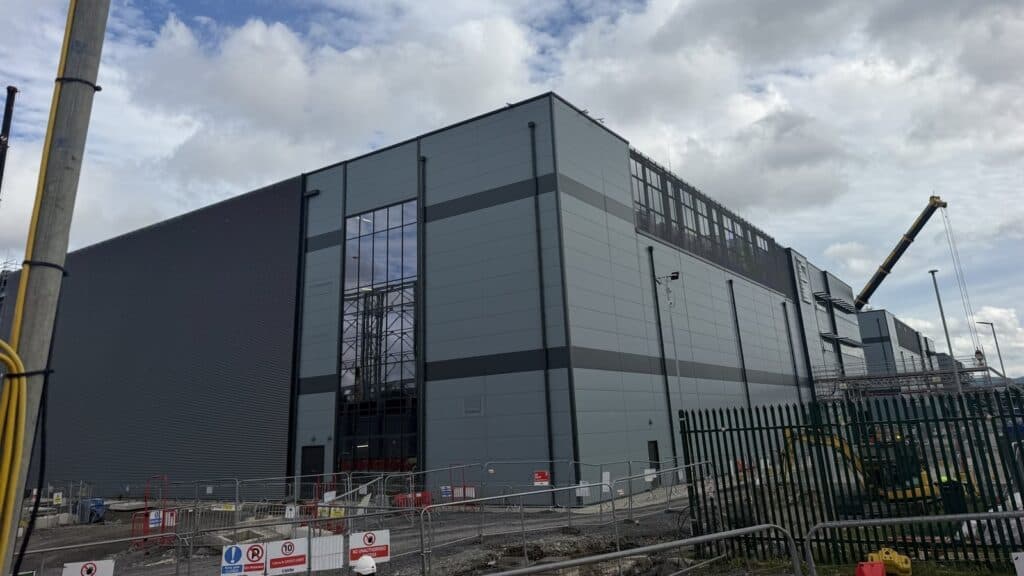
Ireland’s growing number of datacentres last year used 22% of the country’s electricity, more than all urban homes combined, according to the Central Statistics Office. The figure in the US and UK is 6%.
The centres have “drained” €715m from the Irish economy and increased household bills by a cumulative average of €360 between 2015 and 2023, said another report commissioned by Friends of the Earth Ireland and Beyond Fossil Fuels.
Now, research from independent think-tank TASC, found that rather than being evenly distributed across the city or concentrated in already-affluent business districts, data centres are overwhelmingly clustered in communities that already face structural economic disadvantage.
Ireland, and Dublin in particular, has become one of Europe’s leading data centre hubs, hosting an estimated 127 active or planned data centre buildings and campuses.
The number of data centres in Ireland per capita is 10 times higher than the European average.
Data centres are estimated to have added €7.3 billion to the Irish economy, with further growth expected as demand for cloud computing and artificial intelligence continues to expand.
Neighbourhoods such as Blanchardstown-Corduff and Blanchardstown-Tyrrelstown are classified as disadvantaged and experience higher levels of unemployment and lower levels of educational attainment than both the Dublin average and nearby areas like Fingal.
The research suggests that economically-deprived areas offer affordable land, making them attractive for large-scale, land-intensive developments.
Data centres generate relatively few permanent jobs despite their enormous physical footprint, they are highly automated environments, typically employing only a few dozen staff.
While many of these roles require specialised technical skills or advanced education, limiting their accessibility to residents in disadvantaged areas.
The Commission for Regulation of Utilities (CRU) recently proposed an arrangement that would let data centres pay a reduced price for electric on the condition that they accept their supply may be cut intermittently when demand is high.
Explore more on these topics:
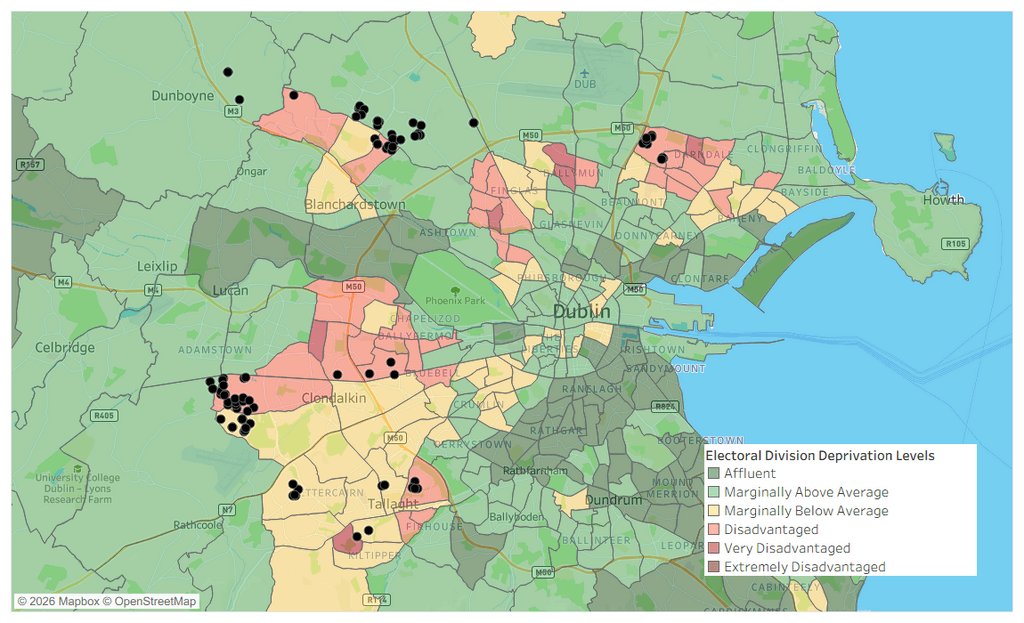

TASC examined the locations of 97 active or planned data centre buildings across the greater Dublin area alongside measures of local socio-economic conditions and found 84 out of 97 data centre buildings are located in areas classified as marginally below average, disadvantaged, or very disadvantaged. Clusters of data centres have emerged in Blanchardstown, Tallaght, and Clondalkin - areas that consistently rank below the national average on key socio-economic indicators.
Government must stop putting data centres ahead of homes, communities and public infrastructure – Pa Daly TD
— Sinn Féin (@sinnfeinireland) August 7, 2026
“The choice is clear: prioritise homes, communities and critical infrastructure, or continue allowing corporate demand to dictate energy policy. Sinn Féin believes the…

News

News

News

News
Storm Boelo: Status Orange warning in place for Galway and Kerry
Flooding and possible damage to homes and businesses are expected As Met Éireann has warned of flooding and damage to homes and businesses this weekend, Storm Boelo has triggered a Status Orange rain warning for Galway and Kerry. The latest rain warning started at 7am on Saturday (24 October), and it runs until 2pm as […]
News
4h
Storm Boelo orange warning issued for Kerry and Donegal
Met Éireann named the counties at risk of flooding Ireland is bracing for flooding and damaging winds this bank holiday weekend, as a Storm Boelo orange warning has been issued for Kerry and Donegal. As Met Éireann named the counties at risk of flooding and damaging winds, it issued a status orange rain warning for […]
News
1 day ago

News
News