




News

Share
Published 12:57 22 Sept 2026 BST
Updated 10:55 22 Sept 2026 BST
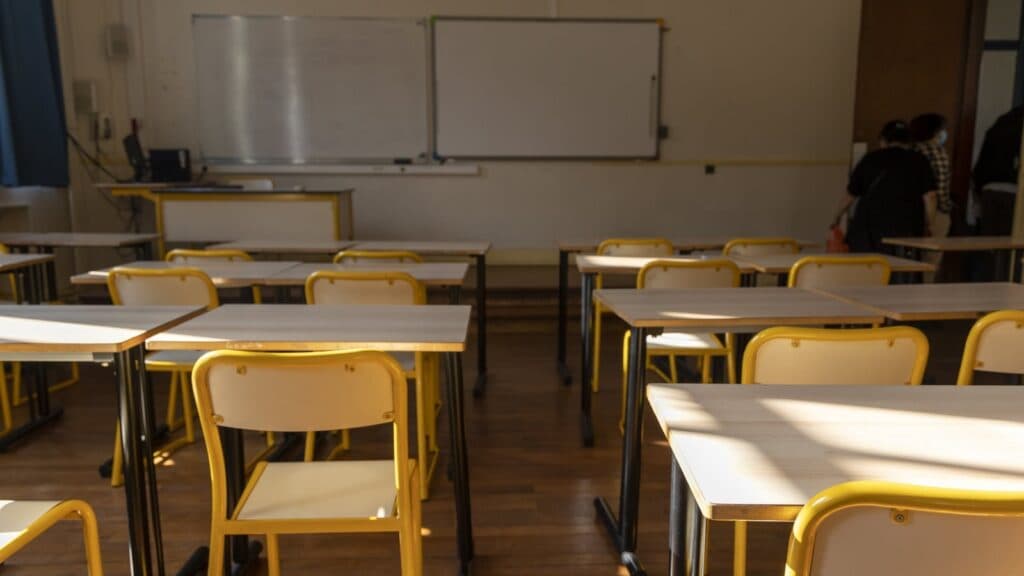
If you have a child in primary school in Ireland, you know the letter.
It arrives in the schoolbag in September, it is always careful to use the word "voluntary", and it always mentions heating.
According to the organisations that run and staff those schools, that letter is no longer a nice-to-have. It is holding the lights on.
Nine bodies representing primary and special school management and staff have written to Minister for Education Hildegarde Naughton seeking a €50 increase in the basic school capitation rate, taking it from €274 to at least €324 per pupil, as RTÉ's Micheál Lehane reported.
Their case is that most primary schools are now in a genuinely difficult position trying to cover the basics.
Capitation is the per-pupil money a school gets for running itself.
Not teachers' pay, the day-to-day: electricity and heating, insurance, classroom materials, ICT, staff training, cleaning, maintenance and water.
It is the least glamorous line in the education budget and the one that moves every time an energy contract is renewed.
The numbers the groups have put in front of the Minister came from an analysis by independent consultants Verecon, which examined almost half of the primary schools in the country.
It found that 71% of them ran a deficit last year on their capitation-related income. The average shortfall was €8,288.
40% were forced to fall back on voluntary contributions from parents to make ends meet.
That last figure is the one that stings, because it quietly turns a national education system into a local fundraising exercise.
A school in a well-off catchment can plug an €8,000 hole with a raffle and a few envelopes. A school in a catchment that cannot afford it either goes without or goes into the red.
The letter does not just ask for a one-off bump, they expect both capitation and the ancillary services grant indexed to inflation.
The representatives argue that if that had been done over the last decade, schools would not now be dependent on parental contributions and fundraising to meet basic running costs.
It was signed by a genuinely broad group: Caoimhín Ó hEaghra of An Foras Pátrúnachta, Ken Fennelly of the Church of Ireland Board of Education, Seamus Mulconry of the CPSMA, Educate Together chief executive Emer Nowlan, James Eustace of the Education and Training Board, Andy Pike of Fórsa, Irish Primary Principals' Network chief executive Páiric Clerkin, Asiya Altawash of the Muslim Primary Board of Education, and Patricia Harrington of NABMSE.
Patrons, unions and principals, all signing the same page, which does not happen often.
The Department of Education responded.
A spokesperson said the Government remains committed to funding schools to meet day-to-day running costs, as set out in the Programme for Government.
Recent budgets, they pointed out, have delivered increases in capitation funding, including an additional €39 million last year, and the last three budgets have raised capitation rates by almost 50% for primary schools.
On the €50 itself, the answer was the one every pre-Budget ask gets: the priority is to continue delivering on Programme for Government commitments, Budget 2027 negotiations are ongoing, and any further funding measures will be considered as part of that process.
It lands into a noisy few weeks for the sector, primary teachers are striking next month, and the Government has already trailed softer announcements like a culture voucher for Irish teenagers.
Capitation is a harder sell than a voucher, because nobody ever got a photo op out of a school's insurance premium.
Still, the schools have done the thing that usually works in an Irish Budget cycle: they have arrived early, arrived together, and arrived with an audited number.
Whether €50 a pupil survives contact with the Department of Public Expenditure will be clear on Budget day.
Explore more on these topics:
News
News
News

Israel FA slams ‘stupidity’ of Hallgrimsson after genocide remarks
They are not best pleased… Ireland’s UEFA Nations League clash with Israel this Sunday has taken an even uglier turn, after the Israeli FA slammed Heimir Hallgrimsson on X. Speaking at a recent press conference ahead of the game – which has been moved to the neutral location of Debrecen in Hungary – the Ireland […]
News
1h
One region of Ireland was twice as likely to report neighbours breaking hose pipe ban
People living in Leinster were almost twice as likely as those in the other provinces to tell on their neighbours. Figures released by Uisce Éireann show that when the hosepipe ban was implemented nationwide due to continuous dry summer weather, calls came in from Leinster at around three times the rate compared to Cavan, Monaghan […]
News
2h
News
Primary school teachers to strike next month
News