Movies & TV

Share
Published 20:42 25 Sept 2026 BST
Updated 21:06 25 Sept 2026 BST
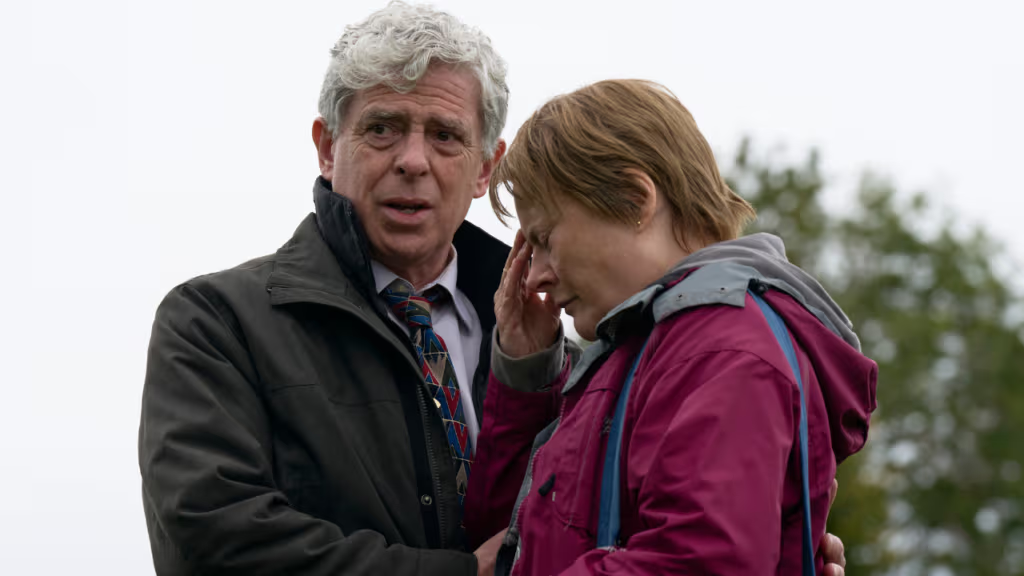
The Lost Children of Tuam, one of the year's best Irish movies, is available to watch in cinemas now.
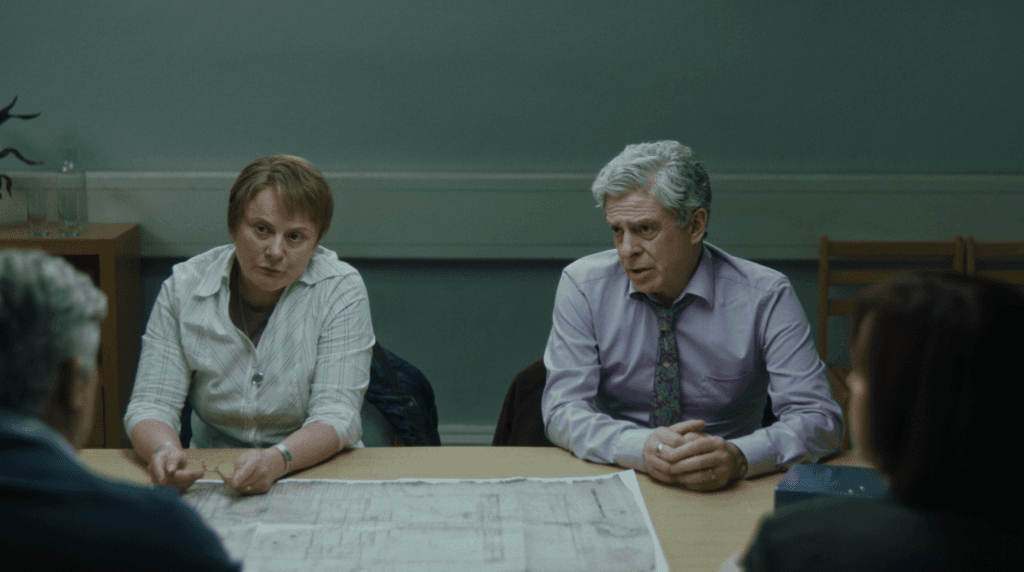
Produced by Liam Neeson, the biographical drama focuses on activist Catherine Corless (played by a brilliant Monica Dolan, Rialto).
In the early 2010s, the history enthusiast began researching the former Bon Secours Mother and Baby Home in Tuam, Galway, as part of a class project for a local history society.
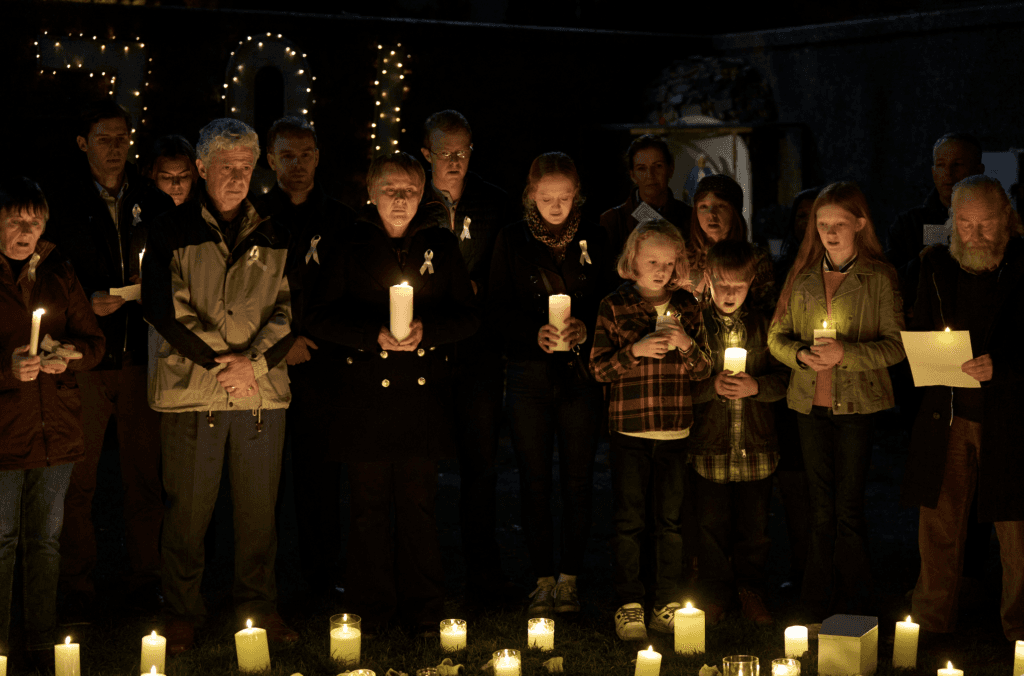
Corless soon uncovered the devastating possibility that as many as 796 children had been buried in unmarked graves on the property. This discovery began a campaign for justice, one that has had a lasting impact on Ireland.
The Lost Children of Tuam is directed by Frank Berry, best known for the social realist dramas Aisha and Michael Inside.
As with his previous work, the filmmaker prioritises authenticity and sensitivity over sensationalism or Hollywood-style melodrama, wisely understanding that the facts of this real-life story are so shocking, they don't need heightening.
The movie is never less than gripping, capturing Corless' persistence and bravery in taking on a powerful institution, while also serving as a stirring tribute to the victims and survivors who the activist continues to fight for.
JOE spoke to The Lost Children of Tuam's director Frank Berry, its stars Monica Dolan and Andrew Bennett (who plays Corless' husband Aidan), as well as the real-life Corless. This was at the red carpet of the drama's Dublin premiere last week at the Light House Cinema.
Berry revealed Liam Neeson and Element Pictures chose him to direct The Lost Children of Tuam based on his previous films, all of which are intimate human dramas tackling systemic issues in Ireland.
Though this is the director's first drama depicting real-life people, he wanted to retain the sensibility of his earlier work and avoid certain biopic tropes.
"Firstly, [I was] very, very keen not to sentimentalise. [I wanted it] to be restrained. I think you could make a different type of film about Catherine's journey and what she's uncovered. It could be very sensational," he explained.
"The power is already there. We don't need to kind of accentuate it or exaggerate it for dramatic effect. We just wanted to depict it in a realistic way.
"I think that has its own power. When people are watching it, I think they feel there's truth here, and that is very, very important to us."
Berry also opened up to JOE about his process for making dramas that smack of authenticity. This involves real-life people who have experienced the events his movies depict being part of the making-of process.
"I'm drawn to films that have a purpose. It's just an instinctual thing. I think asking an audience to walk in the shoes of a character from a subjective point of view is an impactful way to address an issue.
"I made a film about direct provision; I made a film about a young man who goes to prison. So, if you research it, with lived experience, with people who have been through the systems, or, in this case, spend a lot of time with Catherine and meet a lot of survivors, you can depict feelings that are slightly different to a documentary.
"You can ask the audience to feel something while they're in a space that they can relate to as the real world. That's the aim. When I'm talking to people who have experience of the subject of the film, you feel a little something... I mean, it's just small, but it's a feeling that: 'OK, I get it. I kind of understand, to a degree, what needs to be expressed.'
"Then you bring that into a space with actors, and you continue the dialogue with the people who have gone through the system themselves. All that mixed together ends up with a realistic, and I suppose impactful way of addressing a topic."
Bennett, best known for his role in An Cailín Ciúin, praises Berry for exploring such dark real-life material humanely.
"The nature of the stuff that it's about, it's dark stuff. Frank was really good at facing that, looking that straight in the face, but also maintaining a humanity and not expecting you to be able to put up with the awfulness of what was going on there," he told JOE.
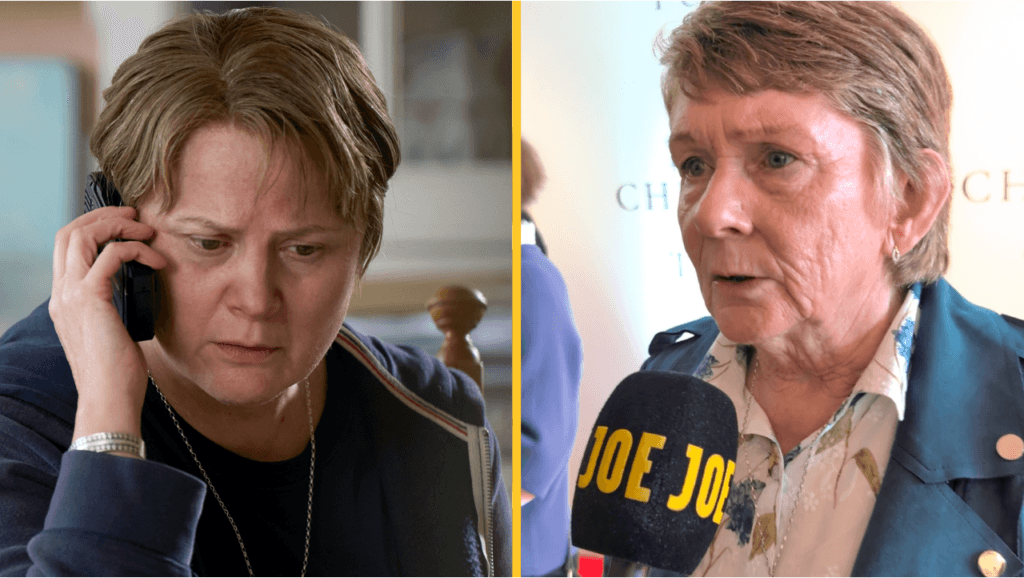
Dolan, a British actress who does a remarkable job embodying Corless, even down to her Tuam's accent, discussed how she prepared for the role.
Monica Dolan in The Lost Children of Tuam and the real-life Catherine Corless speaking to JOE
The star said she was aware of the real-life story after it made international news in 2014, adding that it's such "an atrocity" that "you sort of want to shy away from".
"I knew about it from that point of view, and then, when I was offered the role, Frank sent me a research pack, and that had the Dan Barry article in it, the New York Times article [which the movie adapts].
"That was very intricate and very thorough, and very horrifying, and, also, I think, gave an overview of possibly how it happened in that the State was fledgling and the church had an awful lot of power... It's such an incredibly written piece."
Dolan also met with Corless, a producer on the drama, which she felt was "very useful".
"When I landed the role, I asked if I could meet her... It felt right to meet her in her home environment because her home is so important to her and really grounds her; that's who she is.
"I flew into Knock Airport, I think the June before we started shooting, and spent an afternoon with her and Aidan [her husband, played by Bennett in the film], and we looked at lots of documents, lots of maps.
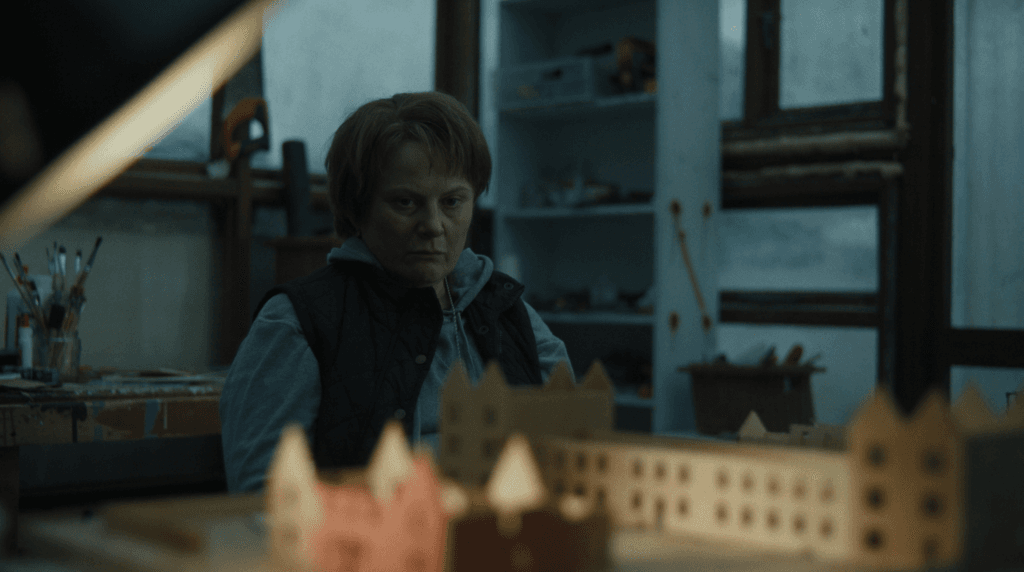
"I looked at her model of the mother and baby home that she created because there were so few pictures available. She created that for herself and the survivors to have some idea.
"We went for a walk in her garden, and I spent some time with her the next day as well, and then she drove me to the grotto [a local memorial], and we spent some time together there as well. It was very, very useful to do that."
On what she has learned from Corless, Dolan explained: "What couldn't she teach anyone? I suppose it's something to do with history, and that being a tool for the future.
"I think also that somebody can be very, very, very heroic by just beavering away.
"Also, she's the sort of person who maybe she's quiet sometimes because she's 10 minutes ahead of everyone else or even further ahead. I get the feeling that she's the sort of person who has to wait for other people to catch up quite a lot."
One of the most compelling parts of The Lost Children of Tuam is Corless' relationship with her more extroverted husband Aidan. Though Catherine's devotion to her investigation and later activism can take away from the couple's quality time, Aidan remains a great support to her.
Like Dolan with Catherine, Bennett spent time with Aidan Corless, and actually notes that he had to tone down the real-life man's natural charisma for the drama.
"I'm not playing the real Aidan... He's a fascinating man in his own right. You could actually make an excellent film about him.
"He's a rock musician and an actor and a farmer and a paint salesman and all that. He's a flamboyant kind of a guy. Lovely, a very, very nice man.
"But I couldn't play that in this because it would have been distracting. It would have been like: 'Why is there this Christmas tree following the main character around?' So we had to tone it down a lot, and I think we succeeded."
Dolan and Bennett in The Lost Children of Tuam
On how Aidan supports Catherine, even as some Tuam locals turn on her, Bennett said: "I don't know the full ins and outs of what went on. I read Catherine's book, obviously, but I think people did turn against her, even local people.
"Tuam was a small place. [They] kind of battened down the hatches against her a little bit, and I think Aidan was hugely supportive of her.
"They're very honest with each other and have their own little problems and whatever. I think the fact that he is an imperfect man was perfect to be that support to her in the film. I think the film gets it really well."
On the red carpet for The Lost Children of Tuam, JOE asked the real-life Corless about the changes she hopes the film will inspire.
She told us: "I am hoping that it will just keep the story out there for other, other places.
"There is Bessborough [another mother and baby home] in Cork that needs help at the moment to retrieve 900 babies missing. And it's worse there because they're trying to build apartments where the babies are. The babies are there somewhere.
"But I am delighted that it has come to this [the film being released]. Having a film about the whole thing, I know it will open up a whole lot of avenues for the others.
"Tuam is a continuation. It may need two more years to continue what they have done, and I think it really shows the world it shouldn't have happened. It was wrong, and may it never happen again.
"So I am very happy that this film has been made and that it'll be distributed for everyone to see."
JOE then asked Corless for her opinion on the mother and baby home redress scheme from the government, which has been criticised for being exclusionary.
"Yeah, there is a lot excluded. The government decided that babies up to six months old wouldn't remember a thing, but we know better now. We know babies from the very start, from when they're born, that they know their mother and that they will know the difference.
"It was just a horrible law that [was] brought in. It's just money-saving, that's all it is for the government.
"A lot of people didn't get any redress. It was really a very small amount to give all the survivors for what they went through, a pittance really.
"So, that won't change. It's done now, I suppose, but at least this film is out there, and it will keep the story alive."
We also asked Berry about the changes he hopes the film brings about.
"Well, I think there there's a number of changes. I hope people will see the film and realise the importance of memorialising and remembering lost children from religious institutions throughout Ireland, not just mother and baby homes," he explained.
"We hope that it'll encourage people to talk about their own experiences. Because beneath the surface in Ireland there's a lot of hurt.
"I've been making this film since 2021, and you talk to a lot of people when you're making a film about the subject of what you're doing, and you just get a feeling about just the sheer scale of hidden pain across Ireland.
"What Catherine has done is she's encouraged survivors of institutions to talk and she's facilitated communication. I hope that continues because that's how we heal. We heal by letting air at the wounds. And that's one of Catherine's great achievements.
"Obviously, what's happening in Tuam is incredible. In addition to that, a huge achievement from Catherine is that she's helping [with] much-needed healing."
Explore more on these topics:
| Movie Title | The Lost Children of Tuam |
| Where to Watch | In cinemas now |
| Cast | Monica Dolan, Andrew Bennett, Ian McElhinney |
| Length | 84 minutes |

Movies & TV
Movies & TV
Movies & TV
Movies & TV
Watch this great 2024 thriller movie on TV tonight
The film would make perfect viewing ahead of Halloween. Our TV movie pick for tonight (Friday, 25 September) is Immaculate, the 2024 horror thriller starring Sydney Sweeney (Euphoria, Reality). The rising star plays Sister Cecilia, an American nun of devout faith who joins a remote convent in the picturesque Italian countryside. Her warm welcome quickly […]
Movies & TV
3h
Watch this brilliant Irish Western thriller streaming for free now
The first major film to be set during the Famine, JOE recently spoke to one of its stars. Black ’47, the excellent Irish Western thriller, is available to stream for free right now. Available to watch on the service Plex, the movie is set in 1847 and follows Irish soldier Feeney (James Frecheville, The Drop). […]
Movies & TV
4h
Movies & TV
Watch this dark thriller movie airing on TV tonight
Movies & TV