








Crime

Share
Published 11:35 21 Jul 2026 BST
Updated 11:35 21 Jul 2026 BST
Students in Galway are commuting from as far away as Kerry, others are sleeping on friends' couches and some are sleeping in their cars as the accomodation crisis continues with no end in sight.
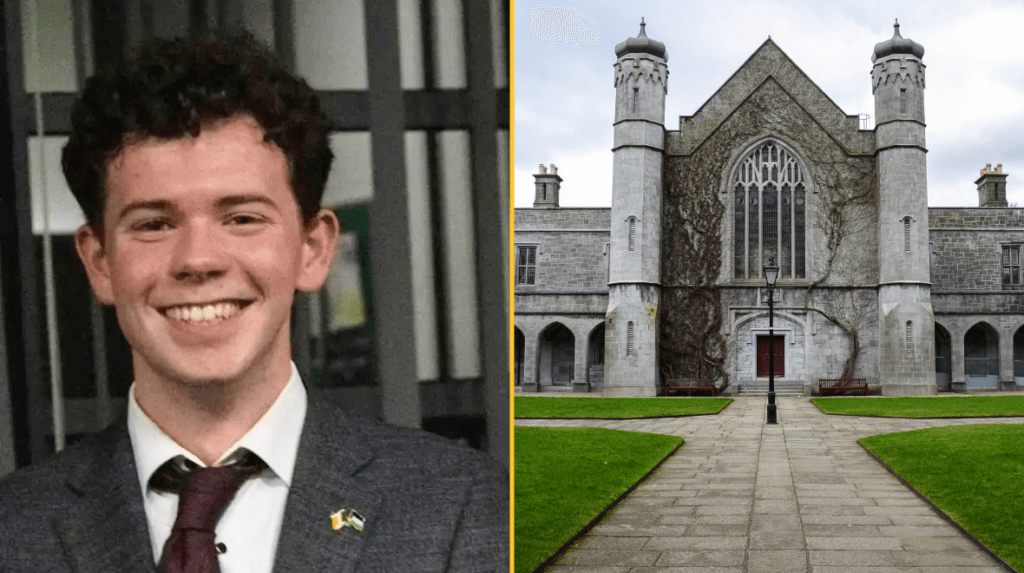
The president of the University of Galway Students' Union says they are braced for chaos this autumn when college returns.
Speaking to JOE, SU President Séan de Búrca said he sees little reason to believe the accommodation crisis will improve before students return to college this autumn.
"In the long and short term, it looks like things are going to get worse," he said.
"The national student accommodation strategy is essentially promising that, at best, things might stay the same. It clearly sets out that we shouldn't have any hope for it to meet its targets, the strategy is not very promising.
"The minister is essentially crossing his fingers and saying I hope something happens.
"We have students who are commuting all the way from Kerry and we have people who are sleeping on friends' couches, we have homeless students, and that's just the ones we know about."
Even students who have managed to secure accommodation are not necessarily in a good position, he added.
Many are paying huge rents for accommodation that is not fit to live in, but are too afraid to complain because they are worried they will lose it.
The accommodation crisis for students in Galway began in 2015 with no reprieve since.
The Students' Union is currently looking at setting up a student housing co-op, but de Búrca admitted it is not something that will solve the crisis overnight.
Research done by JOE shows some digs (a room for rent in a family home for five days a week) are over a thousand euro.
New student accommodation opening near the docks in Galway has rents starting at €300 a week.
Research from the Irish Council for International Students (ICOS) report found that 14% of international students had experienced rental scams, 40% pay rent in cash, and 38% are either not under a formal lease or are subletting informally.
"In a different housing market I think we would see a lot more people coming and saying 'the place I'm living is a kip', but now they're not doing that because they know it beats the alternative of having nowhere to live at all," De Búrca said.
First-year students are among those who will be particularly vulnerable, as they receive their CAO offers shortly before the new academic year begins, leaving them with little time to find somewhere to live.
"They don't have a chance to really look for other places, so they're coming straight in with either paying through the nose or they're going somewhere that is just not great," De Búrca said.
"So I really worry about them, especially when they're just coming into college and just starting out."
The SU president also believes the housing crisis is changing what student life looks like, with many students spending more time trying to afford basic living costs and less time engaging with campus life.
"I'd say [student life] is being strangled away...This is a result of conscious policy choices. This isn't something which has happened entirely in the abstract and I think we need to be very clear when framing that there have been policy failures that are resulting in that student life being totally eroded."
The accommodation crisis is also being felt among students from lower-income backgrounds.
The University of Galway is seeing more students from disadvantaged backgrounds, particularly from Donegal, which is the poorest county in Ireland. This year, CAO applications from Donegal increased by 25% compared with last year.
A report from 2022 commissioned by the Department of Higher Education and carried out by Indecon found that the average student in Ireland spends 32% of their monthly expenditure on accommodation. At the University of Galway, that figure rises to 47%.
With another academic year about to begin, de Búrca warned that without significant action, many students will continue to face impossible choices between unaffordable rents, lengthy commutes and unsuitable, unavailable accommodation.
If you would like to tell us about your student accommodation experience, please email [email protected] .
Explore more on these topics:
The government need to address the dire state of the student accomodation crisis. We need a massive increase in the amount of accommodation available on campus. Additionally we need to add protection to those living in digs accommodation by extending tenant rights to cover digs. pic.twitter.com/1Bfftvbl98
— Richard Boyd Barrett (@RBoydBarrett) March 8, 2024

Crime


Crime

Crime
Crime
A killer is on the run in Ireland after being given day-release for father’s funeral
Gary Anderson was denied permission to attend his father’s funeral but this was later quashed by the courts. A man who murdered a stranger in 2018 has absconded from prison. Gary Anderson who was then 25, was jailed alongside his brother Sean (24) for the murder of Karol Kelly in Derry. Mr Kelly’s brother Paul […]
Crime
2h
Ryanair boss apologises for “rapist” comments
Michael O’Leary previously refused to back down even when challenged on his language by Dublin Rape Crisis Centre. The Chief Executive of Ryanair Michael O’Leary has apologised “sincerely and unreservedly” for using the term “high-fare rapists” when discussing the airline’s competitors. O’Leary had been accused of “trivialising” rape by the Chief Executive of Dublin Rape Crisis Centre […]
Crime
2 days ago

Crime
RTÉ release new statement about 2027 Eurovision Song Contest
Crime