






Life

Share
Published 15:37 1 Feb 2016 GMT
Updated 16:46 1 Apr 2016 BST
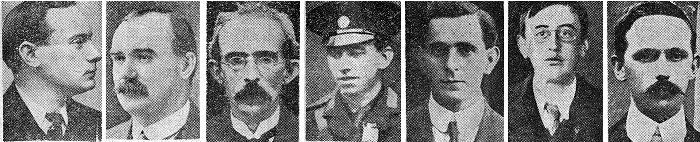
Left to right: Pearse, Connolly, Clarke, MacDonagh, Mac Diarmada, Plunkett and Ceannt (Image: EasterRising1916.net)
2) He was the son of a member of the Royal Irish Constabulary. Born as Edward Thomas Kent in Galway in September 1881, his father James - ironically given his son's future political leanings - was a member of the Royal Irish Constabulary, the armed police force of the United Kingdom in Ireland up until 1922. He was the sixth of seven children, the others being William, Michael, Richard, Nell, John and James. 3) He was a Tribesman. Ceannt was born in Ballymoe, a small village in County Galway overlooking the River Suck. 4) Like Pádraig Pearse, he was passionate about the Irish language. When Ceannt moved to Dublin in 1892, the year of his father's retirement, he quickly became passionate about the Irish Ireland movement. He became a stellar musician, and even played the uilleann pipes for Pope Pius X.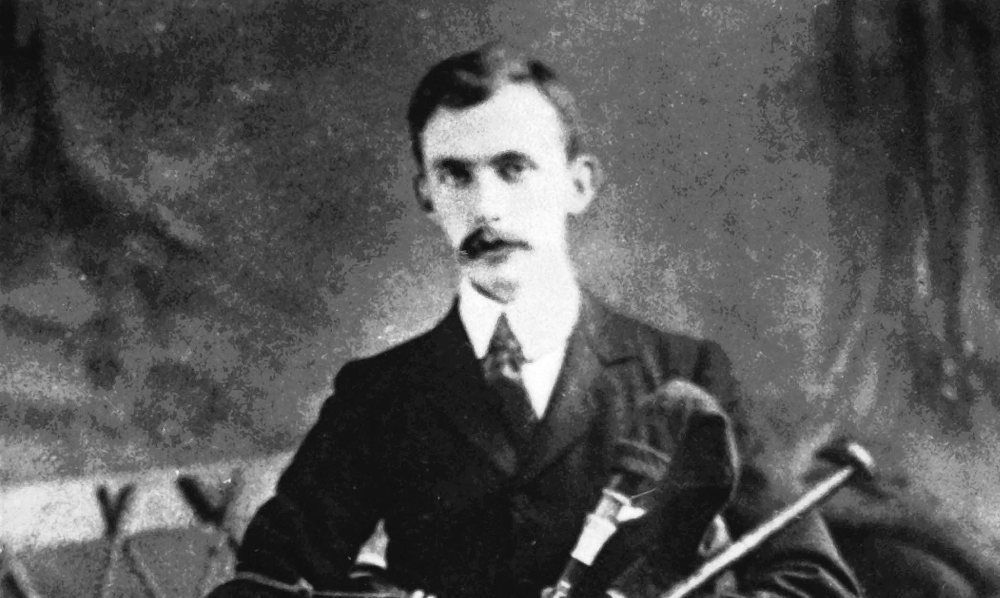
Image: Connacht Tribune
5) He was quite the athlete. Ceannt, an imposing figure physically as well as intellectually, was among a group of Irish athletes to travel to Rome in 1908 for the Pope's jubilee celebrations. It was at those celebrations that he was invited to play music for His Holiness. 6) What about the day job? We was an accountant, working with the clerical staff of the City Treasurer and Estates and Finances office from 1901 to 1916. 7) Planning the 1916 Easter Rising. Plans for a rebellion started in May 1915 when the Military Council of the Irish Republican Brotherhood, Joseph Plunkett, Sean MacDiarmada and Ceannt got together. During the Rising itself, Ceannt was appointed Director of Communications and was stationed at the South Dublin Union.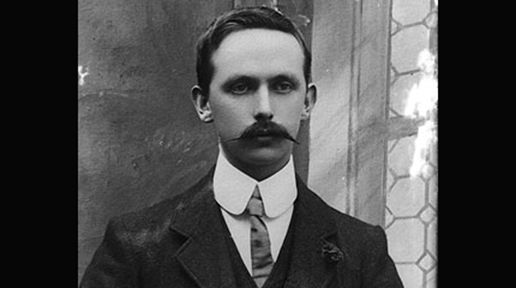 The men under his control included future President of the Executive Council of the Irish Free State (later known as Taoiseach) W.T. Cosgrave, and Cathal Brugha, the first Ceann Comhairle of Dáil Éireann.
His unit saw intense fighting at various points during the week, but surrendered when ordered to do so by his superior officer Pádraig Pearse.
8) He was married to Frances Mary O’Brennan. Known as Áine, she met Ceannt in the Gaelic League, where they shared an interest in Irish culture and heritage. They married in June 1905, and a year later their son Ronan was born.
9) "I shall die, like a man for Ireland's sake." These were the words he wrote to Áine just hours before he was executed at Kilmainham Gaol on May 8th, 1916.
10) The train station in Galway is named after him. Ceannt Station, in the centre of Galway city, was named after Éamonn Ceannt.
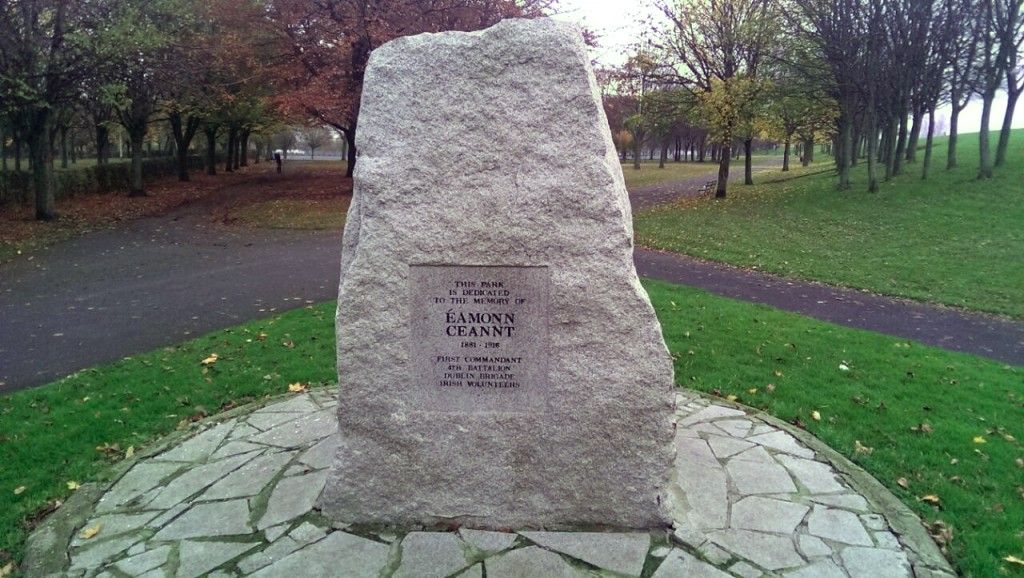
Éamonn Ceannt Tower in Ballymun was demolished in 2005, while this memorial stands in Éamonn Ceannt Park on Dublin's Southside, close to Harold's Cross and Kimmage.
The men under his control included future President of the Executive Council of the Irish Free State (later known as Taoiseach) W.T. Cosgrave, and Cathal Brugha, the first Ceann Comhairle of Dáil Éireann.
His unit saw intense fighting at various points during the week, but surrendered when ordered to do so by his superior officer Pádraig Pearse.
8) He was married to Frances Mary O’Brennan. Known as Áine, she met Ceannt in the Gaelic League, where they shared an interest in Irish culture and heritage. They married in June 1905, and a year later their son Ronan was born.
9) "I shall die, like a man for Ireland's sake." These were the words he wrote to Áine just hours before he was executed at Kilmainham Gaol on May 8th, 1916.
10) The train station in Galway is named after him. Ceannt Station, in the centre of Galway city, was named after Éamonn Ceannt.
Éamonn Ceannt Tower in Ballymun was demolished in 2005, while this memorial stands in Éamonn Ceannt Park on Dublin's Southside, close to Harold's Cross and Kimmage.
 Previously in this series
James Connolly
Joseph Mary Plunkett
Thomas Clarke
Tomás MacDonagh
Previously in this series
James Connolly
Joseph Mary Plunkett
Thomas Clarke
Tomás MacDonagh
Life

Life

Life

Life
Why concert tickets disappear so fast and why they’ve become so expensive
Ticket sales have become an ordeal. We’ve all been there, it’s 8.55am, and your Ticketmaster account is open and ready to go. You’ve got your card details ready and you’ve joined the waiting room with plenty of time to spare. Then 9am rolls around, and a number so big you didn’t even know it existed […]
Life
2 weeks ago
Social media is ruining your breakup healing process – here’s why
“First, mute their stories, or stop following their friends…” We have all been guilty of eavesdropping on other people’s conversations at some point. Especially in restaurants, where there is always a table where a couple of friends are discussing their romantic dramas and breakup memories. ‘Well, the other day they liked my post on my […]
Life
3 weeks ago
Life
Shoppers are rushing to pick up this unmissable Smart Watch offer
Life