








Life

Share
Published 11:39 30 Jun 2026 BST
Updated 15:52 31 Jul 2026 BST

One cannot help but wonder whether this whole new universe of social media is expanding the way romantic bonds are formed or, on the contrary, making it even more complicated to navigate the world of dating.
The breakup healing process within the context of social media is extremely tricky, similar to a double-edged sword. On the one hand, it seems impossible to forget an ex because of the constant reminders of their existence in the form of notifications. On the other hand, social media allows meeting many more people and starting fresh. But… how effective is the saying one nail drives out another?
"Social media prolongs and complicates the grieving process. When I see something about an ex-partner, all my neuronal networks related to my bond with them are activated. Obviously, that's a step backwards”, explains Lourdes Infante, a health psychologist and expert in emotional dependence, attachment and trauma.
“But what's more: the fact that we have more options for meeting people, which at first glance seems like it would help us get through the pain, actually just covers it up. And when you cover up grief, it ends up coming out and acting unconsciously. Unprocessed grief doesn't go away."
So, with social media getting in the way of breakup healing, what’s the secret to mending a broken heart?
It turns out there isn’t just one single ingredient for navigating this. It's about experimenting with the different approaches as if they were pieces of a jigsaw puzzle. Trying out what works best, until everything is – or almost – in place.
Although there is one indispensable tool: the famous ‘zero contact’. Without this foundation, none of the things done afterwards to get over a breakup will hold up.
Why is it so necessary? Because there should be “no input from that person”, as any image or interaction reactivates the bond.
In fact, Lourdes points out that the ideal would be to “log off social media whilst going through this process. But if we’re realistic, that doesn’t happen”.
These apps are so deeply embedded in our daily lives and tie us to so many other aspects, such as friends or family, that cutting ourselves off from just one person may not be a compelling enough reason to delete an account.
“You need willpower. Zero contact is never achieved on the first try, or hardly ever; if I have to try 40 times, I’ll try. If I have to do it gradually, I do it. First, mute their stories, or stop following their friends…”
It’s not about doing it perfectly, because that’s practically impossible. It’s about making a small step every day.
Sometimes, zero contact is in place because you haven’t spoken to that person for months. There’s no interaction between posts, nor are there any story replies. So - why can’t you still get them out of your head?
It’s important to bear in mind “the perspective from which I do things”, says Lourdes. Ask yourself: “Why am I posting this? Is it because I want them to react and to re-engage in conversation in some way?” Being truly honest with oneself will help to let go easily. But, for that, a lot of discomfort will happen.
Some people are quite in favour of blocking, unfollowing or muting someone on social media if it’s good for their mental health. However, some others see that approach as very immature.
“There are people who do it just to say ‘I’m going to annoy you’”. But, on the other side of the coin: “When a relationship ends, one person at that moment has to take charge of their own well-being, and the other person has to take charge of theirs.”
Lourdes highlights: “I can’t neglect my self-care just because the other person might take it badly if I cut them out.” It’s not just that one has the right to do so, but one has the responsibility to deal with whatever might be causing harm. If that means cutting them out, blocking them or unfollowing them on social media, in order to make the grieving process more bearable, that decision is entirely legitimate.
At the end stage, there is a lot of talk about healing and focusing on yourself when you are going through a breakup, and the eternal debate about how long you should wait before getting into another relationship arises.
“Some bonds heal within other bonds.” In other words, even though one is responsible for their own wounds, they don't necessarily have to do all the work by themselves. “There is no right or wrong answer. Some people say: ‘I need to be alone right now’. Other people spend time alone and recover sooner because of their personality… for many reasons”, clarifies Lourdes.
“It's true that there are people who haven't come to terms with their grief, and there are things that really trigger it. But it's also true that, in the end, there are people who have been important in our lives.”
This is why some wounds reopen more than once in a lifetime. Finding out that your ex is getting married, having a child, or moving with their new partner.
“I can't make [someone] disappear from my story and not feel anything, because that person has shaped part of my personality. It doesn't mean that a wound has been reopened, but that this person was very important to me, that I loved them very much.”
This interview has been edited for reasons of length and clarity
Explore more on these topics:
We have all been guilty of eavesdropping on other people's conversations at some point. Especially in restaurants, where there is always a table where a couple of friends are discussing their romantic dramas and breakup memories. ‘Well, the other day they liked my post on my social media; does that mean they like me?’ ‘I saw that my ex posted a story with someone new, the one that was “ just a friend”.’
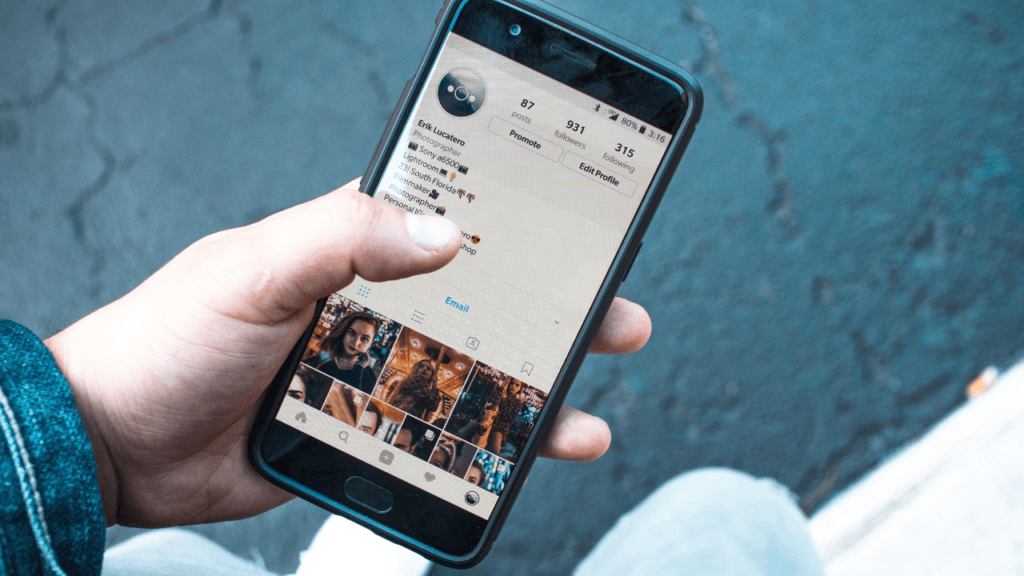
We’re in an age of intensely increased social media usage. According to DataReportal’s Digital 2026 Reports, more than 2 in 3 people on Earth now use social media. Its usage worldwide has reached approximately 5.66 billion users with an average of 2 hours 23 minutes daily usage in 2026.
Adults in the UK now spend an average of four and a half hours online a day, according to Ofcom’s Online Nation Report. As for Ireland, young adults spend more than 2 hours per day.

Life
Life

Life
Take our test to find out if your erectile dysfunction might signify a heart issue
This 2-minute, 10-question check can help you understand whether your symptoms are worth discussing Most people think erectile dysfunction is purely a sexual health issue. But doctors say it can be one of the earliest warning signs of heart disease.1,2 The reason comes down to blood flow. The arteries supplying the penis are much smaller than those supplying the […]
Life
4 days ago
How erectile dysfunction might signify something deeper about your heart health
Men with erectile dysfunction have a 59% higher risk of developing heart disease Most men think erectile dysfunction is purely a sexual health issue, but doctors say it can often be an early warning sign of heart disease.1,2 The reason comes down to blood flow.3,4 Heart disease can develop when blood vessel walls stop working […]
Life
1 week ago
Life
Luas suspended in Dublin city centre
Life