

Movies & TV

Share
Published 14:50 4 Nov 2026 GMT
Updated 15:08 4 Nov 2026 GMT
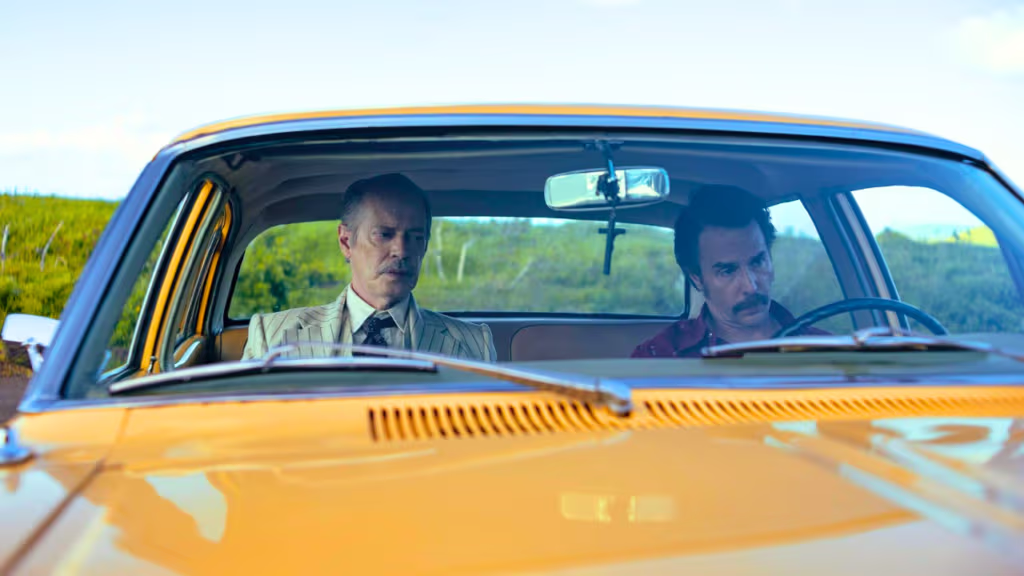
Wild Horse Nine, the brilliant new movie from Martin McDonagh, lands in cinemas today (Wednesday, 4 November), and JOE spoke to the Oscar-winning British-Irish filmmaker.
The pair are dispatched by their boss, MJ (Steve Buscemi), from their base in the country's capital of Santiago to Rapa Nui (also known as Easter Island). The explanation given for the trip is that Chris had always wanted to see the location's famous monolithic human figures carved from stone. The real reasons for the getaway are more complicated...
Revealing more of Wild Horse Nine's story would do a disservice, as the movie's twisty, consistently surprising plot is part of its thrill. What begins feeling like In Bruges 2 - two professional killers trapped in an unfamiliar, seemingly tranquil place wreaking havoc - quickly evolves into its own unique beast, one that accrues surprising emotional and political power.
As Malkovich's veteran CIA officer weighs up his life and all he is done supposedly for the good of his country, the film becomes a fascinating, highly critical portrait of American interventionism and institutional rot within the intelligence agency. That said, it's from a perspective rarely captured on screen: the CIA officers actually helping to destabilise countries like Chile.
Like nearly all of McDonagh's work, the lead players in Wild Horse Nine aren't conventionally heroic or sympathetic. Nevertheless, we are compelled by their contradictions, and maybe even grow to care about the characters because of them. How can Chris and Lee have such a genuine friendship and love for each other and be so openly callous about the damage they and their organisation wreak?
Maybe it's not quite as simple. Many story beats played for humour in the film's first half - Chris' antagonistic attitude to strangers, Lee's troubled relationship with his wife (Parker Posey) - take on deeper thematic significance as the movie plays out. Perhaps this detachment is their spy personas bleeding into their personal life. Or maybe they act this way because they are punishing themselves out of guilt.
John Malkovich in Wild Horse Nine
Rockwell generously plays second fiddle to Malkovich. That said, he does so much with an emotional moment in the film's finale that he would be Oscar-nomination worthy in our book. Buscemi is also fantastic as Chris and Lee's hard-ass boss who is more complicated than he first appears.
For more about Wild Horse Nine, read our interview with Martin McDonagh below. He picks his favourite Irish movie, before talking about his fascination with anti-heroes and how his latest is his "most political" story yet.
Martin McDonagh: Oh gosh, let me think… Jesus, the name of it's just ran away from me, but the Cillian Murphy one… it begins with W. This is terrible [laughing]
Martin McDonagh: Yeah, The Wind That Shakes the Barley, Jesus Christ. I really loved that one particularly. Is it still an Irish film if it was an English director?
Martin McDonagh: I think so. There was something about that that captured the landscape and the history, with great acting. It felt very cinematic, and I think that's probably one of my favourites, yeah.
Martin McDonagh: I don't think I ever set it up like that. Where they come from is probably 1970s American downbeat movies like Taxi Driver or Badlands. Things like that, which have lead characters that you wouldn't want to share a beer with, let alone, you know, hang out with them for a few hours, but there's still something mesmerising about them, I guess.
But particularly with John Malkovich's character in this, I couldn't agree with anything he does or has done, but to follow someone outrageous and to listen to someone who has no filter is always kind of joyful.
That was probably true of Colin Farrell's character in In Bruges too. You couldn't say you agree with any of the sh*t he was coming out with, but there's something fascinating to be following these people from a distance.
Martin McDonagh: No, I know what you mean. It wasn't written for John. Sam Rockwell's character was written for Sam.
It's strange that I can't imagine any actor other than John playing this part, but it wasn't actually written for him.
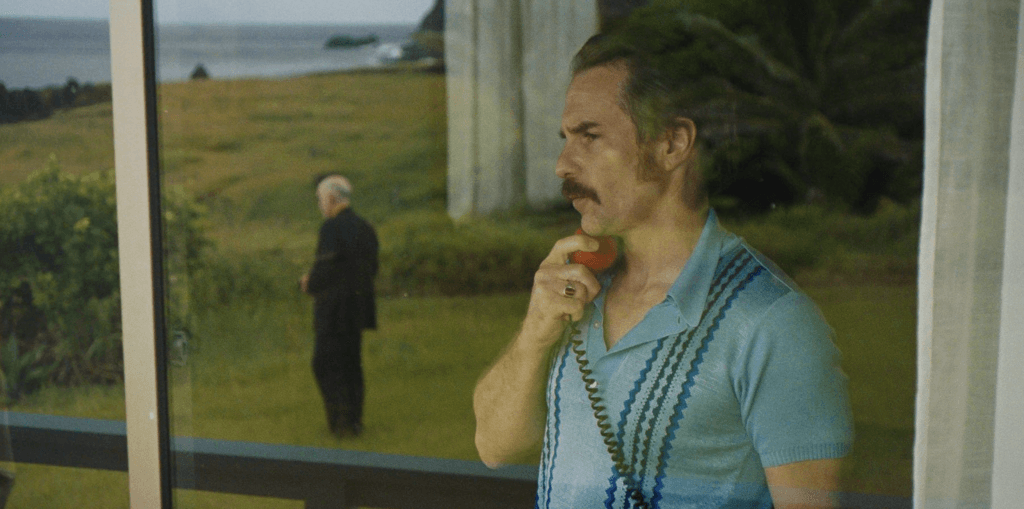
Sam Rockwell in Wild Horse Nine
So, it's not really a reference to Burn After Reading [a film where Malkovich also plays a CIA man writing a memoir] or any of those things, even though there are similarities I see after the fact.
But knowing John's dexterity with comedy and his ability to convey dark, dark anger were probably two of the factors that I wanted for this, but also those moments of when he's on his own and he's more reflective. Few actors can, I think, convey that kind of regret and sorrow when they are just doing almost nothing, smoking a cigarette or looking out of a window. And yeah, Malkovich, I think he's the greatest of his generation probably.
Martin McDonagh: Well, I do like the location to become a character in the film, I guess because it worked so well with Bruges. Then to capture the beauty of the Aran Islands, particularly for Banshees, was a big factor. Rapa Nui, Easter Island, for this, I'd been there like 15 years ago, and it was in the hopes that there might be a film there. Obviously it turned out there was, but to make sure you capture it cinematically too is fundamental.
Martin McDonagh: Sure, good point, and I'm glad it doesn't feel that way.
I think bringing comedy into the mix is important, but also just following the truth of these characters, seemingly without judgment, or fully without judgment, is part of it; to let them reveal themselves, I think, is important.
One of the things I like about this is that it's very political. It's probably my most political thing. But it's entertaining too. You follow, and you laugh at these characters or with these characters, but I think the history and the politics come in kind of secretly or surreptitiously.
I agree. I can't stand didactic, lecturing films. Hopefully, this isn't one.
Explore more on these topics:
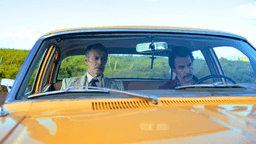
Before we get into our conversation with The Banshees of Inisherin and In Bruges director about his latest, let us tell you why you should be excited for the spy thriller. Set shortly before the 1973 Chilean coup d'etat, the story follows veteran CIA officer Chris (John Malkovich) and his younger colleague, Lee (Sam Rockwell).
| Movie Title | Wild Horse Nine |
| Where to Watch | In Cinemas |
| Cast | John Malkovich, Sam Rockwell, Steve Buscemi, Tom Waits, Parker Posey, Mariana di Girolamo, Ailín Salas |
| Length | 117 minutes |
Yet, because of Wild Horse Nine's real-life historical setting and the megawatt presence of Mariana di Girolamo (Ema) as Monica, a Chilean college student idealistic about her country's future who plays a vital role, we never forget the human cost of Chris and Lee and their organisation's actions. It's worth noting that the film's authentic lived-in depiction of 1970s Chile was no doubt helped by one of its producers, acclaimed Chilean director Pablo Larraín (El Conde, No).
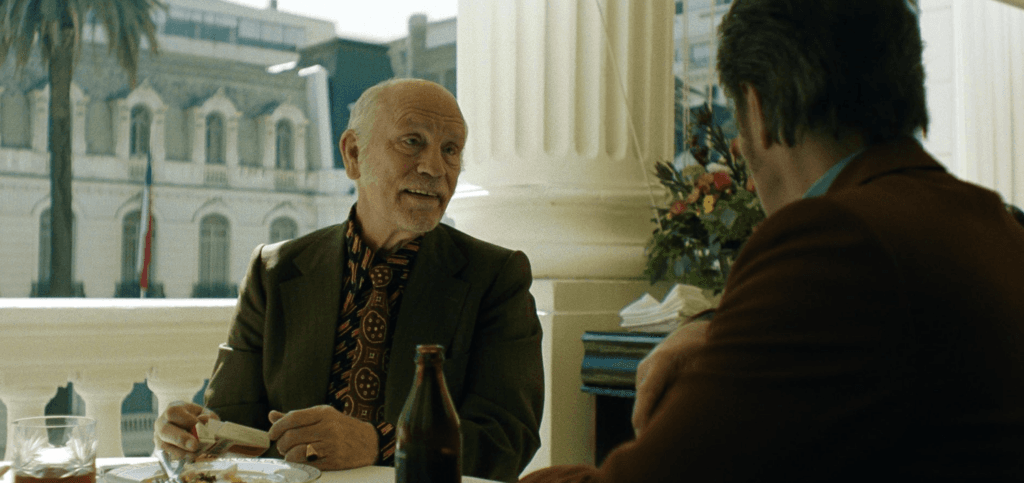

Speaking of the performances, Malkovich is pitch-perfect in a role that feels tailor-made for him. On top of certain character details feeling as if they harken back to previous iconic roles of the actor (mainly Burn After Reading and In the Line of Fire), he has never been quite given a mainstream showcase like that of Chris, one which spotlights how effortlessly he can slip between comedy, menace and pathos. Malkovich also gets a few monologues here that feel unforgettable and Earth-shaking.
Movies & TV
Movies & TV
Movies & TV
Movies & TV
Nicolas Cage’s 96% Rotten Tomatoes drama is on TV tonight
It’s one of our favourite movies of the decade so far. Our TV movie pick for tonight (Wednesday, 4 November) is Pig, the stunning 2021 drama starring Nicolas Cage (The Surfer). The Oscar winner plays Rob, a former chef living a reclusive existence deep in the Oregon wilderness. He supports himself by foraging for truffles […]
Movies & TV
3h
New BBC spy thriller show with Irish star reveals first look & release date
The series has a major connection to another beloved spy show. The BBC has dropped the first trailer and a release date for Honey, its new spy thriller show starring Irish actress Ann Skelly (House of Guinness, Rose Plays Julie). Set in East Berlin during the Cold War in 1982, the show centres on Carolyn […]
Movies & TV
21h
New heist movie unlike any before can be watched right now
Movies & TV