






News

Share
Published 09:46 30 Oct 2026 GMT
Updated 09:46 30 Oct 2026 GMT
The "manosphere" phenomenon should be addressed as a public health problem with the harms it causes online tackled in a similar way to the tobacco industry, a new report has said.
"Reframing the manosphere: a public health response to a commercial ecosystem," was published in The Lancet medical journal this week.
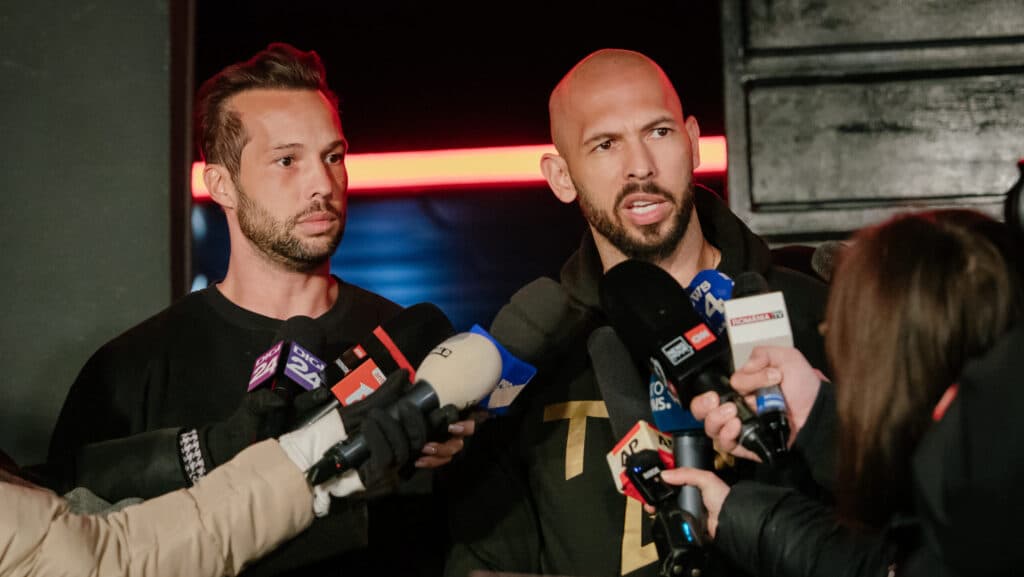
The most famous manosphere influencer is Andrew Tate, British prosecutors are currently seeking the extradition from the US of Tate, 39, and his brother Tristan, 38, to face a series of criminal charges, including rape and sex trafficking.
Andrew Tate is also accused of making and distributing indecent images of a child and possessing extreme pornography.
The authors of the report define the manosphere as "a diffuse commercial ecosystem and loose collection of online communities united by shared beliefs about masculinity, misogyny and male victimisation".
First named in 2009 and encompassing anti-feminist men's rights activists, fathers’ rights campaigners, men going their own way.
"Despite differences in history and origin, groups in the manosphere have a common preoccupation with the so-called crisis of masculinity, and unite around a shared conviction: that feminism has systematically disadvantaged men (with the realisation of such a belief being compared with taking the red pill, a term borrowed from The Matrix, and awakening from an illusion to reality).
"This network has been implicated in considerable health harms: widespread mental health impacts, especially in young people; violence against women, girls, and gender minorities; and delegitimising help-seeking in boys and men. In this Viewpoint, we argue that the manosphere is best understood and addressed as a public health problem," it reads.
They argue that similar to the tobacco and ultra processed food industries, content creators and hosting platforms deploy strategies that individualise responsibility.
"Men's problems are framed as the result of feminism rather than structural conditions, and masculine identity is commodified through products and paid content that normalise and reinforce health-harming and performance-oriented masculinities.
"Efforts to regulate or moderate content are frequently framed as threats to men’s autonomy, restricting political space for intervention."
They say isolation in boys and young men must be addressed in various ways includes boosting employment, skills to improve access to jobs, re-engaging boys in education and ensuring "equitable access to mental health and other frontline health services".
The authors argued that tackling the manosphere should involve a coordinated response by governments, schools, health services and community organisations - treating it like any other public health risk.
The authors argued the manosphere "is best understood and addressed as a public health problem".
It said regulation should include "strengthening existing content moderation to restrict harmful environments and harnessing the power of algorithms to promote positive messaging and norms alongside regulation of the structural features that sustain harm".
Professor Sarah Hawkes, report co-author and co-founder of the Global 50/50 social justice think tank, said: "The manosphere offers boys and young men belonging, identity and an explanation for why life feels hard.
"Those needs are real. A response that only removes the manosphere, without offering something credible in its place, will fail.
"We need to offer boys something better, not just tell them what to avoid."
Fellow co-author, Professor Kent Buse, affiliated with the Department of Global Population Health at Monash University Malaysia, argued boys and men are not the problem, but rather the business model set up to target them.
He said: "This is a business model, not a fringe. Outrage and grievance are good for business, so the system rewards the most extreme content.
"Expect the playbook that served tobacco so well: blame the individual and call regulation an attack on freedom.
"Public health has a tested toolkit for commercial harms and we should use it."
Explore more on these topics:


HSE considering weight-loss drugs for reimbursement process
Fitness & Health


News

News

News

Legendary cricketer accuses Dublin Airport Ryanair staff of ‘discriminatory’ behaviour
He was travelling from Dublin to Bristol when the incident occurred. Legendary Sri Lankan cricketer Kumar Sangakkara has accused Ryanair staff at Dublin Airport Ryanair of ‘discriminatory and threatening behaviour’ towards him and his family. Sangakkara and his family were flying from Dublin to Bristol when the incident, allegedly related to visas, is said to […]
News
18h
Enoch Burke to be arrested if he comes within 100m of school
Former teacher has been in court since 2022. Enoch Burke has been banned from going within 100 metres of his previous workplace in Co Westmeath after a judge amended an order against him today (Thursday). The High Court heard that he owes €238,268.18 in fines after defying court orders and trespassing at the school. The […]
News
18h
News
Revolut was down again, here’s what we know
News